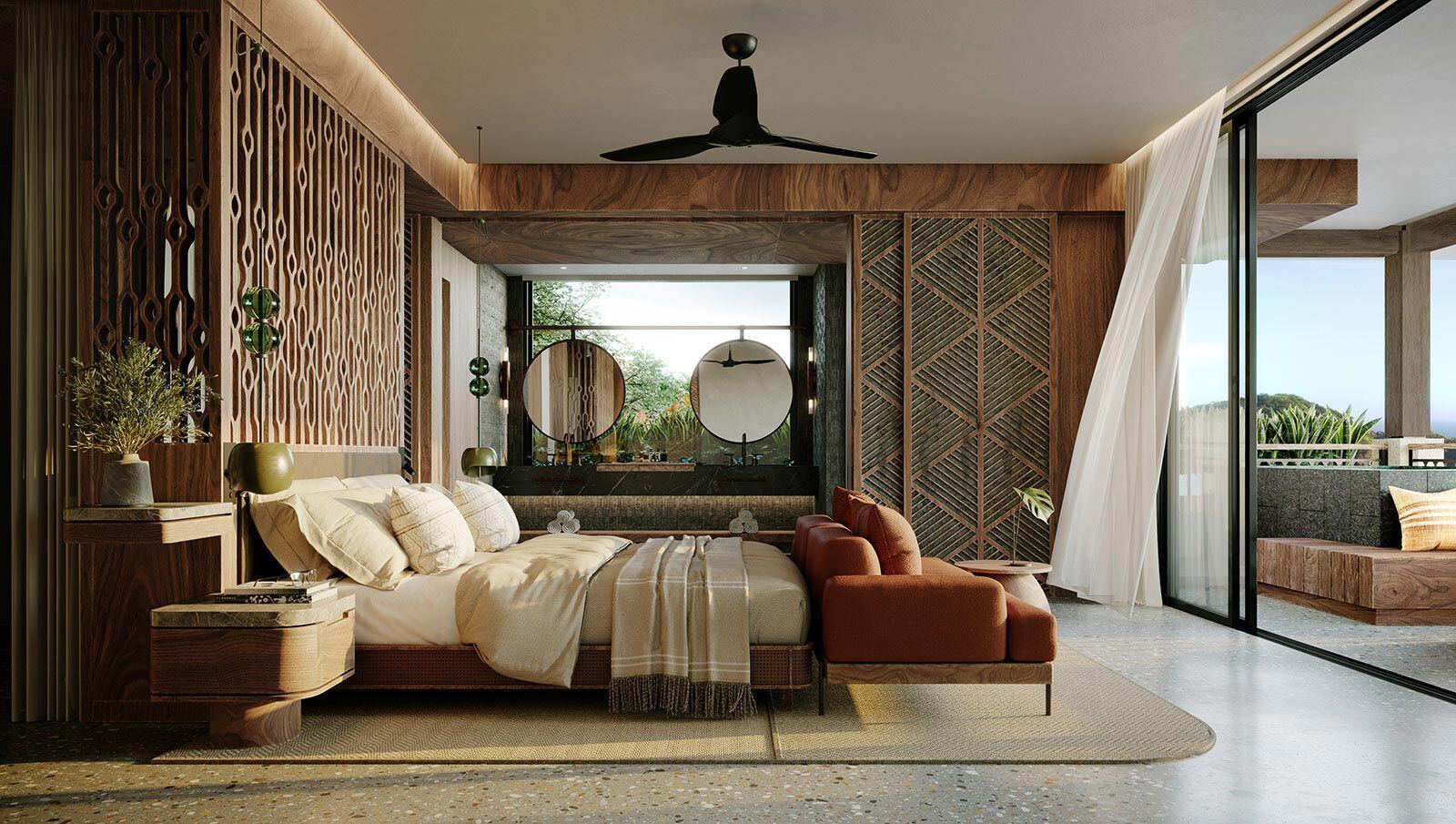
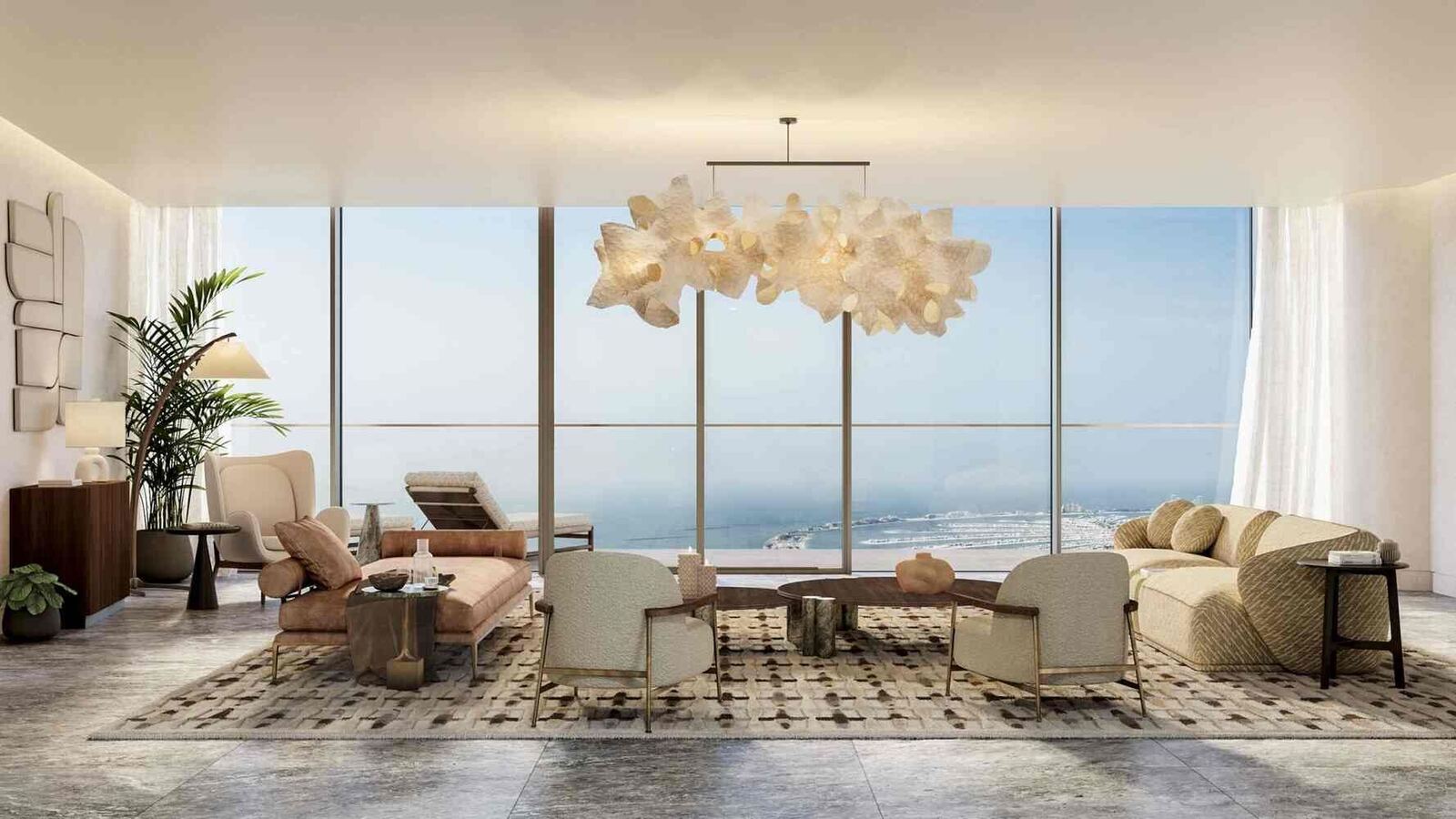
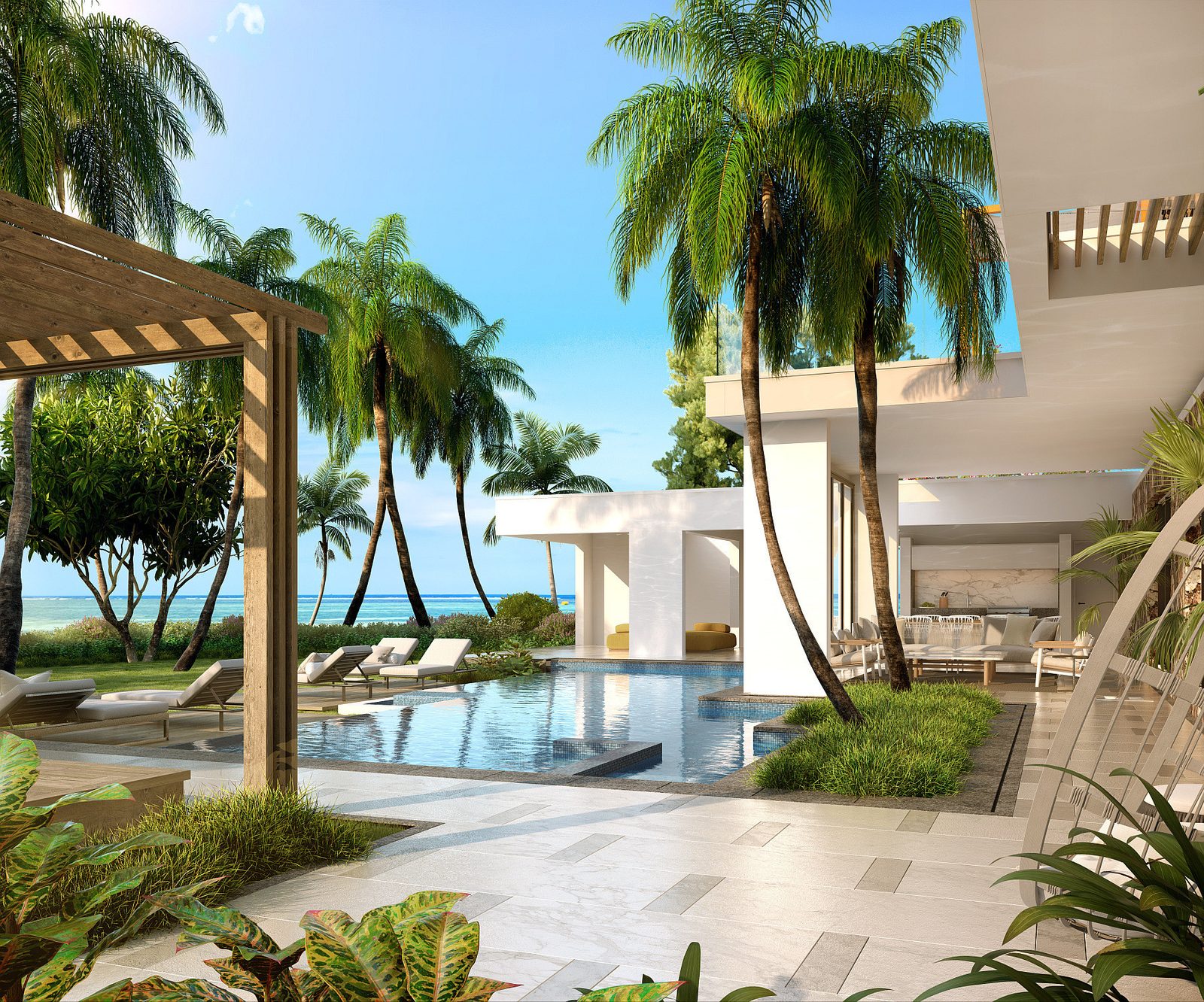
 Photo: One&Only Le Saint Géran Private Homes, Mauritius — Brand Atlas
20 September 2026 ·5 min read
Branded Residences in Mauritius: Freehold for Foreigners, Residency and the PDS Scheme

That combination — ownership, residency and climate in one transaction — is rarer than it sounds. Most tropical markets offer two of the three. It is why Mauritius has punched far above its size for two decades and why its branded pipeline keeps deepening.
Where the market actually is
- West coast (Tamarin, Black River, Rivière Noire) — the most established international community. Marine sports, international schools, dry microclimate, and the deepest expatriate demand on the island.
- North (Grand Baie, Pereybère, Mont Choisy) — the busiest and most amenity-rich market, with the highest liquidity and the widest price range.
- East coast (Belle Mare, Trou d'Eau Douce, Beau Champ) — the resort and golf belt, home to the island's most exclusive hotel-attached residential product.
- South and southwest — quieter, more dramatic landscape, early-stage for branded development.
- Central plateau and Smart Cities (Moka, Beau Plan) — the residential-plus-employment model, aimed at families relocating with work rather than retiring.
The schemes that make it work
Foreign acquisition operates through government-approved frameworks. Getting the scheme right is the first structuring decision in any Mauritian project:
- 01PDS (Property Development Scheme) — the current principal route. Freehold residential property in an approved development, open to foreign buyers, with a social-contribution obligation on the developer. A purchase at or above the qualifying threshold (USD 375,000) entitles the buyer, spouse and dependants to residence permits for as long as the property is held.
- 02IRS and RES — the predecessor schemes. Still relevant in the resale market and in the comparable set, with slightly different rules on land area and thresholds.
- 03Smart City Scheme — mixed-use master developments combining residential, commercial, office and leisure, with its own incentive regime.
- 04G+2 apartments — foreigners may acquire apartments in buildings of at least ground plus two floors outside the approved schemes, with a minimum price threshold; residency does not automatically attach.
- 05Tax and residency context — a flat 15% headline income tax rate, no capital gains tax on property, no inheritance tax, and an extensive double-taxation treaty network. Land transfer and registration duties apply on transactions, and buyers should take advice on the interaction with their home jurisdiction before structuring.
| Segment | Typical positioning | Indicative premium vs comparable unbranded |
|---|---|---|
| East coast resort belt | Hotel-attached villas and estates | 30-55% |
| West coast (Tamarin, Black River) | Branded and managed residential estates | 20-40% |
| North (Grand Baie) | Branded apartments and managed schemes | 15-30% |
| Smart Cities (Moka, Beau Plan) | Managed lifestyle communities | 10-25% |
What buyers are actually buying
Three things, and it is worth being precise because Mauritius is frequently mis-sold. First, structure: freehold title, residency, a stable legal system built on a hybrid of French civil and English common law, and a jurisdiction international families and their advisers already understand. Second, turnkey living: a managed estate with security, maintenance, concierge and rental support for an owner who is on the island part of the year. Third, the brand's operating standard, which in a tropical climate is the difference between a property that ages gracefully and one that does not.
What buyers should not expect is yield. Mauritian rental returns are modest, the season is long but the rates are not Caribbean, and any scheme sold primarily on income is over-promising. The genuine proposition is total cost of ownership, lifestyle and the residency that comes with it. For how rental programmes actually perform, see [rental pool versus private letting](/news/branded-residence-rental-pool-vs-private-letting-2026).
Which brands work here
The island's residential-linked brand set includes One&Only, Four Seasons, Anantara, Shangri-La, Constance and Beachcomber as the established hotel operators, alongside golf-anchored estates and a growing group of wellness-led affiliations. Because the buyer is a part-year resident rather than a hotel guest, residential-side service capability matters more than hotel glamour: estate management, maintenance responsiveness, security and rental administration are what the owner experiences for eleven months of the year.
A useful test for any Mauritian brand partner: ask how many estate staff, not hotel staff, the residential scope actually funds, and who employs them.
What sponsors get wrong in Mauritius
- Over-supplying the north. Grand Baie has absorbed a lot of product, and the marginal apartment scheme there competes on price rather than on brand.
- Under-specifying for the climate. Cyclone-rated envelopes, corrosion-resistant fixings, drainage and humidity management are the difference between a ten-year and a thirty-year asset. Value engineering here reappears as a service-charge crisis.
- Treating residency as the whole pitch. Residency attracts the enquiry; the property has to justify the price on its own merits or resale suffers.
- Neglecting water and energy. Island utilities are constrained. Desalination, borehole strategy, solar provision and storage are underwriting items, not sustainability marketing.
- Missing the South African and continental African buyer. Mauritius is the principal offshore lifestyle and structuring market for wealthy Southern and East African families, and a scheme targeted only at Europe leaves its most natural buyer pool untouched. See our overview of [branded residences in Africa](/news/branded-residences-africa-where-are-we).
The capital picture
Mauritian development is funded by local banks, South African and European private capital, and an active global business sector that channels international investment through the island. Development finance is available but conservative, and pre-sales within an approved scheme are a standard component of the funding stack.
For international sponsors, the island's advantage is procedural clarity: the Economic Development Board's scheme approval process is well-trodden, and advisers who have done it before can give reliable timelines — a rare quality in emerging resort markets.
Outlook to 2030
Expect the east coast to remain the premium ceiling, the west coast to deepen as the family-relocation market of choice, and wellness and longevity positioning to grow as the island competes with the Maldives and Seychelles on something other than beach. The structural driver is unchanged and durable: a growing number of internationally mobile families want a jurisdiction that offers ownership, residency and quality of life together, and very few places offer all three with this little friction.
Frequently Asked Questions
Can foreigners buy property in Mauritius?
Yes. Foreign buyers can acquire freehold residential property within government-approved schemes, principally the Property Development Scheme (PDS), as well as apartments in buildings of ground plus two floors or more, subject to minimum price thresholds.
Does buying a branded residence in Mauritius give residency?
A qualifying purchase of USD 375,000 or more within an approved scheme entitles the buyer, spouse and dependants to a residence permit for as long as the property is held. Residency terms are set by the Economic Development Board and should be confirmed at the time of purchase.
What taxes apply to property in Mauritius?
Mauritius applies a flat 15% headline income tax rate, no capital gains tax on property and no inheritance tax, with an extensive double-taxation treaty network. Land transfer and registration duties apply on transactions, and buyers should take advice on how their home jurisdiction treats the holding.
Are Mauritian branded residences a good rental investment?
Rental returns are modest compared with the Caribbean or the Gulf. The market's real proposition is freehold ownership with residency, a stable legal and tax framework, and managed lifestyle living. Schemes marketed primarily on yield tend to disappoint on delivery.
See also
Market guides by country
- 'The Future of Branded Residences' — Global Tour 2026
- Branded Residence Ownership Structures Explained: The 2026 Guide
- Hotel-Branded vs Design-Branded Residences: The 2026 Comparison
- What Are Branded Residences? 2026 Definition, Models and Market Size
- Trustworthy Branded Residence Brands in 2026: How to Judge Credibility