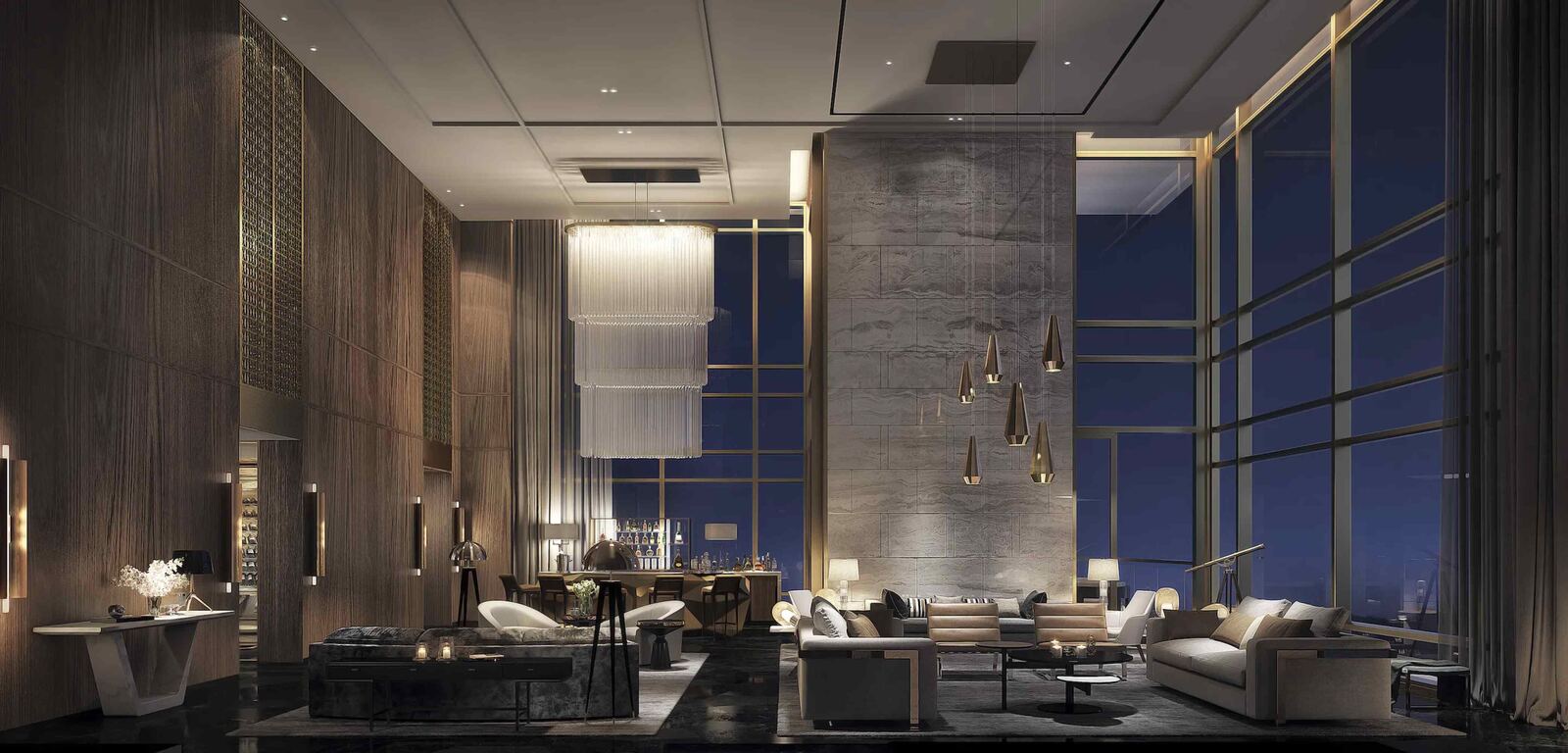
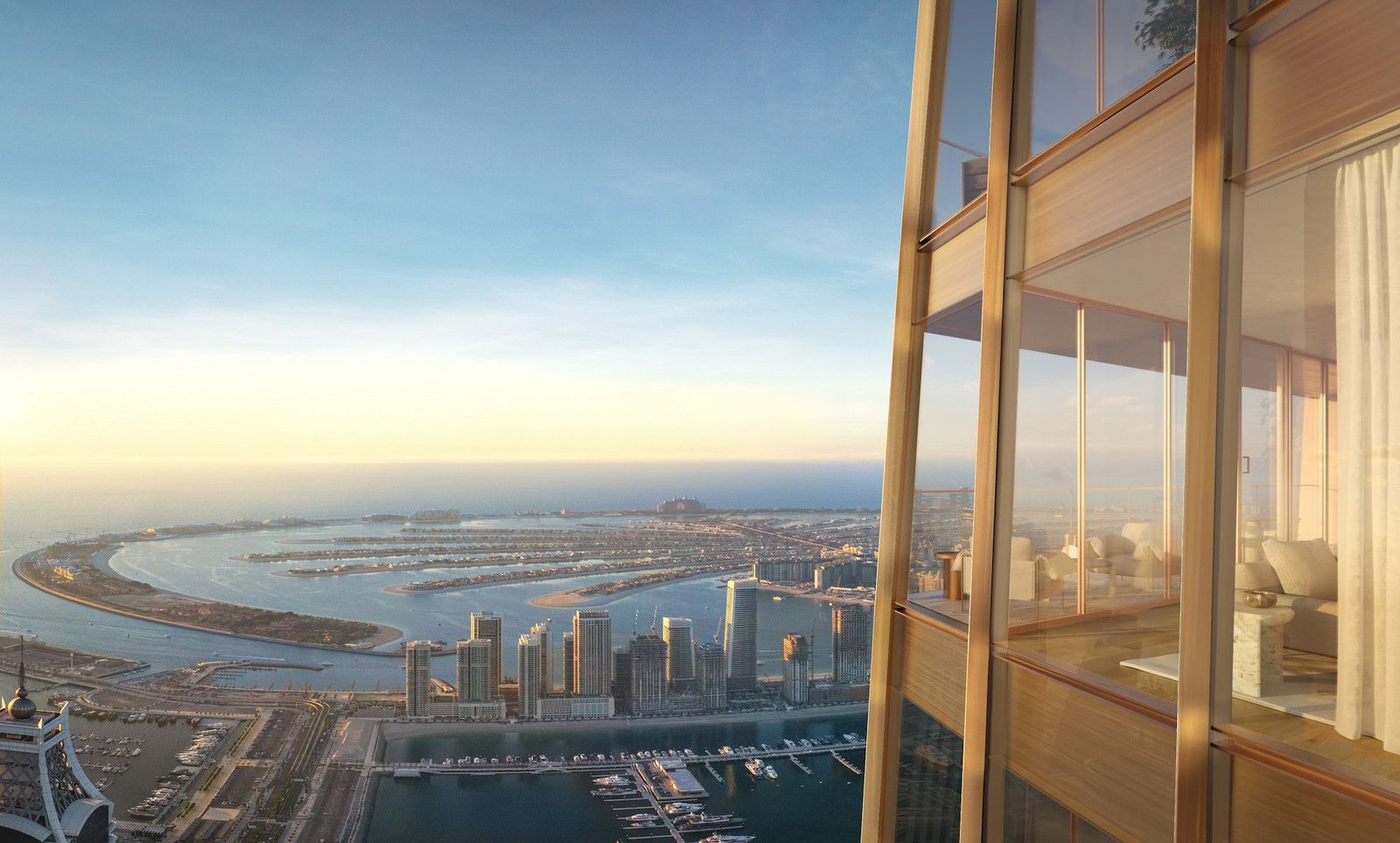
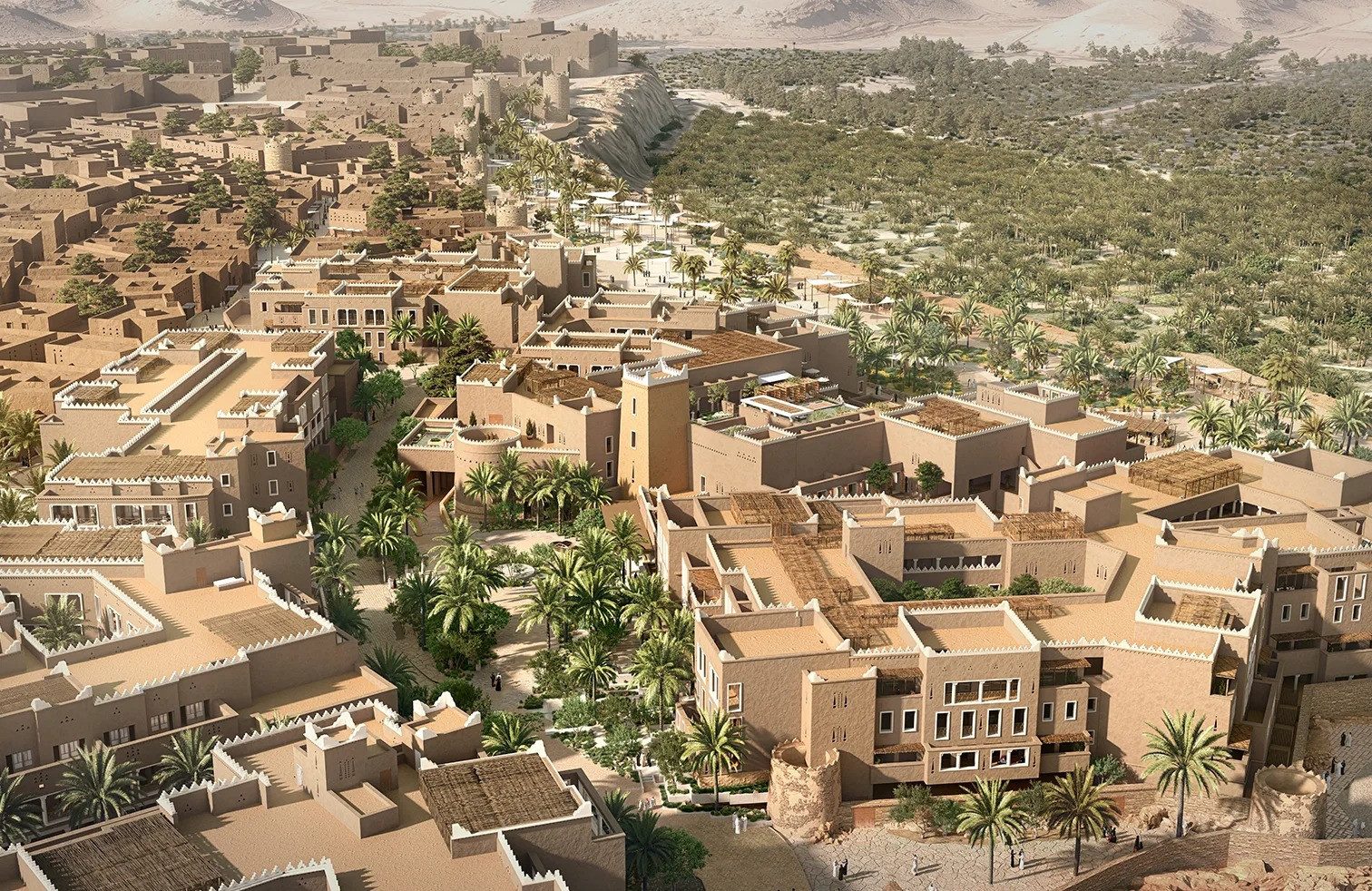
 Photo: Raffles Residences Diriyah, Riyadh — Brand Atlas
8 September 2026 ·7 min read
Branded Residences in Saudi Arabia: The World's Fastest-Growing Pipeline

For most of the last two decades the Saudi luxury buyer bought branded property somewhere else: Dubai, London, Paris, Marbella. The capital left the country because the product did not exist inside it. Vision 2030 changed the physical supply, the regulatory frame and — most importantly — the social permission structure around leisure, hospitality and second-home living.
The result is the most concentrated branded residence build-out in the world. Riyadh alone has more branded units in planning than several European countries combined. The question for a sponsor is no longer whether the market exists. It is which parts of it are commercially underwritten and which are announcements.
Where the market actually is
- Riyadh — the deepest and most bankable market. Diriyah Gate, King Abdullah Financial District, the northern corridors around King Salman International Airport, and New Murabba. Domestic ultra-high-net-worth demand, corporate relocation demand and a genuinely under-supplied prime rental market.
- Jeddah — historic wealth, a mature private-villa culture and a waterfront that finally has a credible development frame. Branded towers and low-rise waterfront product are absorbing at prices Jeddah had never tested before.
- Diriyah — a masterplanned Najdi-architecture district with an unusually dense cluster of luxury brands. Product here is low-rise, heritage-coded and design-controlled to an extent rarely seen in the Gulf.
- AlUla — a UNESCO-listed cultural and desert-wellness market. Small, quota-limited, brand-led resort residences where scarcity is the entire investment thesis.
- Red Sea and Amaala — regenerative-tourism islands and coastal resorts. Branded villa product with a genuine international-buyer angle and an operating model closer to the Maldives than to Riyadh.
- NEOM and Trojena — long-dated, publicly restructured, and to be underwritten on delivered infrastructure rather than renderings.
Why the Saudi premium is real — and where it is overstated
Three structural facts support the premium. First, prime supply is genuinely scarce: Riyadh's high-quality apartment stock is a fraction of Dubai's despite a comparable wealth base. Second, service delivery is the binding constraint in Saudi luxury housing — private compounds have historically provided space without hospitality, so a brand-operated building solves a problem money alone has not. Third, repatriated demand: families who kept a second home abroad are now buying in-Kingdom, and they arrive with an international benchmark for what luxury should feel like.
Where the premium is overstated is in secondary Riyadh locations and in schemes whose brand affiliation is a licence with no operating depth. Saudi buyers are becoming quickly literate. By 2026 the question in the sales gallery is no longer *which brand* but *what does the brand actually run here*.
| Segment | Typical positioning | Indicative premium vs comparable unbranded |
|---|---|---|
| Riyadh prime (DGDA, KAFD, New Murabba) | Hotel-attached and standalone branded towers | 25-45% |
| Diriyah heritage district | Low-rise, design-controlled, hotel-attached | 35-60% |
| Jeddah waterfront | Branded towers and low-rise waterfront | 20-40% |
| AlUla | Scarcity-limited desert and wellness resorts | 40-70% |
| Red Sea / Amaala | Island and coastal resort villas | 30-55% |
The rules that decide feasibility
Saudi Arabia is the Gulf market where regulation has moved fastest, and getting it wrong is expensive:
- 01Foreign ownership. The framework for non-Saudi real estate ownership has been progressively opened, with designated zones and conditions rather than blanket freehold. Underwrite your buyer pool on what is enacted and implemented for your specific plot, not on the direction of travel.
- 02Off-plan sales (Wafi). Off-plan marketing and sale require Wafi licensing, escrow of buyer receipts and approved documentation. Brand fees, technical services payments and construction drawdown all have to be reconciled with the escrow release schedule before the licence is signed.
- 03Masterplan authority control. Inside a giga-project, the developer of record — DGDA, Red Sea Global, Royal Commission for AlUla, NHC — controls design codes, brand approvals, operator standards and sometimes the brand shortlist itself. Brand selection is a joint process, not a sponsor decision.
- 04Saudisation and staffing. Hotel-standard residential service requires a workforce. Nitaqat quotas, training pipelines and the operator's ability to staff to standard in-Kingdom are real underwriting items that affect the service charge for the life of the building.
- 05Zakat, tax and structuring. RETT on transfers, VAT treatment of residential versus serviced components, zakat exposure and the structure through which foreign capital enters all change scheme net economics materially.
Which brands are transacting, and how they are choosing
The active set is broad — Ritz-Carlton, St. Regis, Raffles, Fairmont, Four Seasons, Mandarin Oriental, Rosewood, Six Senses, Aman-tier wellness operators, Nobu, and a growing group of design and fashion houses. What has changed since 2024 is that the brands are now the scarce side of the transaction. Corporate approval committees are turning down Saudi sites that would have been accepted two years ago, for three recurring reasons: sponsor balance-sheet quality, staffing feasibility, and an unrealistic assumption about how quickly the surrounding masterplan will be delivered.
The practical implication for a sponsor is that the brand conversation should open only once land, approvals, funding and the masterplan delivery sequence can be evidenced. Approaching too early burns the relationship, and in a market this concentrated the brands talk to each other.
For design-led positioning in the Kingdom, see our note on [design-led branded residences in Saudi Arabia](/news/design-led-branded-residences-saudi-arabia-2026).
What sponsors get wrong in Saudi Arabia
- Importing a Dubai model wholesale. Dubai's buyer is offshore, investment-led and studio-tolerant. Saudi Arabia's buyer is domestic, family-led and wants three to five bedrooms, privacy, majlis provision and separate family circulation. Unit mixes copied from Business Bay do not sell in Riyadh.
- Designing without cultural fluency. Privacy sequencing, gender-flexible amenity programming, separate service entries and prayer provision are not cosmetic. They determine whether the building works for the family that buys it.
- Assuming infrastructure timing. A residence delivered two years before its district's retail, schools and transport is a rental-void problem disguised as a construction success.
- Underestimating service-charge sensitivity. Saudi buyers coming from private villas have no benchmark for a hotel-standard charge. If it is not explained and demonstrated at sale, it becomes the biggest post-handover dispute in the building.
- Signing a licence built for an offshore investor market. Rental-pool provisions, short-let assumptions and offshore marketing obligations frequently make no sense in a domestic owner-occupier market and cost real money in fees.
The capital picture
Saudi branded schemes are funded by a mix of sovereign and quasi-sovereign platforms, listed and family developers, local bank debt, sukuk and a rising volume of international joint-venture equity attracted by the pipeline's scale. PIF-affiliated masterplan developers frequently sit on the land side, which changes the negotiation: a private sponsor is often taking a development parcel inside someone else's masterplan, with obligations attached.
Capital providers are increasingly underwriting three specific items: the enforceability of the brand licence, the sponsor's ability to fund to completion without pre-sales dependency given escrow rules, and evidence of absorption at the underwritten price point rather than at the launch headline. Schemes that can evidence all three are financing comfortably; the rest are stalling at term sheet.
Outlook to 2030
Expect four shifts. Consolidation of the pipeline — a meaningful share of announced branded units will be re-phased, rebranded or quietly cancelled, and that is healthy. Differentiation by operator capability, as buyers begin resale-testing the first delivered schemes and discover which brands actually run their buildings. The arrival of a genuine secondary market, which will produce Saudi Arabia's first real resale premium evidence — the single most important data point the market currently lacks. And a broadening beyond the giga-projects into well-located infill sites in Riyadh and Jeddah, where land economics are simpler and delivery risk is lower.
Saudi Arabia will not stay the fastest-growing market forever. It is, right now, the one where getting the structure right matters most.
Frequently Asked Questions
Can foreigners buy branded residences in Saudi Arabia?
Non-Saudi ownership has been progressively opened through designated zones and conditional frameworks rather than blanket freehold. Eligibility depends on the specific location, the scheme's status and the enacted implementing regulations at the time of sale, so every scheme should confirm its own buyer pool with counsel before marketing internationally.
Which Saudi city has the most branded residences?
Riyadh, by a wide margin, driven by Diriyah Gate, King Abdullah Financial District, New Murabba and the northern growth corridors. Jeddah is the second market, with AlUla, the Red Sea and Amaala forming a smaller, scarcity-led resort segment.
What premium do branded residences achieve in Saudi Arabia?
Indicatively 25-45% in prime Riyadh, 20-40% in Jeddah, and 35-70% in scarcity-constrained locations such as Diriyah and AlUla. Comparable sets are thin and repricing quickly, so these figures should be tested through a scheme-specific premium study rather than applied as market fact.
Do Saudi branded residences need a Wafi licence?
Yes, off-plan marketing and sale require Wafi licensing with escrow of buyer receipts and approved contractual documentation. This constrains how brand fees and construction can be funded from pre-sales and must be reconciled with the brand's payment and milestone schedule before signing.
Which brands are most active in Saudi Arabia?
Ritz-Carlton, St. Regis, Raffles, Fairmont, Four Seasons, Mandarin Oriental, Rosewood, Six Senses and Nobu are all active, alongside wellness and design-led operators. Inside giga-project masterplans the brand shortlist is frequently shaped by the masterplan developer rather than the parcel sponsor.
See also
Market guides by country
- 'The Future of Branded Residences' — Global Tour 2026
- Branded Residence Ownership Structures Explained: The 2026 Guide
- Hotel-Branded vs Design-Branded Residences: The 2026 Comparison
- What Are Branded Residences? 2026 Definition, Models and Market Size
- Trustworthy Branded Residence Brands in 2026: How to Judge Credibility