May 2026 ·4 min read
Branded Residences in Saudi Arabia & the GCC: 2026 Outlook

The centre of gravity of the global branded residences market has, in less than a decade, shifted decisively to the Gulf. Saudi Arabia and the UAE together now account for more than a third of the world's announced pipeline by unit count, and by 2030 the Kingdom alone is expected to deliver over 50 internationally branded schemes — a figure unmatched by any single country in the history of the category. This is not a cyclical bump. It is a structural repositioning of where the format is being built, sold, and operated.
The Saudi acceleration is anchored in Vision 2030 and its giga-project ecosystem. Diriyah, NEOM, Red Sea Global, Qiddiya, ROSHN, Al Ula and Soudah Development are not, individually, real estate projects in the conventional sense — they are integrated tourism, lifestyle and residential platforms designed around international brand partnerships from inception. Branded residential is, in nearly every case, a core component of the masterplan. The result is a pipeline that is simultaneously larger, more sophisticated, and more brand-dependent than any comparable national market.
Diriyah is the most advanced expression of this model. The historic district of At-Turaif sits at the centre of a masterplan that has secured commitments from a deep roster of luxury hospitality brands — Ritz-Carlton, Four Seasons, Aman, Capella, Raffles, Baccarat, Faena, Oberoi — each with a residential component. The scale is unprecedented: more branded residential units in a single masterplan than most countries deliver in a decade. Pricing already reflects a meaningful brand premium, and resale signals from the first delivered phases suggest the buyer base is genuinely international, not just regional.
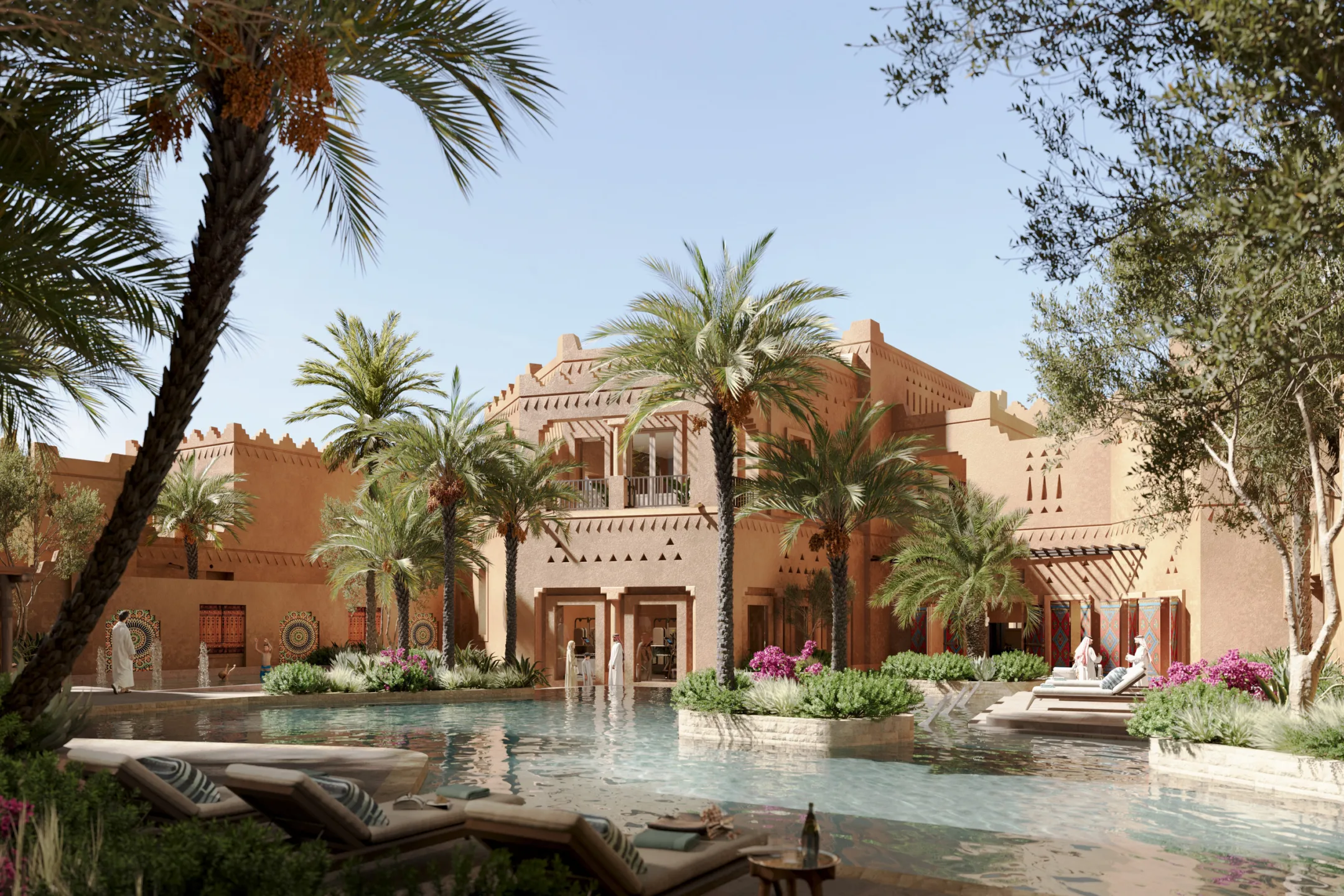
Al Ula occupies a different position in the ecosystem. Where Diriyah is urban and brand-dense, Al Ula is a destination-led market built around a UNESCO World Heritage landscape, a controlled tourism cap and an ultra-low-density residential proposition. The brand partners attached to the masterplan — including Aman, Banyan Tree and a small set of design-led independents — have been selected for their fit with a conservation-first development philosophy. The buyer profile is narrower, the unit count smaller, and the premium structurally higher than in the Riyadh corridor.
Aseer is the most recent of the giga-projects and, in some respects, the most strategically interesting. The Soudah Peaks masterplan introduces a mountain resort category that has not previously existed in the Gulf, anchored on year-round cool-climate tourism. The branded residential pipeline is in early stages, but the format-fit is strong: mountain resort branded residences have been among the highest-performing assets in Europe and North America over the past decade, and the Aseer proposition allows the Kingdom to enter that category at scale.
The UAE story is more mature but no less active. Dubai remains the most internationally legible branded residential market in the world by transaction volume, with new launches across hospitality, fashion, automotive and design categories arriving at a pace no other city can match. Abu Dhabi has emerged as a serious second pole, anchored on Saadiyat Island and Yas Island, with brand entrants — Mandarin Oriental, Nobu, Elie Saab, Bulgari — increasingly building dedicated residential schemes rather than residential extensions to existing hotels.
Qatar, Bahrain and Oman are smaller but structurally meaningful markets. Qatar's branded pipeline has consolidated around a small number of high-quality urban schemes; Oman's is concentrated in the Muscat-Salalah resort corridor; Bahrain has emerged as a credible secondary market for regional buyers seeking lower entry prices.
Three patterns will define the next 24 months in the region. First, brand category diversification: hospitality remains dominant but wellness, design and lifestyle entrants are scaling rapidly. Second, the rise of residential-led masterplans — schemes where the brand is selected for residential fit first and hotel fit second, reversing the historic sequence. Third, a sharpening of the brand-premium spread: the best-executed schemes will continue to extend their premium, while less-integrated 'name-only' projects will see compression as buyers grow more sophisticated.
For developers active in the region, the strategic question is no longer whether to pursue a brand partnership but how to structure one that is genuinely additive over the 20-30 year life of the contract. The most common mistakes we see are signing too early in the masterplan cycle, accepting weak territorial exclusivity terms, and under-resourcing the operational integration. Each of these is fixable at the negotiation stage and very expensive to fix later.
Icon Partners is actively advising developers and giga-project sponsors across the GCC on brand selection, negotiation and post-contract implementation. The pace of new mandates over the past 18 months has been unlike any other region in our portfolio — and the next two years will, in our view, set the tone for branded residential globally for the rest of the decade.
Frequently Asked Questions
How many branded residences are being built in Saudi Arabia?
Saudi Arabia is expected to deliver more than 50 internationally branded residential schemes by 2030, the largest national pipeline in the world. The bulk sits within Vision 2030 giga-projects: Diriyah, NEOM, Red Sea Global, Qiddiya, Al Ula and Aseer.
Which brands are most active in the GCC?
Hospitality brands dominate — Ritz-Carlton, Four Seasons, Aman, Mandarin Oriental, Raffles, Capella and Baccarat all have multiple schemes in development. Fashion (Bulgari, Elie Saab), wellness (Six Senses, Equinox) and design brands are scaling rapidly behind them.
What makes Diriyah significant for branded residences?
Diriyah concentrates more internationally branded residential units in a single masterplan than most countries deliver in a decade, with a deep roster of luxury hospitality partners and a UNESCO-listed historic core. It is currently the most brand-dense branded residential cluster under development globally.
Are branded residences in the GCC a good investment?
Branded schemes in the region typically command a 30-50% premium over comparable non-branded product, with sell-out velocity roughly double. The investment case is strongest in trophy locations with credible operator integration; less-integrated 'name-only' schemes are seeing premium compression as the market matures.
See also
Market guides by country
- 'The Future of Branded Residences' — Global Tour 2026
- Branded Residence Ownership Structures Explained: The 2026 Guide
- Hotel-Branded vs Design-Branded Residences: The 2026 Comparison
- What Are Branded Residences? 2026 Definition, Models and Market Size
- Trustworthy Branded Residence Brands in 2026: How to Judge Credibility