2 August 2026 ·4 min read
Design-Led Branded Residences in Saudi Arabia: The 2026 Landscape

A pipeline built on hospitality so far
Saudi Arabia's branded residential pipeline to date has been built overwhelmingly on hospitality names: Ritz-Carlton Reserve and Baccarat at Diriyah's City of Earth, Rosewood and Clinique La Prairie at Amaala on the Red Sea coast, Faena Residences at Wadi Safar within Diriyah, and a growing roster of operators active across Al Ula, the Red Sea Project and Riyadh's expanding luxury residential districts. JLL's August 2025 analysis of the market, published as The Next Untapped Wave of Branded Residences, frames the Kingdom's branded residential sector as still early in its development relative to the depth of demand identified among Saudi households.
A second wave: fashion and design houses
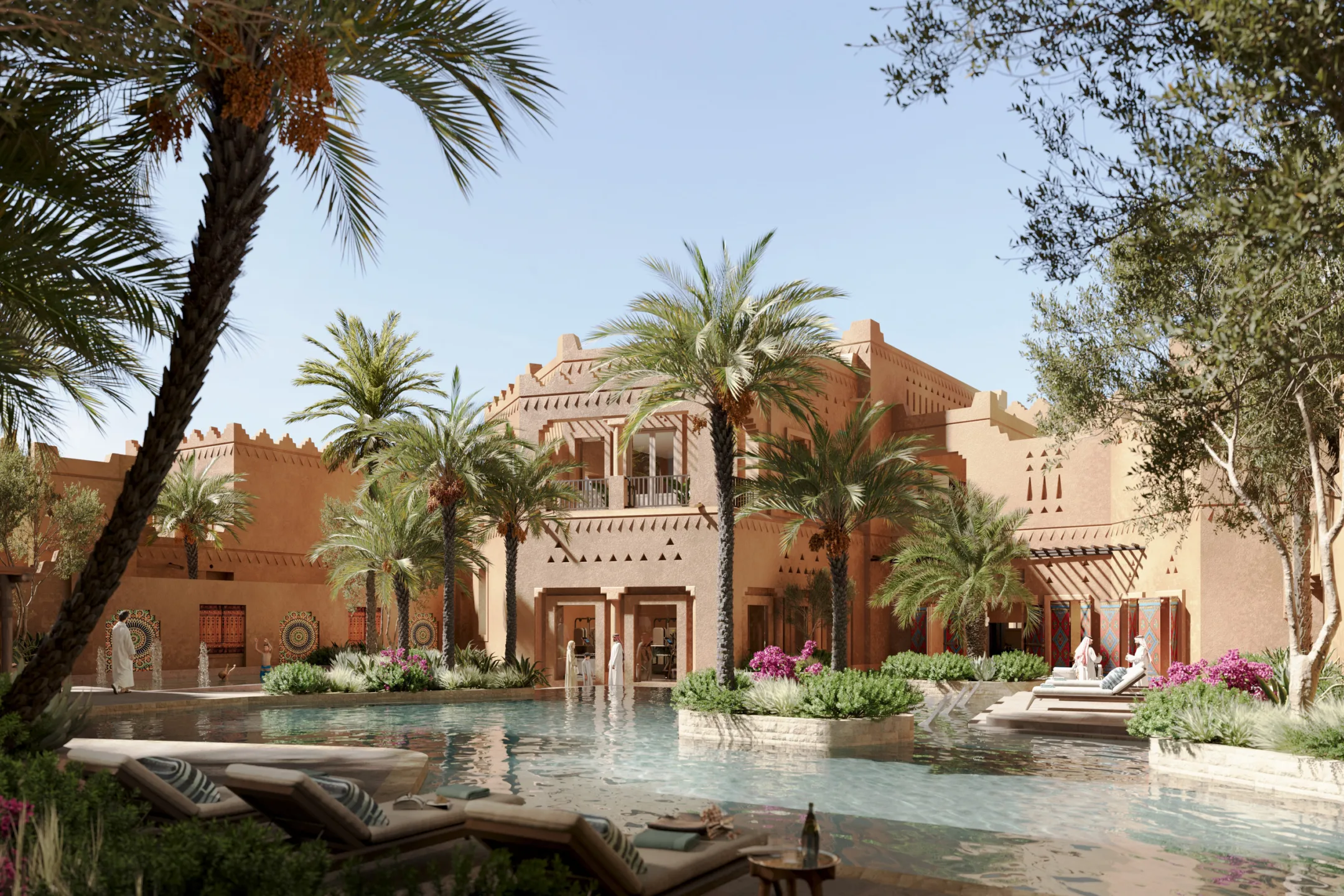
Alongside that hospitality pipeline, a second category is now establishing itself. Diriyah Company announced in March 2025 the launch of Armani Residences Diriyah, marking the Italian design house's debut in the Kingdom within Diriyah's City of Earth district, sitting alongside the Ritz-Carlton Reserve and Baccarat schemes already announced there. It is a template other design and lifestyle brands are expected to follow: authoring architecture and interiors on a residential product situated within a masterplan otherwise dominated by hospitality names, rather than opening a hotel of their own.
Why the demographic argument holds
Knight Frank's 2025 Saudi Report, produced with YouGov and surveying more than 1,000 Saudi households, was cited by Construction Week Online in reporting a substantial pool of private capital, estimated at close to SAR 3.57 billion, being directed towards the Kingdom's branded residential market. The underlying demographic case for design-led product is that Saudi Arabia's luxury buyer base skews notably younger than in many established branded residence markets, with strong domestic, rather than purely expatriate or investor, demand for fashion, design and automotive names. For a buyer in their thirties who already engages with a maison through fashion or an automotive purchase, that association can carry more immediate resonance than a hospitality group primarily associated with travel.
A differentiation argument, not only a demand argument
There is also a straightforward supply logic. As the giga-projects deliver dozens of hospitality-branded schemes into adjoining corridors of Diriyah, the Red Sea and Riyadh, several neighbouring plots risk carrying comparable five-star hospitality names and near-identical service propositions. A design house entering as an authoring partner, rather than as one more hotel operator, gives a sponsor a distinct identity within a masterplan where hospitality branding alone is at risk of becoming a commodity.
Operations are the real constraint
The limiting factor is not brand appetite but service delivery. Design houses do not arrive with a residential operating platform, trained staff or a reservations and standards infrastructure; that has to be built or contracted separately. Saudi Arabia's residential service labour market is itself still maturing alongside the pipeline, which means a design-led scheme in Riyadh or Diriyah needs a credible hospitality operator engaged from the outset, with staffing plans, training programmes and service standards written into the development agreement rather than added later. Where that sequencing has been skipped in other emerging branded residence markets, the design premium has typically eroded within a few years of handover as service quality failed to match the architectural promise.
Regulatory and masterplan controls
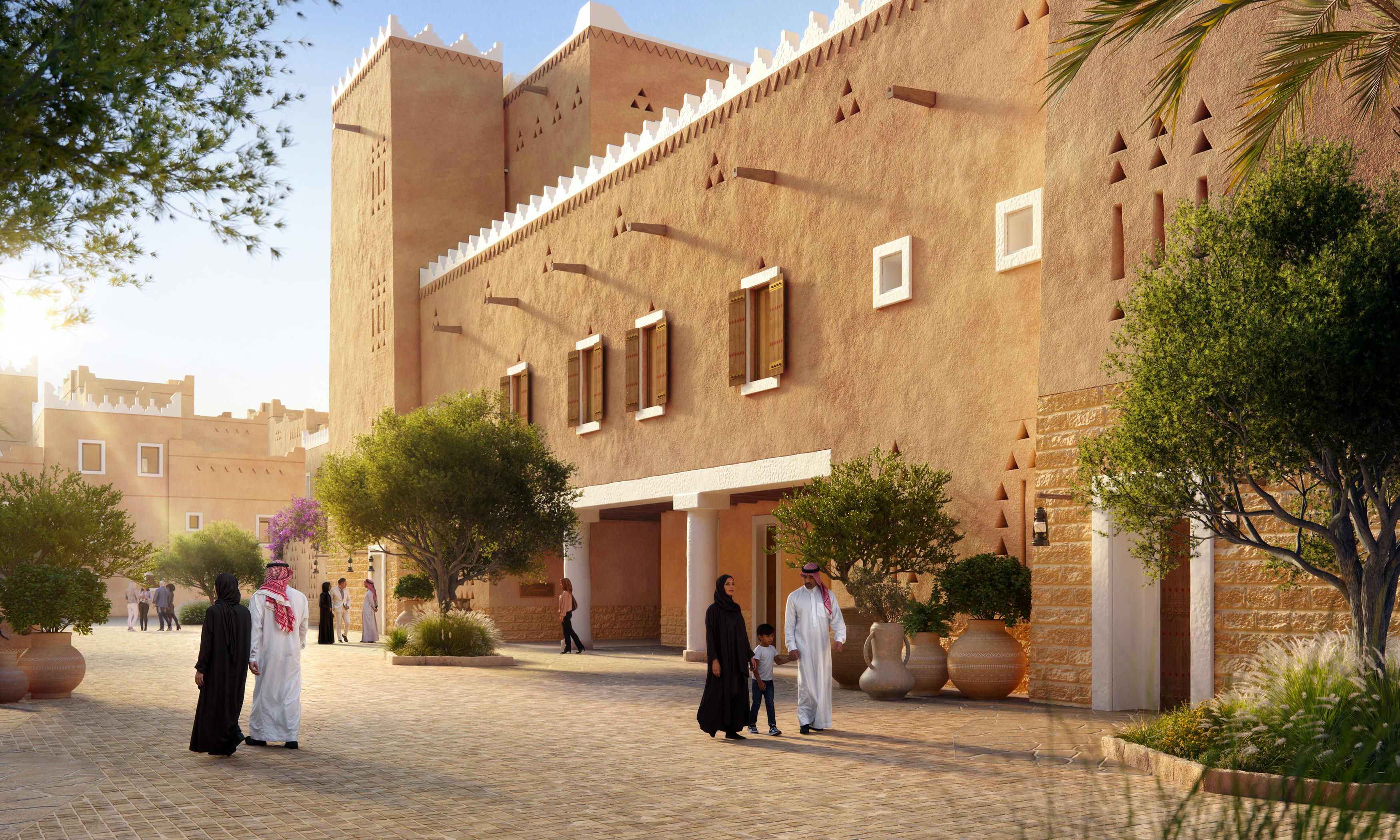
Which brands can operate on which plots is also shaped by ownership rules and by the design review authority retained by master developers within the giga-projects. Diriyah Company and equivalent master developers apply their own architectural and heritage codes across districts such as Diriyah's historic core and Al Ula, and design-led schemes proposing a strongly authored, brand-specific aesthetic can face more demanding review in those heritage-sensitive zones than a hospitality-branded scheme following a more conventional resort design language. Sponsors should confirm early in the process whether a masterplan's design code constrains the degree of brand-specific expression a design house can actually deliver on a given plot.
The hybrid model likely to dominate
The pattern emerging across schemes currently in negotiation, and visible already in the Armani Residences Diriyah structure sitting alongside hospitality-branded neighbours, points towards a hybrid becoming standard through 2026-2028: a design or lifestyle maison authoring architecture and interiors, paired contractually with a hospitality operator running the residential service platform. That combination delivers the identity younger Saudi buyers are shown to respond to in Knight Frank's survey work, alongside the trained service depth that price points in these developments require, without asking a design house to build hospitality capability it does not have.
What this means for sponsors
The practical sequence for a sponsor considering a design-led scheme does not change from any other branded residence decision: establish what the site, the masterplan's design code and the buyer pool actually support, size the required service model honestly against realistic staffing costs in the current Saudi labour market, and only then select the brand, or the brand pairing, capable of delivering both the identity and the service standard the price point demands. Getting that sequence backwards, by securing a design name before confirming who will operate the building, is the most common route to a scheme that photographs well at launch and underperforms on service within its first few years.
Frequently Asked Questions
Which design or fashion brands have entered Saudi Arabia's branded residence market?
Armani entered in March 2025 with Armani Residences Diriyah within Diriyah's City of Earth district, marking its residential debut in the Kingdom. It sits alongside hospitality-branded schemes such as Ritz-Carlton Reserve and Baccarat in the same masterplan, and further design, fashion and automotive names are expected to follow a similar pairing model.
Why are fashion and automotive brands pursuing residential projects in Saudi Arabia specifically?
Knight Frank's 2025 Saudi Report found strong domestic appetite among a comparatively young Saudi luxury buyer base, with meaningful demand for fashion, design and automotive names alongside traditional hospitality brands, supported by an estimated pool of private capital in the region of SAR 3.57 billion targeting the sector.
Can a design house operate a residential building on its own?
Generally not credibly. Design houses typically lack a trained residential service platform, staffing model and reservations infrastructure, so design-led Saudi schemes are increasingly structured as a design house authoring architecture and interiors paired with a separate hospitality operator running day-to-day residential service.
Do heritage districts like Diriyah and Al Ula restrict design-led branded residences?
Yes. Master developers retain design review authority and apply masterplan-specific architectural and heritage codes, particularly in historically sensitive districts. A strongly brand-specific design aesthetic can face more demanding review there than a more conventional hospitality-branded scheme, so this should be confirmed with the master developer early in planning.
What is the biggest risk for a design-led branded residence in Saudi Arabia?
Under-investing in the operating side. If a scheme secures a well-known design or fashion name before confirming a credible hospitality operator, staffing plan and training programme, the architectural premium tends to erode within a few years of handover as service quality fails to match the design promise, a pattern already visible in other emerging branded residence markets.
See also
Market guides by country
- 'The Future of Branded Residences' — Global Tour 2026
- Types of Branded Residences in 2026: Categories, Formats and Ownership Models
- What Are Branded Residences? The Definitive 2026 Guide
- Branded Residence Ownership Structures Explained: The 2026 Guide
- What Are Branded Residences? 2026 Definition, Models and Market Size