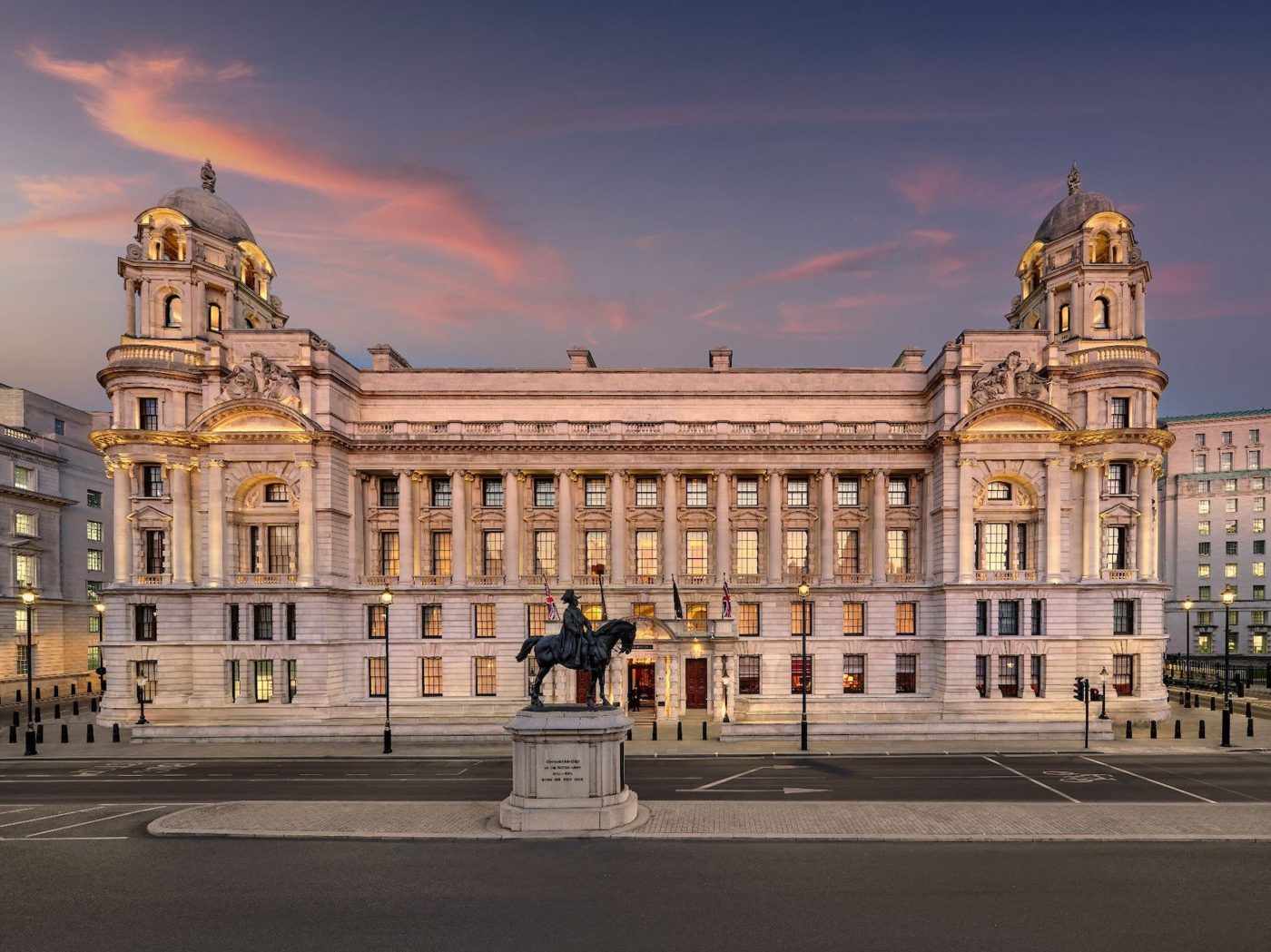
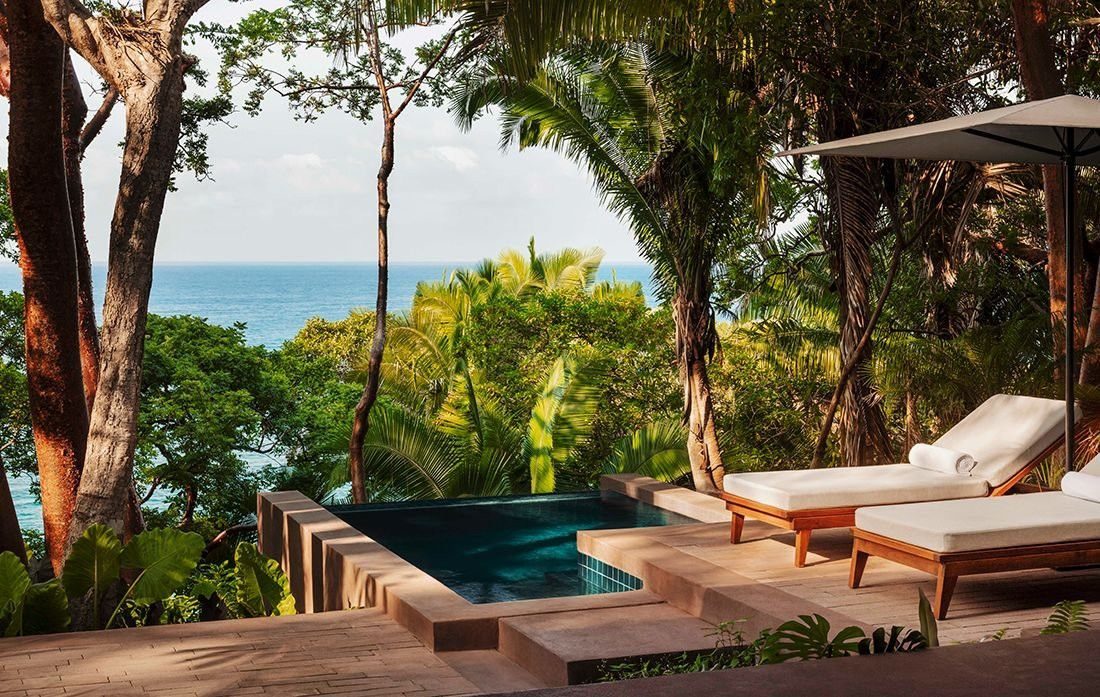
 Photo: One&Only Mandarina Private Homes, Riviera Nayarit — Brand Atlas
10 September 2026 ·6 min read
Branded Residences in Mexico: The Americas' Most Productive Resort Market

Mexico did branded residences before most of the world had a name for them. Los Cabos and Punta Mita were selling hotel-affiliated villas when the Gulf was still building its first hotels. That maturity matters: Mexico has something very few markets have — two decades of resale evidence and rental performance data across multiple cycles.
Where the market actually is
- Los Cabos (San José del Cabo and Cabo San Lucas) — the most institutional resort market in Mexico. Deep US and Canadian buyer base, direct flights from a dozen North American cities, and the country's strongest branded resale evidence.
- Riviera Nayarit (Punta Mita, Litibú, Mandarina) — the high-design, low-density end of the market. Jungle-meets-ocean product, strong Mexican ultra-high-net-worth participation alongside US buyers.
- Riviera Maya (Playa del Carmen, Tulum, Mayakoba) — the highest-volume market and the most uneven. Mayakoba is institutional; parts of Tulum are not. Infrastructure, title quality and municipal permitting vary street by street.
- Mexico City (Polanco, Lomas, Reforma, Santa Fe) — an urban branded market driven by domestic wealth, corporate relocation and, since 2021, sustained international in-migration.
- Emerging: Costalegre and Baja's Pacific coast — early-stage, brand-led, and the location of the next generation of low-density luxury schemes.
The ownership question every foreign buyer asks
Foreigners cannot hold direct title to residential land within 50 kilometres of the coast or 100 kilometres of a border — the *restricted zone*, which covers virtually every resort market in the country. The established solution is the fideicomiso: a Mexican bank trust, renewable, typically 50 years, under which the buyer holds full beneficial rights to use, lease, improve, sell and bequeath the property.
It is a well-worn structure and it is not a lesser form of ownership, but three points matter commercially:
- 01It has an annual cost — trustee fees recur for the life of the trust and belong in the buyer's total cost of ownership, alongside the service charge.
- 02Corporate ownership is an alternative for certain uses, particularly where the property is genuinely commercial or rental-operated, but it changes the tax picture and requires advice.
- 03Title provenance is the real risk, not the trust. Ejido land — communally held agrarian land — has generated a long history of disputes in resort municipalities. Title diligence back through the regularisation chain is mandatory, and it is where international sponsors most often get hurt.
| Segment | Typical positioning | Indicative premium vs comparable unbranded |
|---|---|---|
| Los Cabos | Hotel-attached resort villas and residences | 25-45% |
| Riviera Nayarit | Low-density design and resort brands | 30-50% |
| Riviera Maya / Mayakoba | Resort-attached with rental programmes | 20-40% |
| Tulum (non-masterplanned) | Boutique and lifestyle affiliations | 10-25% |
| Mexico City | Urban hotel and design-branded towers | 15-30% |
Why the rental story drives everything
In most branded markets the rental programme is a secondary benefit. In Mexico it is frequently the deal. A branded resort residence in Los Cabos or Punta Mita can produce meaningful dollar income during high season from a buyer pool that treats it as a hybrid of second home and yield asset.
That means the rental programme structure deserves as much scrutiny as the brand. The questions that decide returns: is the pool mandatory or elective; how is rotation allocated between units; what is the owner-use blackout during peak weeks; what share does the operator retain; who funds FF&E replacement and on what cycle; and are furnishing packages specified by the operator at a cost the pro forma actually carries. For the mechanics, see our comparison of [rental pools versus private letting](/news/branded-residence-rental-pool-vs-private-letting-2026).
The second-order issue is tax. Rental income earned in Mexico is taxable in Mexico, with withholding and IVA implications that differ depending on whether the owner is resident, how the property is held and whether the operator is the contracting party. US owners additionally have home-country reporting obligations. A scheme that markets a headline yield without setting out the net-of-tax position invites a credibility problem at handover.
Which brands work here
Mexico is a genuine hotel-brand market. Four Seasons, One&Only, Ritz-Carlton, St. Regis, Waldorf Astoria, Rosewood, Auberge, Montage, Nobu, Park Hyatt and SLS all have residential product either delivered or under way, and buyers correctly read an attached hotel as the source of both service and rental distribution.
Two Mexican features are worth noting. First, the strongest performers are almost always hotel-attached rather than licence-only, because the rental thesis depends on a real operating platform. Second, design and lifestyle brands work best at the boutique scale — Tulum and Nayarit reward character; Los Cabos rewards operational reliability.
What sponsors get wrong in Mexico
- Underwriting infrastructure that the municipality has not funded. Water supply, wastewater treatment and road access in Quintana Roo and coastal Nayarit are the most common cause of delivery slippage and of post-handover reputational damage.
- Ignoring environmental permitting. MIA authorisation, coastal federal zone (ZOFEMAT) concessions and mangrove protection are enforceable, slow and politically sensitive. They should be resolved before the brand is approached, not during technical services.
- Pricing in pesos and thinking in dollars. Construction cost is largely peso-denominated and sale prices are largely dollar-denominated. Currency movement can swing a margin by more than the brand premium earns.
- Over-relying on the US buyer. Mexican ultra-high-net-worth demand is deeper than most foreign sponsors assume and behaves differently — larger units, longer holds, less rental interest. A scheme built only for the Texan buyer leaves half the market on the table.
- Treating Tulum as one market. Masterplanned, serviced, title-clean Tulum and the rest of Tulum are not the same asset class and should never share a comparable set.
The capital picture
Mexican resort development is funded through local and international private equity, US-dollar structured debt, family capital and increasingly through joint ventures where an international operator-adjacent platform partners with a Mexican sponsor holding land and permits. Pre-sales are a genuine funding source here in a way they are not in escrow-constrained markets, which is precisely why buyer protections and completion guarantees are scrutinised so closely by counsel.
For sellers, Mexico has an advantage most emerging resort markets lack: an exit market. Stabilised branded resort assets with credible rental histories trade to institutional and family-office buyers at yields that make development viable. That is a capital-cycle maturity Southeast Asia and the Gulf are still building.
Outlook to 2030
Three trends define the next cycle. Quality separation — the first delivered generation of Tulum product is now resale-testing, and the gap between masterplanned and improvised schemes will become visible in price. Migration up the coast, as Costalegre, the Baja Pacific and secondary Nayarit absorb the demand that Los Cabos land prices have pushed out. And institutionalisation of the rental layer, with operators standardising owner economics and reporting to a level that lets funds underwrite branded resort residential as a real asset class rather than a lifestyle trade.
Mexico's advantage is not the premium. It is that the premium is provable.
Frequently Asked Questions
Can foreigners buy branded residences in Mexico?
Yes. Within the restricted zone — 50 kilometres from the coast and 100 kilometres from a border, which covers every major resort market — foreign buyers hold property through a fideicomiso, a renewable Mexican bank trust that confers full beneficial rights to use, lease, improve, sell and bequeath. Corporate ownership is an alternative in some commercial-use cases.
Which Mexican market has the strongest branded residence resale evidence?
Los Cabos and Punta Mita. Both have more than a decade of branded resale and rental data across multiple cycles, which makes them the only Mexican markets where premium claims can be tested against transactions rather than against launch pricing.
Are rental returns in Mexican branded residences reliable?
They can be strong in dollar terms in established resort markets, but they depend entirely on the rental programme structure — rotation, owner-use blackouts, operator share, FF&E reserve and the tax treatment of Mexican-source rental income. Net-of-cost and net-of-tax returns are frequently much lower than headline gross yields.
What is the biggest risk in Mexican resort development?
Land title provenance and infrastructure. Ejido land history has produced long-running disputes in resort municipalities, and water, wastewater and road capacity in parts of Quintana Roo and Nayarit are not funded to match the development pipeline. Both belong in diligence before a brand is approached.
See also
Market guides by country
- 'The Future of Branded Residences' — Global Tour 2026
- Branded Residence Ownership Structures Explained: The 2026 Guide
- Hotel-Branded vs Design-Branded Residences: The 2026 Comparison
- What Are Branded Residences? 2026 Definition, Models and Market Size
- Trustworthy Branded Residence Brands in 2026: How to Judge Credibility