Mar 2026 ·3 min read
The Wellness Premium: How Equinox, Aman and Clinique La Prairie Are Rewriting the Playbook

The global wellness real estate sector is now valued at $548 billion and projected to expand sharply through the decade, according to the Global Wellness Institute. For branded residences, this is no longer a peripheral trend — it is the single fastest-moving competitive front, and it is rewriting the rules of brand selection.
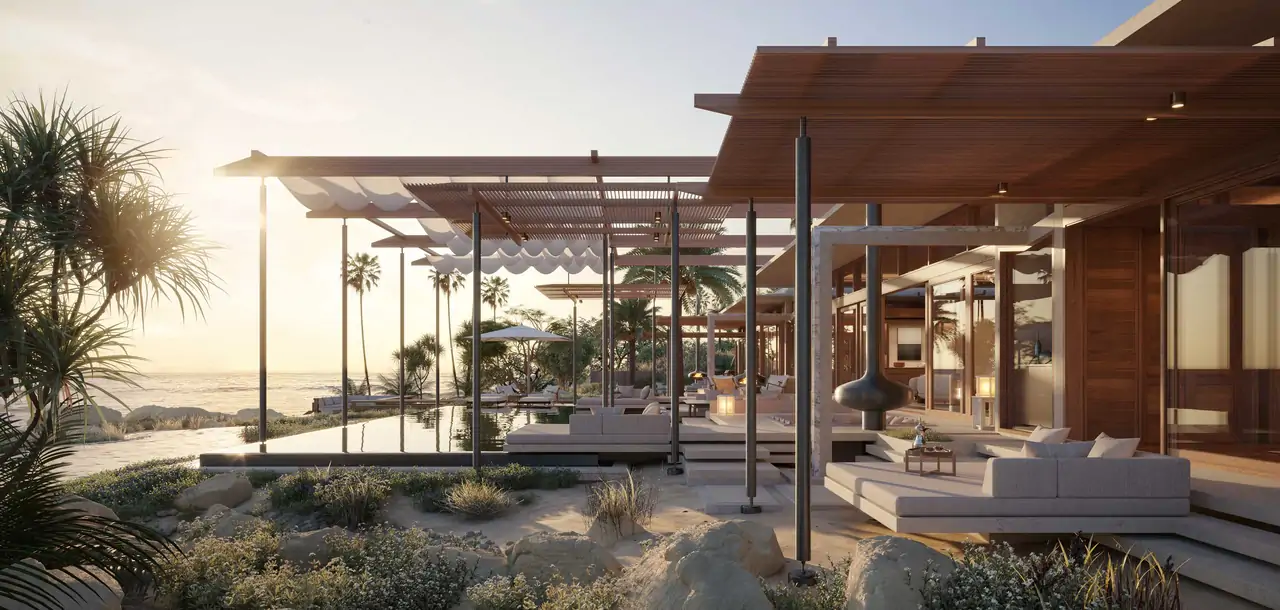
Three moves in the past eighteen months illustrate the scale of the shift. Equinox Hotels signed with Red Sea Global to deliver a flagship residence-led project at Amaala on Saudi Arabia's northwestern coast. Aman opened its first standalone residences in Tokyo, anchored by a wellness programme rather than a hotel. And longevity brands such as Clinique La Prairie and Jayasom are now being courted by developers as residential partners in their own right.
What makes this wave different from earlier 'spa-led' residential is the depth of the proposition. Buyers are no longer paying a premium for a well-equipped gym and a treatment menu. They are paying for biometric personalisation, longevity diagnostics, recovery science, sleep optimisation, nutrition programming and a coherent operating philosophy that extends from the apartment into the resident's daily routine.
Nobu Residences at 619 Brickell, unveiled in late April, makes the point explicitly: the development is being marketed as Miami's first residential tower built around longevity and biohacking, with hospitality treated as a supporting layer. It is a positioning that would have been unthinkable five years ago — and it is achieving pricing on par with established luxury hotel brands.
For developers, the operational implications are significant. A wellness-led residence is not a hospitality residence with extra equipment. It requires different staff profiles (clinicians and coaches alongside concierges), different service protocols, different data infrastructure and a different relationship with the brand partner. The brand is not just licensing a name; it is delivering a clinical and behavioural programme that must be embedded in the building from day one.
The premium is real. Where hospitality brands have historically commanded 25–40% over comparable non-branded product, the early data on wellness-led schemes suggests premiums in a comparable range — and, in selected projects, materially higher. Critically, the buyer demographic is younger, with a stronger orientation toward primary residence use rather than investment.
This last point matters. A residence occupied year-round by an engaged resident generates higher service revenues, stronger community dynamics and better long-term asset performance than a building of investor-owned absentee units. For developers thinking about ten-year asset value rather than handover-day pricing, wellness brands offer a structurally different — and arguably more durable — proposition.
The risk, as with any fast-moving category, is brand inflation. Not every wellness label has the operating capability to deliver on the promise, and the gap between marketing claim and delivered experience will become the defining quality test of the next cycle. The brands that win will be those that can operationalise their philosophy at residential scale, week in and week out, for thirty years.
At Icon Partners, we are advising an increasing number of developers on wellness brand selection and integration. The questions are harder, the partner universe is wider, and the operating model is more demanding. But the upside — in pricing, velocity and long-term resident engagement — is among the most compelling we have seen in the sector.
Types of branded residences
- Types of Branded Residences in 2026: Categories, Formats and Ownership Models
- Hotel-Branded vs Design-Branded Residences: The 2026 Comparison
- Design-Led Branded Residences in Saudi Arabia: The 2026 Landscape
- Lifestyle Brands Reshape Luxury: The 30% Tipping Point
- Branded Residences in Slovenia: Alpine Wellness, Small Scale and Real Constraints