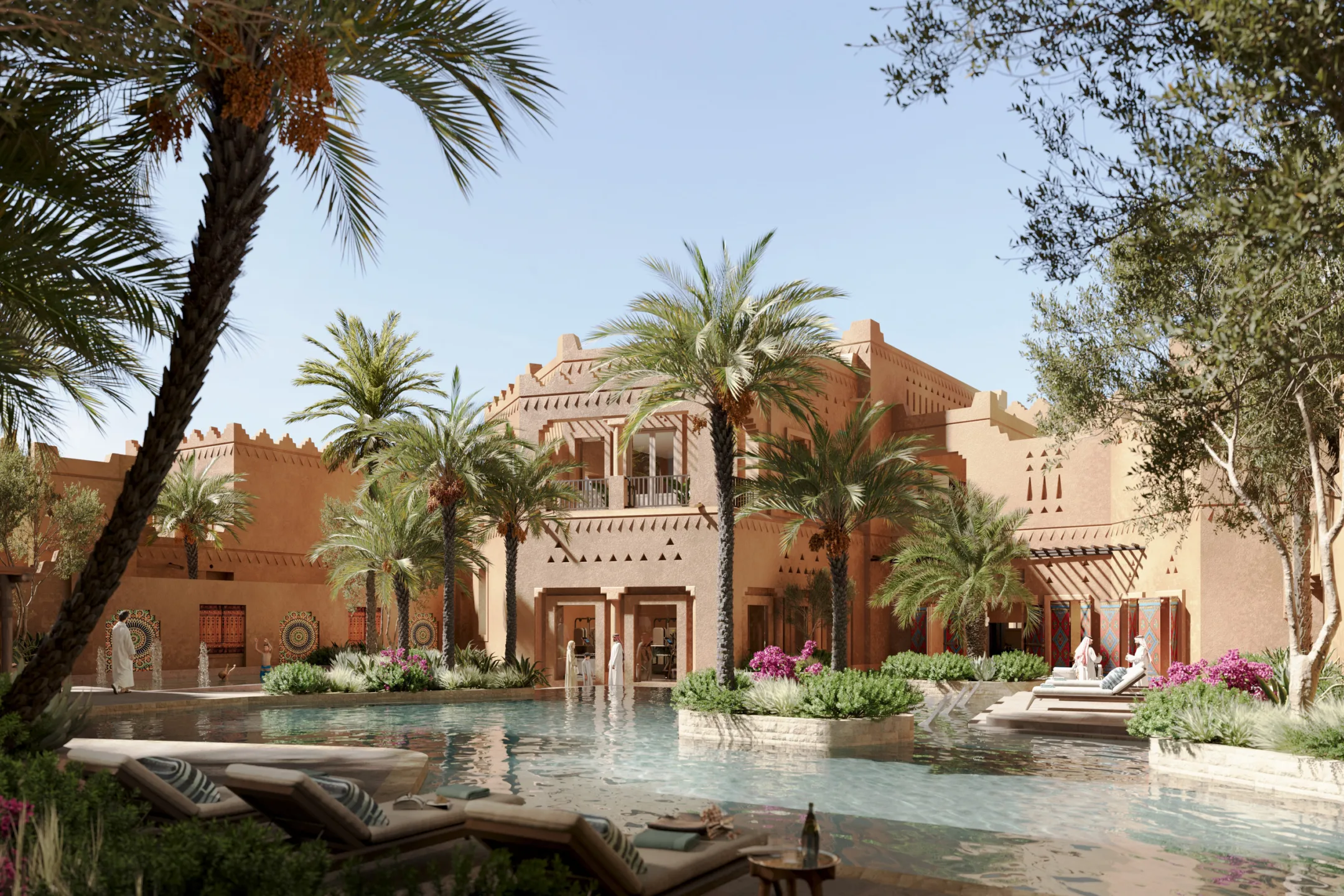
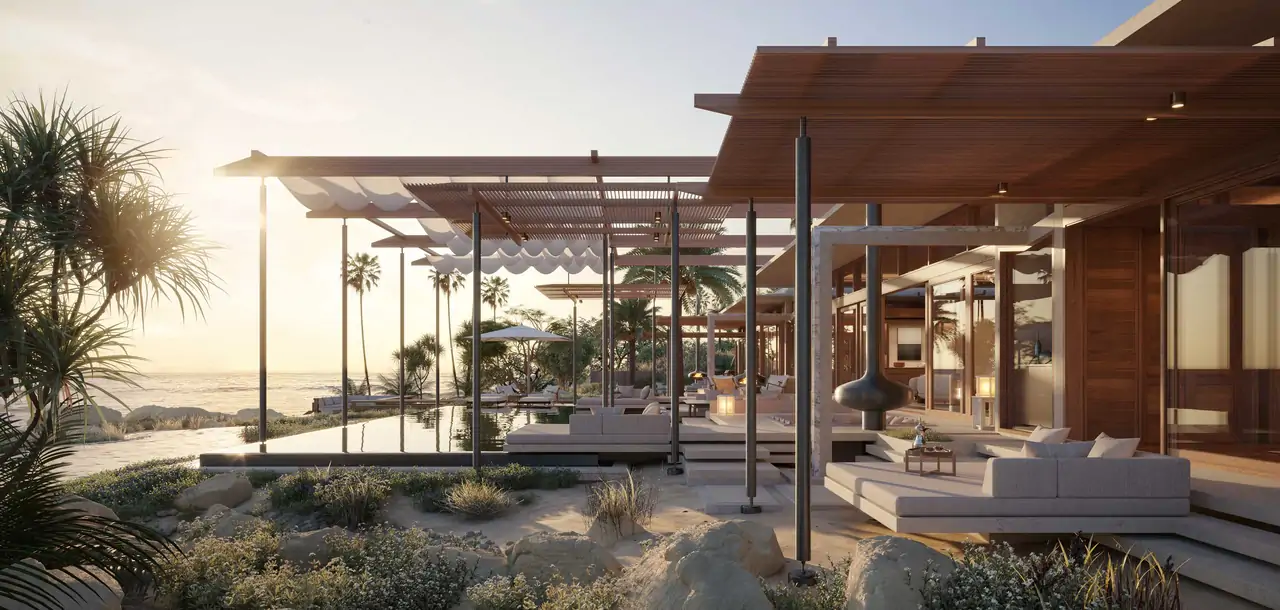
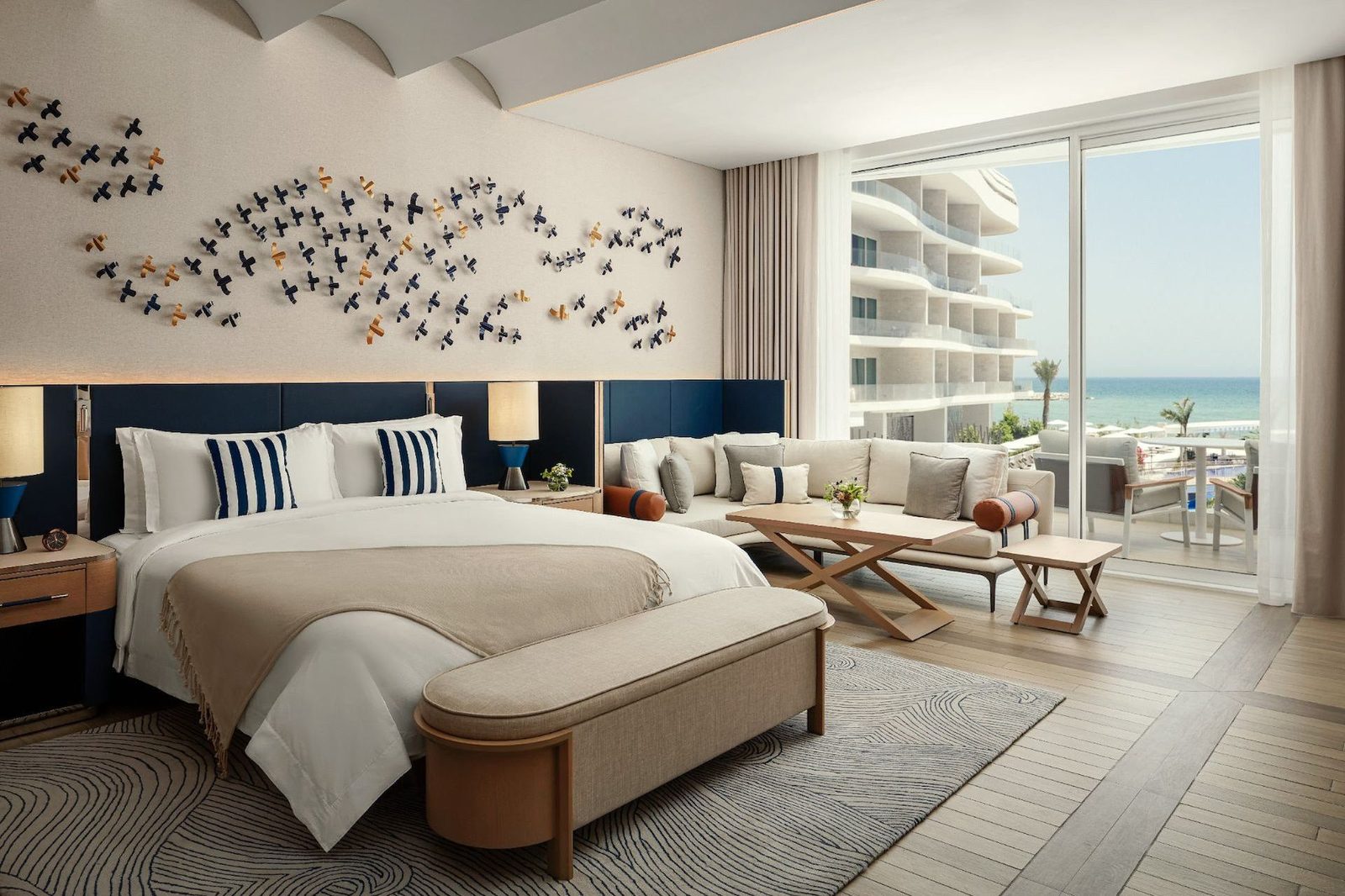
 Photo: St. Regis Muscat — Brand Atlas
26 August 2026 ·4 min read
Branded Residences in Oman: The Understated Alternative

Every Gulf market claims differentiation. Oman actually has it. The Hajar mountains, the Musandam fjords, the Dhofar monsoon belt and hundreds of kilometres of undeveloped coastline give the Sultanate a physical setting that cannot be replicated by masterplanning. The strategic question is whether the market can convert that into a branded residential proposition at scale — and the honest answer is that it can, but only for a specific kind of brand.
Why tower brands do not translate
The operators that dominate Dubai's skyline built their residential proposition around urban density, concierge service and address prestige. Transplanted to Muscat or Musandam, that proposition has nothing to attach to. The brands that work in Oman are the ones whose identity is built on place, nature and wellness rather than urban status.
- Conservation and nature-led operators, whose brand standards are about site sensitivity and low-impact design rather than marble specification.
- Wellness and longevity brands, for which Oman's landscape and relative quiet are a genuine product input.
- Boutique luxury operators running small key counts where the economics work at forty villas rather than four hundred apartments.
The corollary is that scheme sizes are smaller, absolute revenues are lower, and the development margin has to come from a higher price per unit rather than volume. That is a different underwriting model, and sponsors used to Gulf tower economics frequently misjudge it.
The Integrated Tourism Complex framework
Oman's Integrated Tourism Complex (ITC) designation is the mechanism that permits foreign freehold ownership, and it is the single most important structural fact for any branded scheme in the Sultanate. Property within an approved ITC can be sold freehold to non-Omanis, typically with residency implications for the owner and immediate family.
- 01Confirm ITC designation before anything else. Without it, the addressable buyer pool shrinks dramatically.
- 02Understand the tourism component obligation. ITC approval is conditional on a genuine tourism offer, not a residential estate with a gate.
- 03Model the hotel component honestly. In many ITCs the hotel is a planning requirement that does not stand alone commercially; the residential must carry it.
- 04Check the residency terms currently attached, which have been adjusted over time.
- 05Verify infrastructure delivery responsibility — remote sites can carry substantial off-site cost.
Where the opportunity sits
| Area | Character | Branded fit |
|---|---|---|
| Muscat (Al Mouj, Yiti, Bandar Jissah) | Capital, established ITCs | Resort-urban hybrid, family end-user |
| Musandam | Fjord landscape, dramatic and remote | Ultra-boutique, conservation-led |
| Dhofar / Salalah | Monsoon season, tropical anomaly | Seasonal resort, regional GCC demand |
| Duqm and central coast | Industrial-adjacent, long horizon | Not yet a branded residential market |
Salalah deserves specific attention. The khareef monsoon turns Dhofar green while the rest of the Gulf is at its most punishing, producing a genuine seasonal demand inversion. Regional GCC families travel there precisely because it is unlike everywhere else they can reach in three hours. That is a defensible seasonal proposition, though it carries the same off-season service-charge challenge as any seasonal market.
What premium is achievable
Oman's branded premium is typically 20-35% over comparable unbranded prime stock, but the more relevant metric is that branded product in the right location expands the addressable buyer pool beyond the domestic market entirely. For a remote ITC, the brand is not adding a percentage to a known price — it is making the asset saleable to an international buyer who would otherwise never consider the location.
Pitfalls
- Importing a UAE density assumption into a planning culture that will not permit it.
- Pursuing a tower operator for a low-rise coastal or mountain site.
- Underestimating off-site infrastructure on remote parcels.
- Treating the ITC hotel component as a profit centre when it is usually a cost of access.
- Assuming year-round demand in Dhofar or on exposed coastal sites.
Outlook
Oman will not produce volume, and it should not try to. Its opportunity is a small number of exceptional, low-density, nature-led branded schemes that command genuine international attention because there is nothing comparable elsewhere in the Gulf. For the right sponsor with the right brand and a realistic view of scale, it is one of the more interesting propositions in the region.
Frequently Asked Questions
Can foreigners buy property in Oman?
Yes, within designated Integrated Tourism Complexes (ITCs), where property can be sold freehold to non-Omanis, typically with residency implications for the owner and immediate family. ITC criteria and the attached residency terms have been adjusted over time, so confirm the current framework with the Omani authorities.
Which brands suit the Omani market?
Nature-led, conservation and wellness operators whose identity is built on place rather than urban prestige, along with boutique luxury brands that work economically at forty villas rather than four hundred apartments. Urban tower operators translate poorly because their proposition depends on density and address prestige that Oman deliberately does not offer.
Is Salalah a viable branded residence market?
It has a genuine and defensible seasonal proposition: the khareef monsoon makes Dhofar green during the Gulf's hottest months, drawing regional GCC families. The constraint is the same as any strongly seasonal market — the service-charge and staffing model must work across the off-season, not just at peak.
What premium do branded residences achieve in Oman?
Typically 20-35% over comparable unbranded prime stock. More importantly, in remote or emerging locations the brand's main function is expanding the addressable buyer pool to international purchasers rather than adding a percentage to an established local price.
See also
Market guides by country
- 'The Future of Branded Residences' — Global Tour 2026
- What Are Branded Residences? The Definitive 2026 Guide
- Branded Residence Ownership Structures Explained: The 2026 Guide
- Hotel-Branded vs Design-Branded Residences: The 2026 Comparison
- What Are Branded Residences? 2026 Definition, Models and Market Size