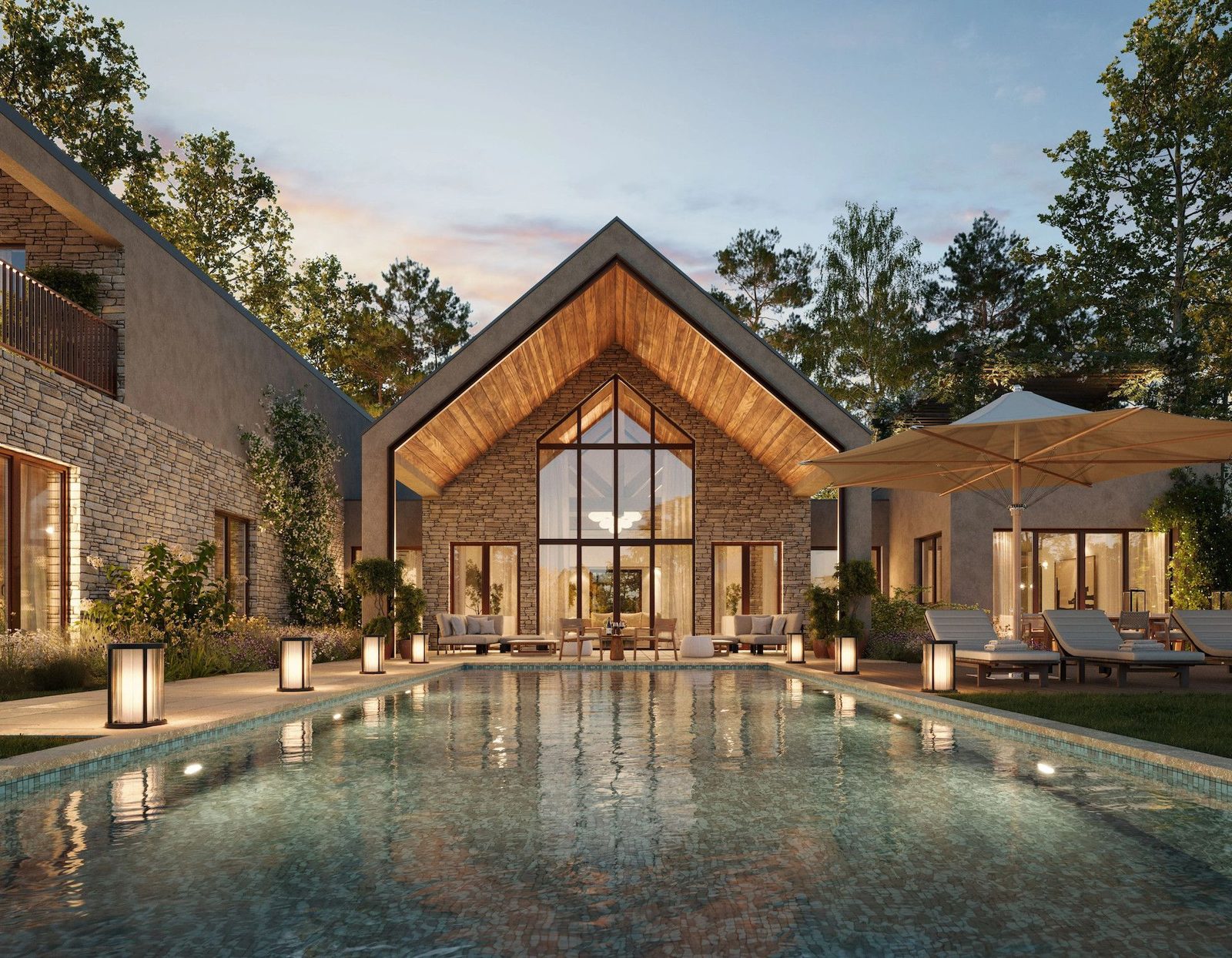
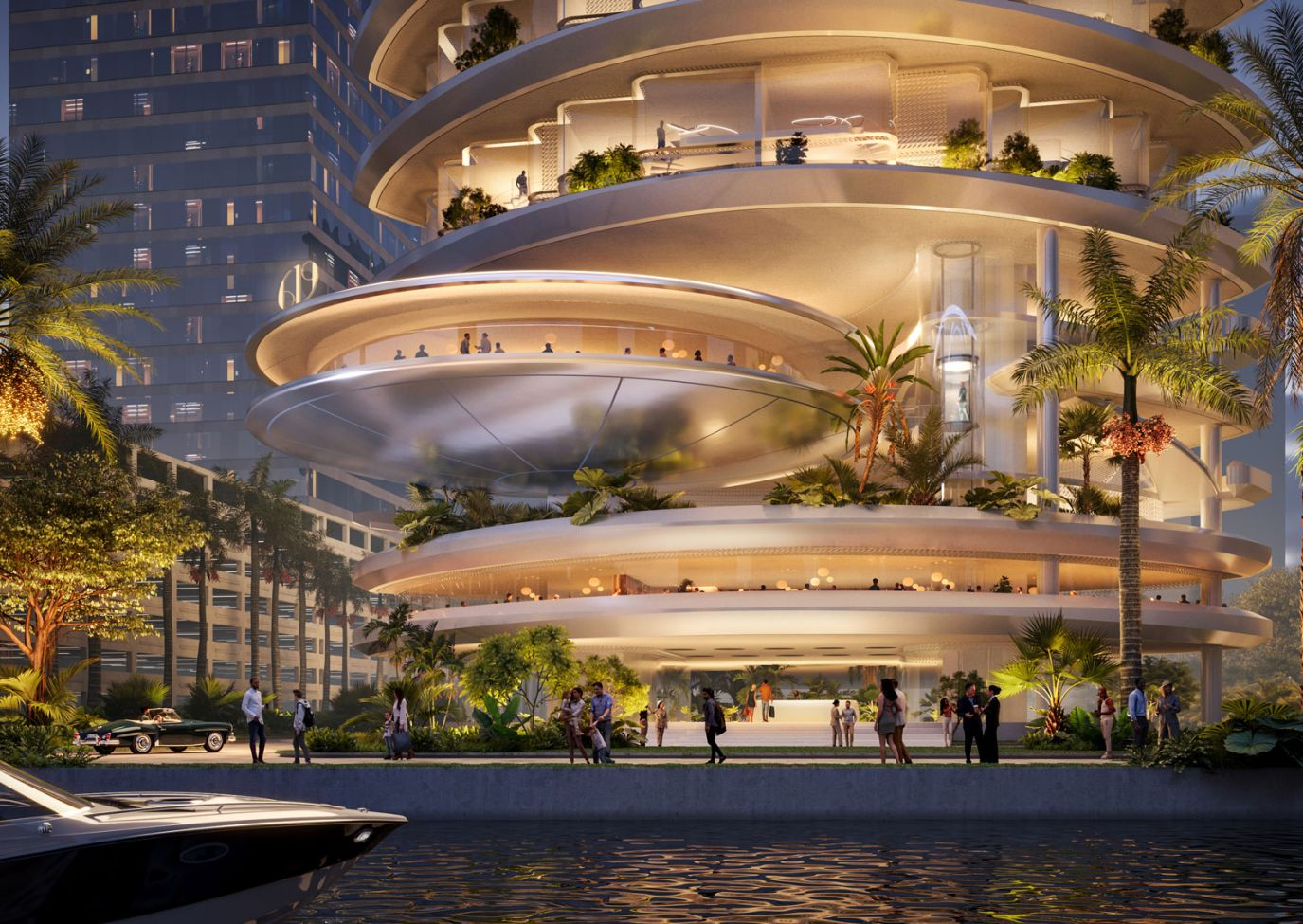
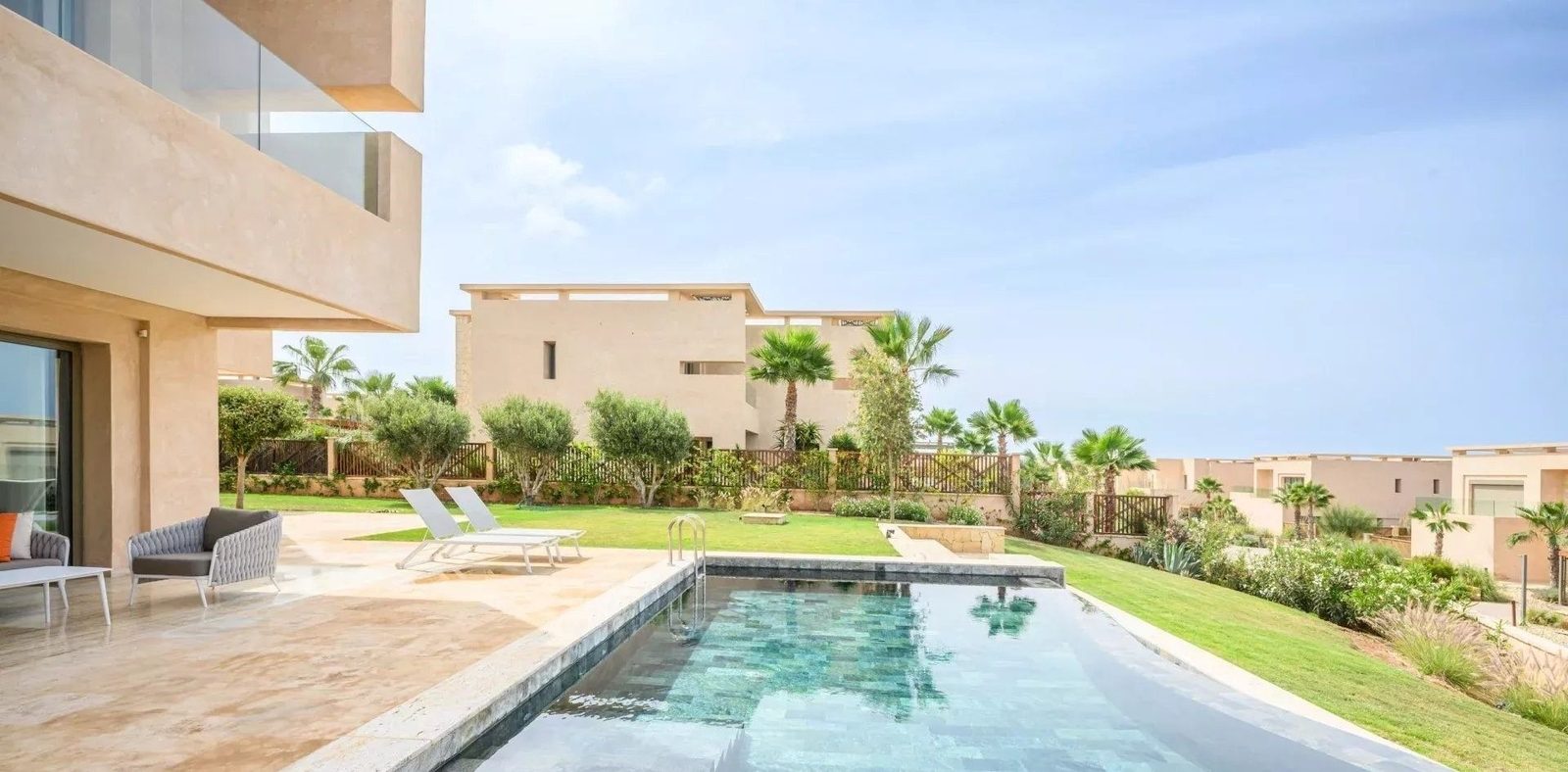
 Photo: Fairmont Taghazout Bay Residences, Agadir coast — Brand Atlas
8 September 2026 ·6 min read
Branded Residences in Morocco: The Quiet Rise of a Mediterranean and Atlantic Contender

Morocco has been selling luxury real estate to foreigners for thirty years. What it has not done, until recently, is sell it with an operator's name and an operator's obligations attached. That is now changing across five distinct markets, each with a different buyer, a different price ceiling and a different risk profile.
This guide is written for sponsors weighing a branded scheme in Morocco and for buyers trying to understand what the premium actually purchases.
Where the market actually is
- Marrakech — the deepest luxury pool in the country. The Palmeraie, Route de l'Ourika, Amelkis and the golf corridors carry villa and riad-format branded product aimed at French, Gulf and diaspora buyers. Four Seasons, Mandarin Oriental, Royal Mansour and Amanjena have created a service benchmark that residential schemes now trade against.
- Casablanca-Anfa — the country's only genuine urban ultra-prime market. The Casa Anfa redevelopment has produced land parcels and infrastructure capable of supporting hotel-attached branded towers targeting Moroccan corporate wealth and returning executives.
- Tangier and Tamuda Bay — the Mediterranean arc. Strong Gulf and Spanish-adjacent demand, a well-established resort base (Ritz-Carlton Tamuda Bay, Banyan Tree Tamouda Bay) and a growing appetite for resort-attached villas with managed rental.
- Rabat — institutional and diplomatic demand, the Bouregreg valley masterplan, and a buyer base that values discretion over display. Smaller in volume but underserved.
- Agadir and Taghazout Bay — the Atlantic surf-and-wellness corridor. Fairmont Taghazout Bay is the anchor reference: resort-attached residences with a rental proposition aimed at European buyers who use the property six to twelve weeks a year.
Why the premium works here — and where it does not
Morocco's branded premium is earned on three specific failures of the unbranded market. First, absentee maintenance: most foreign owners occupy their property for a few weeks a year, and unmanaged Moroccan villas deteriorate visibly. Second, rental monetisation: short-let operation at luxury standard requires staffing, compliance and distribution that individual owners cannot replicate. Third, exit liquidity: the unbranded resale market in Marrakech is slow and opaque, and a managed, brand-affiliated asset transacts materially faster.
Where the premium fails is predictable: schemes that buy a logo without funding the service platform. A branded villa with an underfunded facilities budget converts, within three years, into an ordinary villa with an expensive service charge — and the resale evidence punishes it.
| Segment | Typical positioning | Indicative premium vs comparable unbranded |
|---|---|---|
| Marrakech villas and riads | Resort-attached or standalone branded | 25-40% |
| Casablanca-Anfa urban | Hotel-attached branded apartments | 20-30% |
| Tangier / Tamuda Bay | Resort-attached coastal | 20-35% |
| Agadir / Taghazout Bay | Resort-attached with rental programme | 20-35% |
| Rabat | Urban serviced luxury | 15-25% |
The regulatory reality: ownership, currency and land status
Foreign nationals may own Moroccan real estate freehold, with one decisive exception: agricultural land cannot be acquired by foreigners without a change-of-use certificate (*attestation de vocation non agricole*). A large share of the land around Marrakech and the coastal belt is classified agricultural, and the declassification process is the single most common cause of delay in a Moroccan branded scheme.
Three further points shape a deal:
- Land titling. Morocco runs a dual system: *titre foncier* (registered, definitive title under the ANCFCC) and *melkia* (customary, unregistered). Only registered title is financeable and brandable. Converting melkia land through *immatriculation* takes time and must be completed before a licence is signed, not after.
- Currency convertibility. Investment must be registered with the Office des Changes in convertible dirhams for sale proceeds and rental income to be repatriable. Buyers who fund a purchase informally discover on exit that their capital cannot leave. Sales documentation should make the convertibility route explicit — it is a selling point, not a footnote.
- VPA sales regime. Off-plan sales are governed by the *vente en l'état futur d'achèvement* framework, with staged payments tied to construction milestones and a guarantee requirement. Brand milestone obligations must be reconciled with the VEFA schedule before signature.
Which brands are actually transacting
Three groups are active. Global luxury hotel brands — Four Seasons, Ritz-Carlton, Fairmont, Banyan Tree, Mandarin Oriental — have the operating base and the recognition, and are selective on sponsor quality rather than location. French and Mediterranean lifestyle brands travel unusually well in Morocco because the primary foreign buyer pool is French-speaking. Royal Mansour, as a domestic ultra-luxury reference, exercises influence out of proportion to its size: it sets the service benchmark Moroccan buyers apply to everyone else.
The frequent strategic error is chasing a global name for a site whose realistic buyer is a Casablanca executive or a Lyon-based diaspora family. In those cases a strong regional operator with genuine rental distribution to francophone Europe will out-earn a marquee licence at a fraction of the fee.
What sponsors get wrong
- Starting the brand conversation before the land is clean. Agricultural classification and unregistered title kill more Moroccan schemes than financing does.
- Underwriting the rental programme on hotel occupancy. Villa rental in Marrakech is seasonal and event-driven. Model it on realistic 35-45% annual occupancy, not resort averages.
- Ignoring the service charge conversation. Moroccan buyers benchmark against *syndic* charges that are a fraction of hotel-standard costs. The differential has to be explained and demonstrated from the first meeting.
- Designing for the wrong climate. Marrakech summers and Atlantic humidity punish specifications imported from the Gulf. Brand technical standards need local adaptation, agreed in writing.
- Skipping the currency story. International buyers who cannot see a clear repatriation route discount the asset or walk.
The capital picture
Moroccan branded schemes are typically funded by sponsor equity plus local bank debt, with CDG Group and the large domestic banks active in hospitality-linked development. Foreign equity enters through registered convertible investment, most often in joint venture with a Moroccan sponsor who controls the land and the permitting relationship.
What attracts institutional capital is the same everywhere: a licence negotiated to bankable standard, clean registered title, a VEFA-compliant sales structure, and a residential fee load that survives sensitivity analysis on absorption. Morocco's advantage is that its cost base allows a genuine luxury product at price points that look attractive against southern Europe — provided the sponsor does not spend the margin on the licence.
Outlook to 2030
Three trends will define the decade. First, the 2030 World Cup infrastructure cycle — stadiums, high-speed rail extension toward Marrakech and Agadir, and airport capacity — materially improves access to exactly the markets where branded product sits. Second, the diaspora buyer becomes the swing demand source, with a generation of French, Belgian, Dutch and Gulf-resident Moroccans buying managed second homes rather than family villas. Third, resale evidence finally emerges from the first delivered branded phases, which will separate the schemes that funded their operating model from the ones that did not.
Morocco does not need a brand to sell a beautiful house. It needs a brand to make that house perform when the owner is not there.
Frequently Asked Questions
Can foreigners buy branded residences in Morocco?
Yes. Foreign nationals can own Moroccan property freehold, with the exception of agricultural land, which requires a change-of-use certificate. Buyers should register the investment in convertible dirhams with the Office des Changes so that sale proceeds and rental income can be repatriated.
Where are the best branded residences in Morocco?
Marrakech leads for villa and riad-format branded product, Casablanca-Anfa for urban hotel-attached apartments, and Tangier, Tamuda Bay and Taghazout Bay for coastal resort-attached schemes. Rabat is smaller but underserved.
What premium do branded residences achieve in Morocco?
Indicatively 20-40% over comparable unbranded stock, highest in Marrakech and coastal resort schemes with a credible rental programme. The premium depends on a properly funded operating model rather than the brand name alone, and comparable sets remain thin.
What is the biggest risk in a Moroccan branded scheme?
Land status. Agricultural classification and unregistered melkia title are the most common causes of delay or failure. Both must be resolved into registered titre foncier before a brand licence is signed.
See also
Market guides by country
- 'The Future of Branded Residences' — Global Tour 2026
- Branded Residence Ownership Structures Explained: The 2026 Guide
- Hotel-Branded vs Design-Branded Residences: The 2026 Comparison
- What Are Branded Residences? 2026 Definition, Models and Market Size
- Trustworthy Branded Residence Brands in 2026: How to Judge Credibility