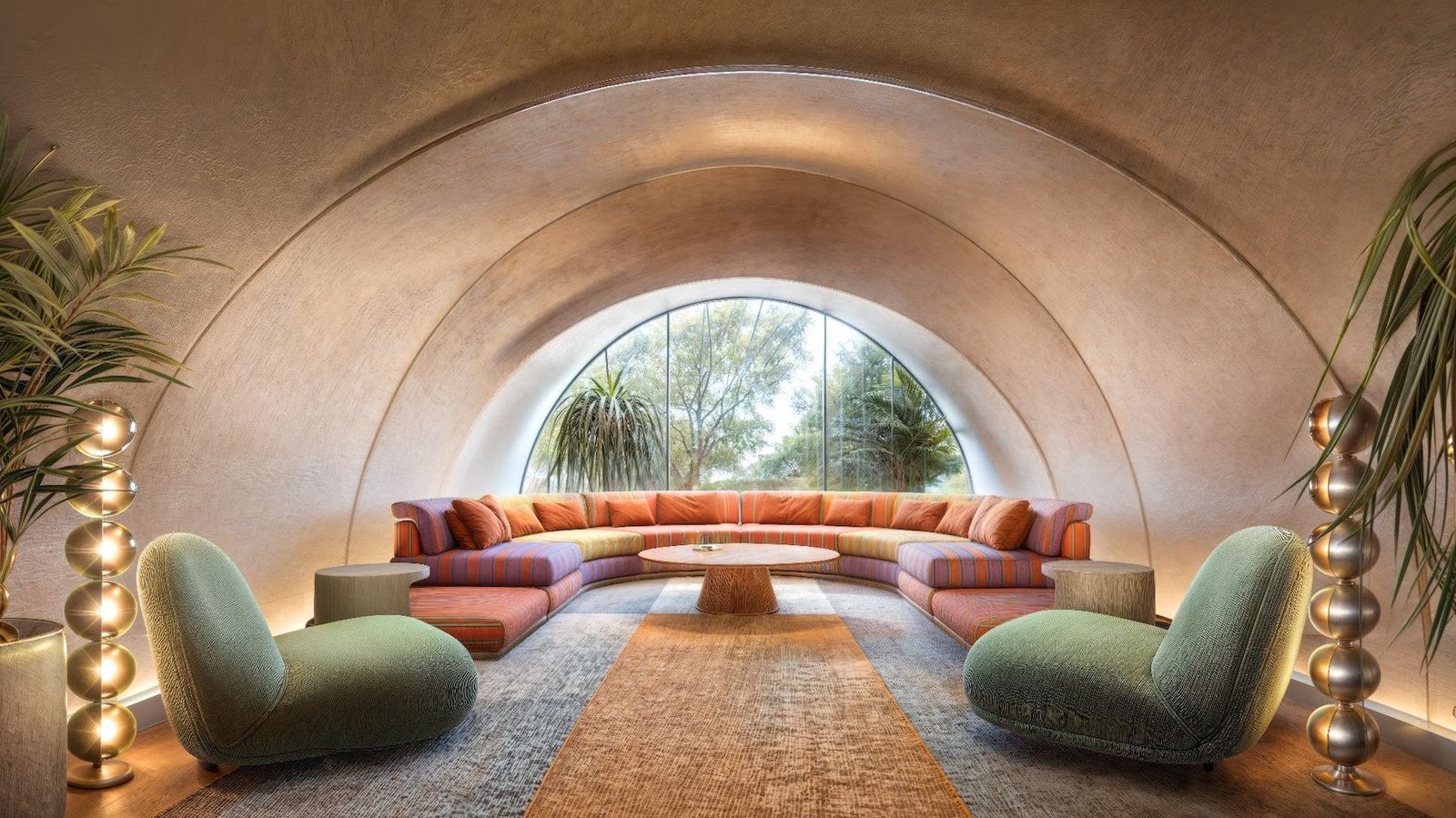
 Photo: ELLE Residences Bali — Brand Atlas
29 August 2026 ·5 min read
Branded Residences in Indonesia: Bali's Boom, Jakarta's Depth and the Title Question

Indonesia hosts two branded residence markets that share a currency and almost nothing else. Bali is a globally traded resort market where a large share of buyers are foreign, the product is villa and low-rise, and the rental programme is central to the investment case. Jakarta is a domestic urban market where branded towers serve Indonesian wealth and corporate demand.
Confusing the two is the most common analytical error in the market.
Bali: the strongest resort-branded story in Asia
Bali's tourism recovery has been extraordinary, and it has been accompanied by a structural shift in the visitor: longer stays, remote work, wellness-led travel and repeat visitation. That converts directly into second-home and investment demand.
- Canggu, Berawa and Pererenan — the epicentre of the current development wave, young international demand, strong short-stay rates and increasing infrastructure strain.
- Seminyak and Petitenget — established, denser, with the most mature F&B and retail ecosystem.
- Uluwatu and the Bukit peninsula — clifftop luxury, the strongest ultra-prime resort product and the widest branded premiums.
- Ubud — wellness and nature-led, smaller schemes, distinctive buyer profile.
- Nusa Dua — the master-planned resort enclave, institutional-grade land tenure and the easiest jurisdiction for a conventional hotel-plus-residences model.
The title question, answered properly
Foreigners cannot hold *Hak Milik* (freehold) title in Indonesia. The legitimate routes are:
- 01Hak Pakai (Right to Use) — available to foreigners resident in Indonesia, with defined terms and renewal periods. Appropriate for personal-use property.
- 02Hak Guna Bangunan (Right to Build) — held through an Indonesian legal entity, typically a foreign-investment company (PT PMA). This is the standard structure for commercial and rental-generating property, and the correct route for most branded residence investment.
- 03Leasehold — a contractual lease over land, commonly 25 to 30 years with agreed extensions. Widely used in Bali, and entirely workable when the lease is properly registered, the extension mechanism is enforceable and the underlying title is clean.
The structure to avoid is the nominee arrangement, in which land is held in an Indonesian individual's name under a side agreement. It is unenforceable and has produced repeated, well-documented losses for foreign buyers. Any sponsor marketing branded product to international purchasers should be structuring through PT PMA or registered leasehold and should say so explicitly in the sales documentation. Brands increasingly make this a condition of the licence.
| Segment | Typical positioning | Indicative premium vs comparable unbranded |
|---|---|---|
| Uluwatu / Bukit clifftop | Ultra-prime resort villas | 30-50% |
| Canggu / Berawa | Boutique branded villas and low-rise | 25-40% |
| Seminyak | Established resort-attached | 20-35% |
| Ubud wellness | Small wellness-brand schemes | 25-40% |
| Jakarta urban | Branded towers, domestic buyers | 15-25% |
Why Bali premiums are so wide
Because the alternative is unreliable. A large share of Bali's villa stock is informally managed, inconsistently maintained and operated without full compliance with accommodation licensing and tax obligations. A branded, professionally operated residence solves maintenance in a tropical climate, guest acquisition, staffing, licensing and tax reporting simultaneously.
It also solves the occupancy problem. Bali's gross yields look attractive on paper; realised net returns depend entirely on distribution, rate management and cost discipline. An operator with real revenue management delivers a different outcome from a villa listed on a booking platform by its owner.
Compliance issues sponsors must address
- Accommodation licensing (Pondok Wisata and hotel licensing). Short-term rental of residential property requires the correct licence. Marketing a rental return on unlicensed product is a regulatory and reputational risk.
- Zoning and the Bali spatial plan. Not every attractive site is zoned for tourism accommodation, and enforcement has tightened. Zoning verification precedes everything.
- Building height limits. Bali's traditional height restriction — broadly the height of a coconut palm, applied as roughly fifteen metres — shapes the entire product. Low-rise, land-hungry schemes are the norm, and Gulf-style density is unavailable.
- Infrastructure. Water supply, drainage, waste and traffic in Canggu and the south are under genuine strain. Serious schemes budget for their own water and wastewater treatment, and the brand will require it.
- Tax. Rental income, corporate tax through the PT PMA, and final transfer taxes all need to be modelled properly. Advertised gross yields that ignore tax and management cost are not a return.
Jakarta: a different business
Jakarta's branded market is urban, domestic-led and driven by corporate demand, family wealth and the prestige of well-managed towers in the Golden Triangle — SCBD, Sudirman, Kuningan and Menteng. Premiums are narrower, absorption is slower, and the buyer is Indonesian. The structural questions are ordinary urban development questions: land assembly, permitting, traffic, and whether the service platform survives handover. The move of government functions to the new capital, Nusantara, has added long-term uncertainty to Jakarta's institutional demand, though the private wealth base remains firmly in place.
The capital picture
Bali development capital is fragmented — private developers, family capital, regional funds and a growing number of small institutional platforms aggregating villa portfolios. This fragmentation is the market's largest inefficiency and its clearest opportunity: a sponsor able to deliver an institutional-quality, fully compliant, brand-operated scheme at scale is competing against a field of sub-scale operators.
Foreign investment is structured through PT PMA with minimum capitalisation requirements. Debt from Indonesian banks for foreign-owned resort development is available but conservative, so most schemes are equity-heavy with staged development to manage exposure.
Outlook to 2030
Three trends will shape the market. Institutionalisation — as compliance enforcement tightens and buyers become more sophisticated, informal villa product loses ground to branded, properly licensed schemes. Geographic spread — Lombok, the Gili islands, Sumba, Labuan Bajo and North Bali absorb demand as southern Bali's infrastructure constrains growth. And brand discipline — international operators are becoming markedly more selective in Bali after a wave of loosely governed affiliations, which will benefit sponsors who arrive with clean title, real infrastructure and a credible operating plan.
Bali does not lack demand. It lacks well-structured supply. That is a solvable problem, and it is where the return is.
Frequently Asked Questions
Can foreigners own branded residences in Bali?
Not as freehold. Foreigners can hold Hak Pakai (Right to Use) if resident, or invest through an Indonesian company (PT PMA) holding Hak Guna Bangunan (Right to Build), or take a registered long-term leasehold. Nominee arrangements, where land is held in an Indonesian individual's name, are unenforceable and should be avoided entirely.
What returns do branded residences in Bali achieve?
Bali's resort-branded product shows some of the widest premiums globally, roughly 25-50% over comparable unbranded villas, because the unbranded alternative often lacks credible management and compliant rental operations. Realised net rental returns depend heavily on distribution, rate management, licensing compliance and tax, so gross yield figures should always be stress-tested.
Why are Bali buildings so low-rise?
Bali applies a traditional height restriction of roughly fifteen metres — historically described as the height of a coconut palm — which limits buildings to around three to four storeys. This shapes the entire product type: branded schemes in Bali are low-rise villa and pavilion formats rather than towers, and land requirements are correspondingly higher.
Is Jakarta a branded residence market?
Yes, but a very different one. Jakarta's branded towers in SCBD, Sudirman, Kuningan and Menteng serve domestic wealth and corporate demand, with narrower premiums of roughly 15-25% and slower absorption than Bali. It is an urban development market with ordinary urban risks rather than a resort investment market.
See also
Market guides by country
- 'The Future of Branded Residences' — Global Tour 2026
- What Are Branded Residences? The Definitive 2026 Guide
- Branded Residence Ownership Structures Explained: The 2026 Guide
- Hotel-Branded vs Design-Branded Residences: The 2026 Comparison
- What Are Branded Residences? 2026 Definition, Models and Market Size