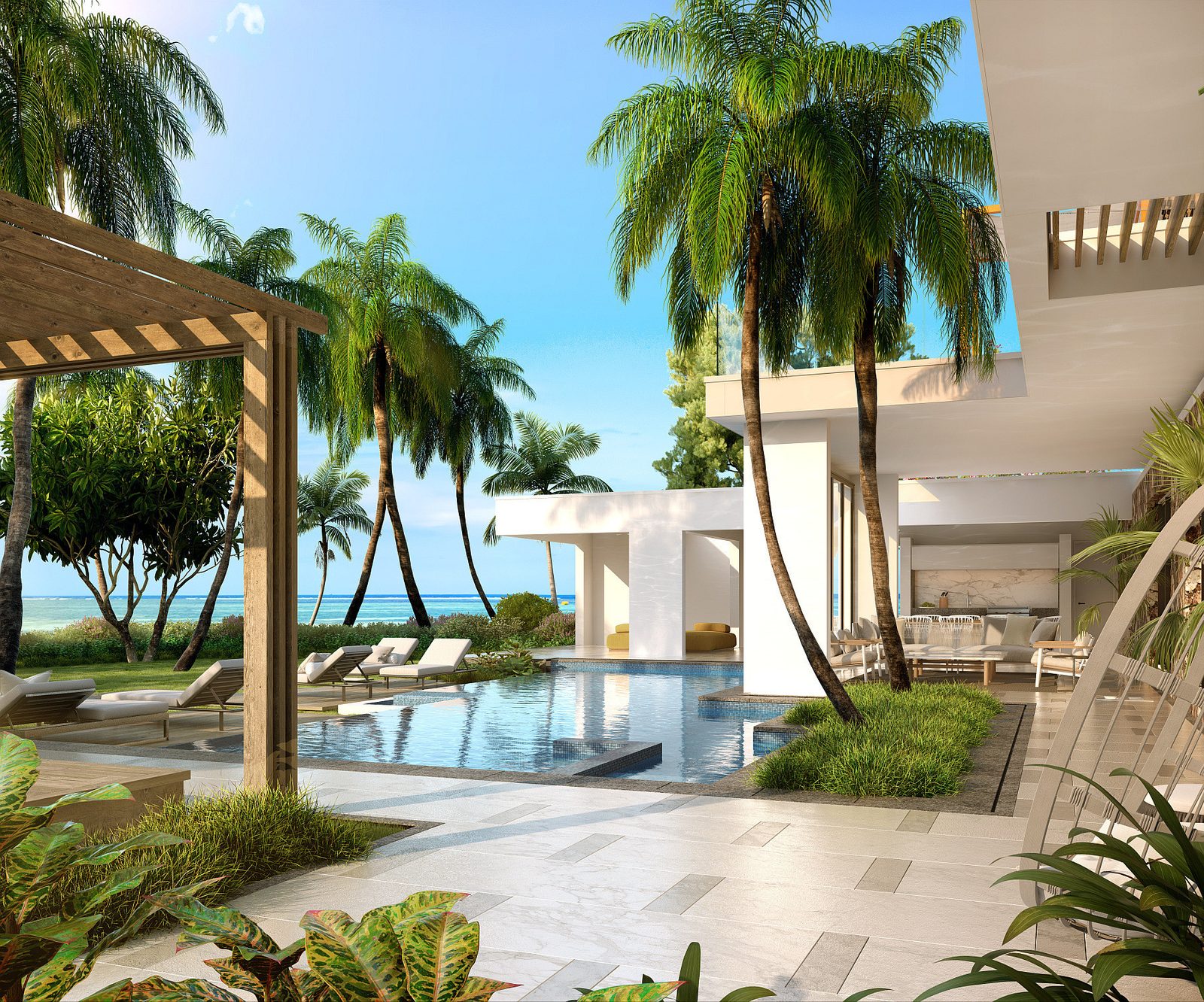
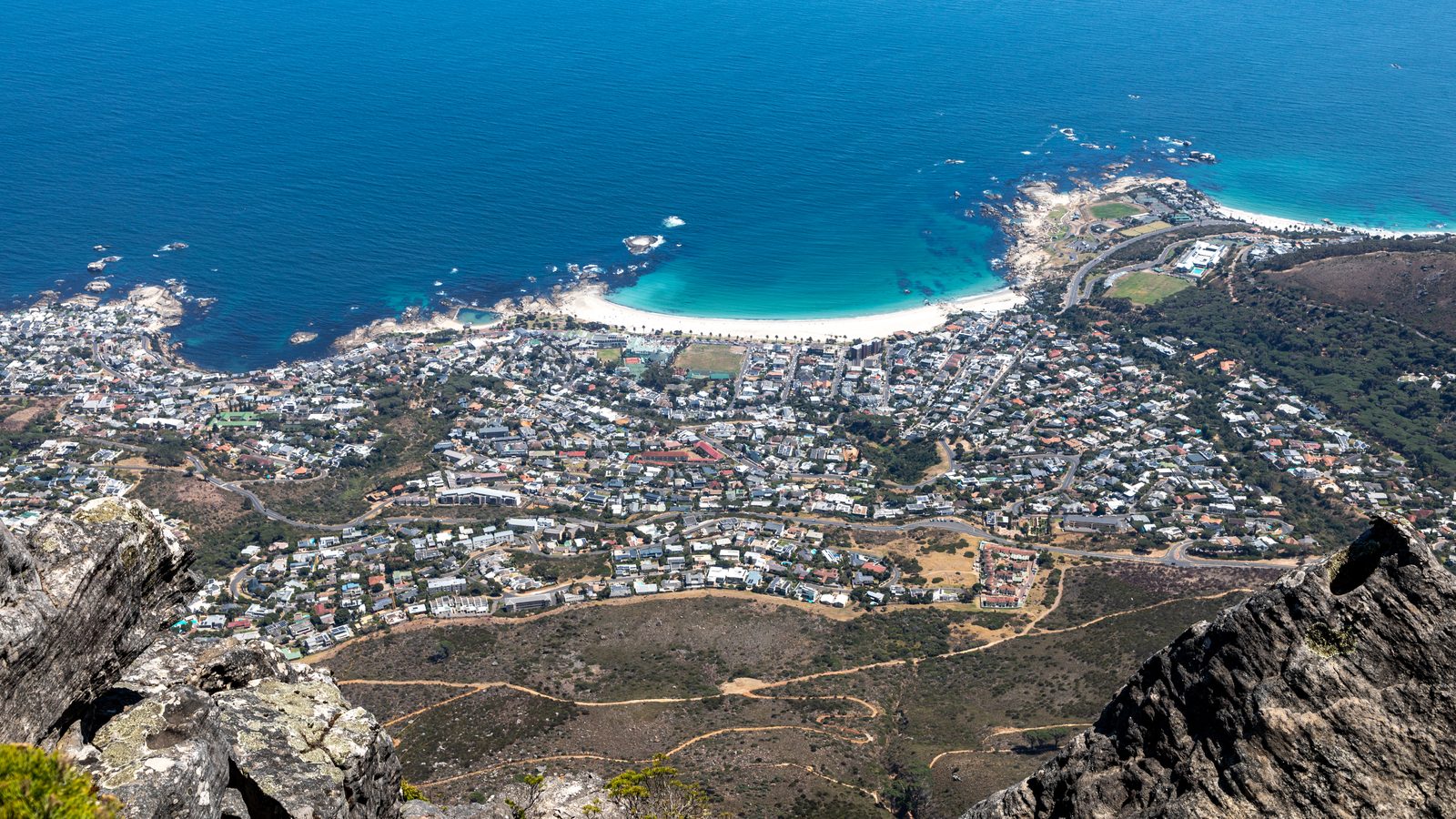
 Photo: Camps Bay and the Atlantic Seaboard, Cape Town
15 September 2026 ·5 min read
Branded Residences in South Africa: Cape Town's Value Gap and the Semigration Effect

A buyer converting dollars, pounds or euros into rand in Cape Town acquires beachfront and mountain-view property at a fraction of comparable Mediterranean or Californian pricing. That arbitrage has driven a decade of international interest, reinforced by remote work and, domestically, by semigration — the steady movement of wealthy South Africans from Gauteng to the Western Cape.
Branded residences are the natural product for both groups: the international buyer who needs the property managed in their absence, and the relocating domestic buyer who wants security and service without staff management.
Where the market actually is
- Cape Town Atlantic Seaboard — Clifton, Camps Bay, Bantry Bay, Fresnaye and the V&A Waterfront. The country's prime market and the location of almost all genuine branded product.
- Cape Town City Bowl and De Waterkant — conversion-led, design-branded apartments, strong short-let demand where bylaws permit.
- Cape Winelands — Stellenbosch, Franschhoek — estate and wine-branded product. Exceptional differentiation, strong international recognition, genuine scarcity of prime estates.
- Garden Route and Plettenberg Bay — established domestic second-home market with growing branded interest.
- Johannesburg — Sandton, Hyde Park, Rosebank — corporate wealth, hotel-attached urban product, lower premiums and a buyer base focused on security and convenience.
- Kruger and the private reserves — conservation-linked lodge residences, a niche South Africa is uniquely qualified to own.
Why the premium works here
The South African branded premium is bought with three specific benefits:
- 01Absentee management and security. International owners occupy a few weeks a year. Managed security, maintenance and staffing are the core product, and doing it privately is expensive and unreliable.
- 02Infrastructure insulation. Load-shedding, water resilience and now grid instability have made buildings with independent power, storage and water systems materially more valuable. A brand-operated building funds and maintains that infrastructure as standard; a body corporate frequently does not.
- 03Rental distribution. Cape Town's seasonal short-let market is strong but competitive and increasingly regulated. Operator distribution and compliance capability outperform private letting.
| Segment | Typical positioning | Indicative premium vs comparable unbranded |
|---|---|---|
| Atlantic Seaboard | Hotel-attached and design-branded | 25-35% |
| V&A Waterfront | Hotel-attached branded apartments | 25-35% |
| Cape Winelands estates | Wine and estate-branded | 20-35% |
| Garden Route | Resort-attached | 15-25% |
| Johannesburg | Urban hotel-attached | 15-25% |
The regulatory reality: ownership, exchange control and short-lets
- Foreigners can own freehold property outright, in their own name or through a South African entity. This is a genuine competitive advantage against most emerging markets. Non-residents typically fund the purchase from offshore and record the inflow so that proceeds can be repatriated.
- Exchange control shapes the exit, not the entry. Funds introduced through the banking system and endorsed correctly can be repatriated with the capital gain on sale. Incorrectly documented inflows create problems years later; sponsors should make the documentation route part of the sales process.
- Capital gains tax and a withholding on non-resident sellers apply on disposal, alongside transfer duty on acquisition. These are predictable and should be modelled openly in buyer materials.
- Short-term letting is regulated locally. Cape Town has debated and tightened rules around short-let activity in certain areas and building types. A rental programme must be underwritten against the specific zoning and body corporate rules of the building.
- Sectional title law governs shared ownership. As in Canada and Brazil, the brand's operating standard must be embedded in the sectional title rules and the management agreement at registration.
Which brands are actually transacting
The active set combines international hotel brands — the Marriott luxury stable, Radisson, Accor's upper tiers, and boutique international operators — with exceptionally strong domestic hospitality brands. The Royal Portfolio, Singita, Newmark and the One&Only Cape Town presence carry service reputations that international buyers recognise, and in the safari and Winelands segments domestic operators are simply better than anyone else at the job.
Singita is the clearest example of a South African brand with global pricing power. In conservation-linked residential product, a domestic brand with genuine ecological credibility will outperform a generic international luxury name, and it should be priced accordingly in the licence negotiation.
What sponsors get wrong
- Pricing in rand and thinking in dollars. Currency volatility can move a project's economics faster than construction risk. Match revenue and cost currencies as far as possible.
- Treating infrastructure resilience as an amenity. Power, water and connectivity resilience are now core specification items and a major part of the branded value proposition.
- Assuming short-let income is permanent. Regulation is tightening. Underwrite on a base case that survives a restrictive outcome.
- Underestimating domestic buyers. Semigration demand is real, sustained and less price-sensitive than sponsors expect. A scheme built only for foreigners misses half the market.
- Weak sectional title drafting. Retrofitting an operating standard into an existing body corporate is close to impossible.
The capital picture
South African development is funded by domestic banks, listed property groups and private capital, with international equity entering selectively through joint ventures. Local debt is available but priced against a high policy rate, which pushes sponsors toward pre-sale-led structures.
International capital underwrites currency first, infrastructure second and the operator third. Schemes that can show hard-currency sales, resilient building systems and a credible operator with local depth raise money. Schemes relying on rand-denominated appreciation do not.
Outlook to 2030
Expect Cape Town to keep absorbing international demand as long as the value gap against comparable global prime markets persists, which it likely will. Expect conservation and wine-estate branded product to become South Africa's signature category — it is the one segment the country can own globally. And expect infrastructure resilience to become a formal pricing input, disclosed in sales material the way energy ratings are in Europe.
South Africa is a market where a brand earns its fee by making a complicated place easy to own.
Frequently Asked Questions
Can foreigners buy branded residences in South Africa?
Yes. Foreign nationals can own freehold property outright, personally or through a local entity. Funds should be introduced through the banking system and correctly documented so that sale proceeds and gains can be repatriated under exchange control rules.
Where are the best branded residences in South Africa?
Cape Town's Atlantic Seaboard and the V&A Waterfront lead, followed by the Cape Winelands for estate and wine-branded product, the Garden Route for resort schemes and Johannesburg for urban hotel-attached apartments.
What premium do branded residences achieve in South Africa?
Indicatively 20-35% over comparable unbranded stock, highest on the Atlantic Seaboard and in wine-estate product. Absentee management, security and infrastructure resilience are the main reasons buyers pay it.
How does load-shedding affect branded residences in South Africa?
It has made independent power, storage and water resilience a core part of the branded value proposition. Brand-operated buildings typically fund and maintain those systems to standard, which is a measurable advantage over self-managed body corporates and increasingly a pricing factor.
See also
Market guides by country
- 'The Future of Branded Residences' — Global Tour 2026
- Branded Residence Ownership Structures Explained: The 2026 Guide
- Hotel-Branded vs Design-Branded Residences: The 2026 Comparison
- What Are Branded Residences? 2026 Definition, Models and Market Size
- Trustworthy Branded Residence Brands in 2026: How to Judge Credibility