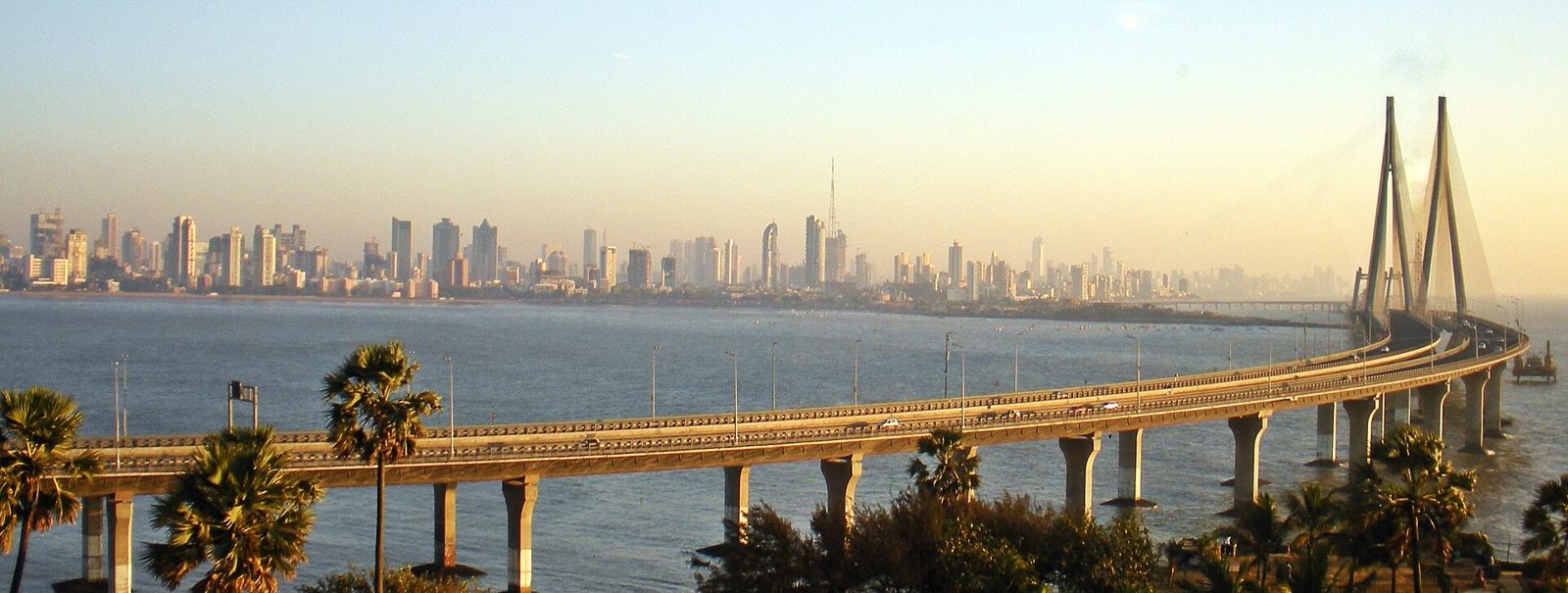
 Photo: Worli skyline and the Bandra–Worli Sea Link, Mumbai
20 August 2026 ·6 min read
Branded Residences in India: The Largest Untapped Luxury Market in Asia

For two decades, wealthy Indian buyers exported their branded residence demand — to Dubai, London, Singapore and New York. That has changed. India's high-net-worth population has grown faster than almost any market in the world, second-home ownership has become normalised among urban professionals, and a generation of listed developers now has balance sheets strong enough for international brands to underwrite.
The result is a pipeline that spans Mumbai penthouses, Delhi NCR towers, Goa villas and Himalayan resort residences. Not all of it will be delivered. The purpose of this guide is to explain which parts are structurally sound.
Where the market actually is
- Mumbai — the deepest wealth pool and the most constrained land. South Mumbai, Worli, Bandra Kurla Complex and Lower Parel dominate. Redevelopment of ageing societies is the primary land route, and it brings its own consent complexity.
- Delhi NCR — Gurugram (Golf Course Road, Dwarka Expressway) is the most active branded launch corridor in the country by unit count, with strong absorption at price points that would have been unthinkable five years ago.
- Goa — the leading resort-branded market. Villa-format schemes with a rental programme, targeting Mumbai and Bengaluru buyers who use the property eight to fourteen weeks a year.
- Bengaluru and Hyderabad — new-economy wealth, technically sophisticated buyers, strong demand for serviced luxury but historically thinner ultra-prime pricing.
- Hill and heritage markets — Rishikesh, Kasauli, Alibaug, Udaipur, Coorg. Small wellness and resort-attached schemes where the brand supplies the operating capability the location cannot.
Why Indian buyers pay the premium
The Indian branded residence premium is not primarily about the logo on the gate. It is about three problems the market has failed to solve on its own:
- 01Delivery certainty. A brand-affiliated scheme signals a developer that has passed international due diligence. In a market with a long memory of stalled projects, that is worth real money.
- 02Service that survives handover. Facilities management in Indian luxury housing degrades quickly once the developer exits. A hotel operator with reputational exposure does not have that option.
- 03Rental and second-home logistics. For Goa, Alibaug and hill properties, the property must be maintained, secured and monetised in the owner's absence. That is a hospitality function, not a housekeeping one.
| Segment | Typical positioning | Indicative premium vs comparable unbranded |
|---|---|---|
| Mumbai ultra-prime | Hotel-attached or standalone branded | 25-40% |
| Delhi NCR (Gurugram) | Standalone branded towers | 20-35% |
| Goa resort villas | Resort-attached with rental programme | 25-45% |
| Bengaluru / Hyderabad | Urban serviced luxury | 15-25% |
| Hill and wellness resorts | Small resort-attached phases | 20-35% |
The regulatory reality: RERA changes the model
The Real Estate (Regulation and Development) Act is the single most important structural feature of an Indian branded scheme, and international sponsors consistently underestimate it. RERA governs project registration, escrow of buyer receipts, disclosure of completion dates and penalties for delay. Practically, it means:
- Seventy per cent of buyer receipts sit in a designated account and can only be drawn for construction of that project. Cross-collateralising phases or funding brand fees from pre-sales is not available in the way it is in some Gulf markets.
- The advertised completion date is a legal commitment, not a marketing aspiration. Brand milestone obligations must be reconciled with RERA-declared dates before the licence is signed.
- Marketing claims are regulated. What the sales team says about brand services, facilities and rental returns is disclosable and enforceable. Brand-approved marketing language and RERA-compliant disclosure need to be drafted together.
Layered on top are state-level differences: Maharashtra's redevelopment and FSI regime, Goa's coastal regulation zone restrictions, and NCR's authority-specific approvals each change the feasible scheme before a brand is even approached.
Which brands are actually transacting
The active set in India divides into three tiers. Global hotel brands — Four Seasons, Ritz-Carlton, St. Regis, Mandarin Oriental, Raffles and the Marriott and Accor luxury stables — are pursuing urban schemes in Mumbai and NCR with strict technical services and delivery conditions. Domestic hospitality brands, principally the Taj and Oberoi ecosystems, carry extraordinary trust with Indian buyers and are frequently the commercially stronger choice outside the top two cities. Non-hotel brands — automotive, fashion and design houses — appear periodically in NCR and Mumbai launches; they can create launch velocity but rarely deliver durable operating value, and they should be underwritten as a marketing asset rather than a service platform.
The most common strategic error we see is a sponsor chasing the most recognisable global name for a site where a Taj or Oberoi affiliation would deliver higher net absorption at lower licence cost.
What sponsors get wrong
- Treating the brand as a sales accelerant only. If the operating model, service charge and facilities programme are not funded to standard, the premium erodes within three years of handover and resale evidence turns against the scheme.
- Underestimating the service charge conversation. Indian buyers benchmark against society maintenance charges. A hotel-standard charge needs to be explained, justified and demonstrated from the first sales meeting.
- Signing before land title and approvals are clean. Title diligence, litigation history and encumbrance searches must be at international lender standard. Brands walk away at this stage more often than at any other.
- Building the wrong unit mix. Large-format three and four bedroom units dominate Indian luxury demand; imported studio-heavy mixes from Gulf models do not sell.
- Ignoring the rental programme in resort markets. In Goa and the hills, the rental proposition is frequently the deciding factor, and it needs to be structured, disclosed and legally coherent, not improvised.
The capital picture
Indian branded schemes are financed through a mix of developer equity, structured NBFC debt, alternative investment funds and — increasingly — international platform capital pursuing residential-for-sale exposure. Foreign direct investment in construction development is permitted under the automatic route subject to conditions, which makes joint venture structures with offshore equity workable when the sponsor's governance and reporting are institutional-grade.
In practice, the schemes that attract the best capital are those where the brand licence is already negotiated to a bankable standard: clear termination triggers, defined technical services scope, no open-ended sponsor obligations, and a residential fee structure that survives sensitivity analysis on absorption.
Outlook to 2030
Expect three developments. First, consolidation around credible sponsors — a small number of listed developers will take the majority of new brand licences because brands cannot afford delivery failures in a market this visible. Second, the rise of resort-branded product in Goa, Alibaug, Rajasthan and the Himalayan belt as domestic leisure demand matures. Third, genuine price discovery as the first cohort of branded schemes reaches resale, producing the comparable evidence the market currently lacks.
India is not a market where a brand rescues a weak scheme. It is a market where a brand multiplies a well-executed one.
Frequently Asked Questions
Are branded residences a good investment in India?
They can be, where the sponsor is credible and the operating model is properly funded. Indian branded schemes have shown premiums of roughly 20-40% over comparable unbranded stock, but the premium depends on delivery certainty and sustained service quality rather than the brand name alone. Resale evidence is still thin, so underwriting should be conservative.
Which cities in India have the most branded residences?
Mumbai and Delhi NCR — particularly Gurugram — lead by pipeline and unit count, followed by Goa for resort-format schemes and Bengaluru and Hyderabad for urban serviced luxury. Smaller wellness and heritage markets such as Alibaug, Udaipur and the Himalayan belt are growing quickly from a low base.
How does RERA affect branded residence projects?
RERA requires project registration, escrow of the majority of buyer receipts, and legally binding completion dates. This constrains how brand fees and construction can be funded from pre-sales and means brand milestone obligations must be reconciled with declared delivery dates before the licence is signed.
Should an Indian developer choose a global or a domestic brand?
It depends on the buyer. Global brands add international recognition and resale reach in Mumbai and NCR ultra-prime. Domestic brands such as Taj and Oberoi often deliver higher net absorption outside the top two cities at lower licence cost, because Indian buyers trust their service delivery. The decision should follow a scheme-specific premium study.
See also
Market guides by country
- 'The Future of Branded Residences' — Global Tour 2026
- Branded Residence Ownership Structures Explained: The 2026 Guide
- Hotel-Branded vs Design-Branded Residences: The 2026 Comparison
- What Are Branded Residences? 2026 Definition, Models and Market Size
- Trustworthy Branded Residence Brands in 2026: How to Judge Credibility