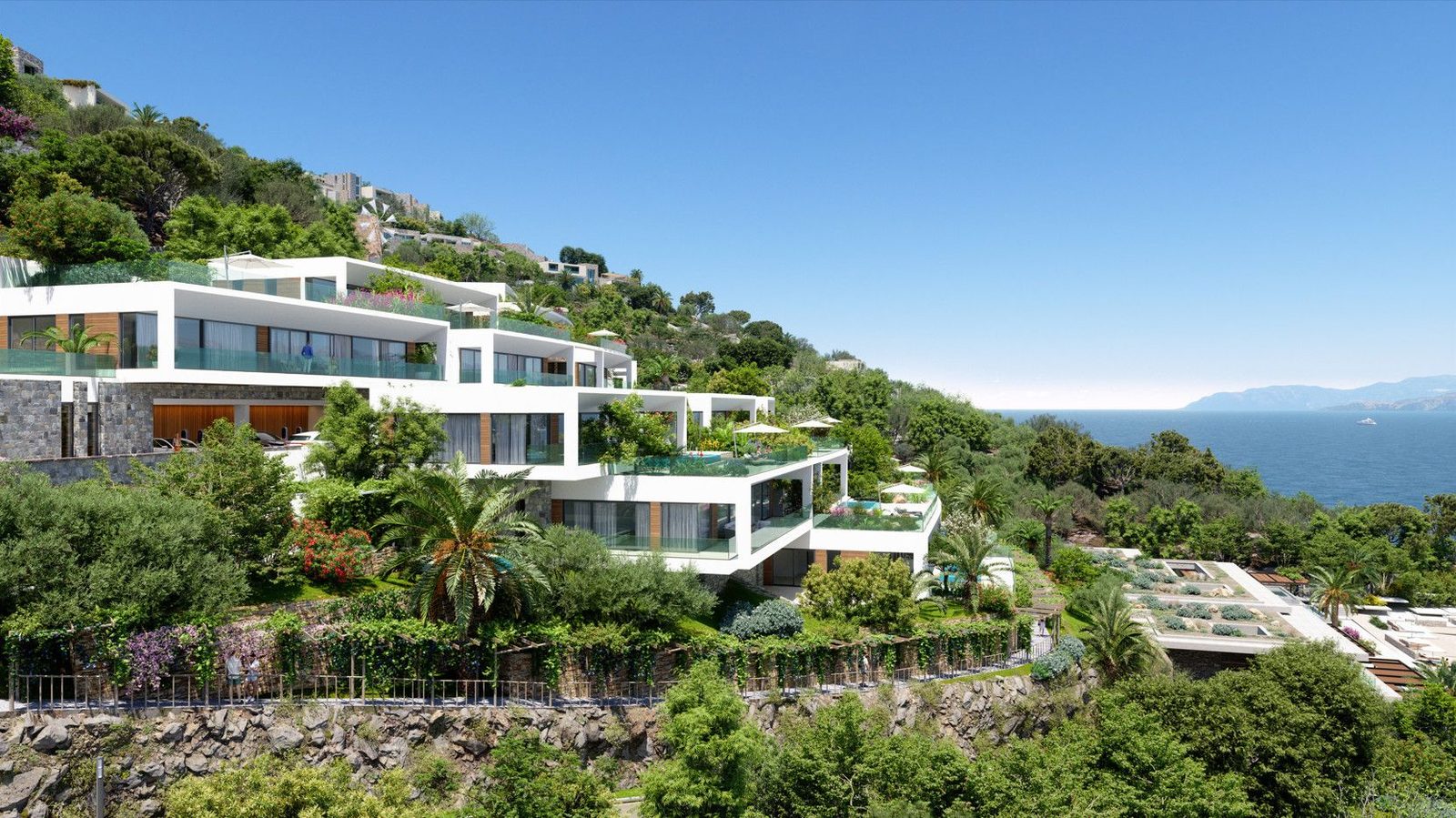
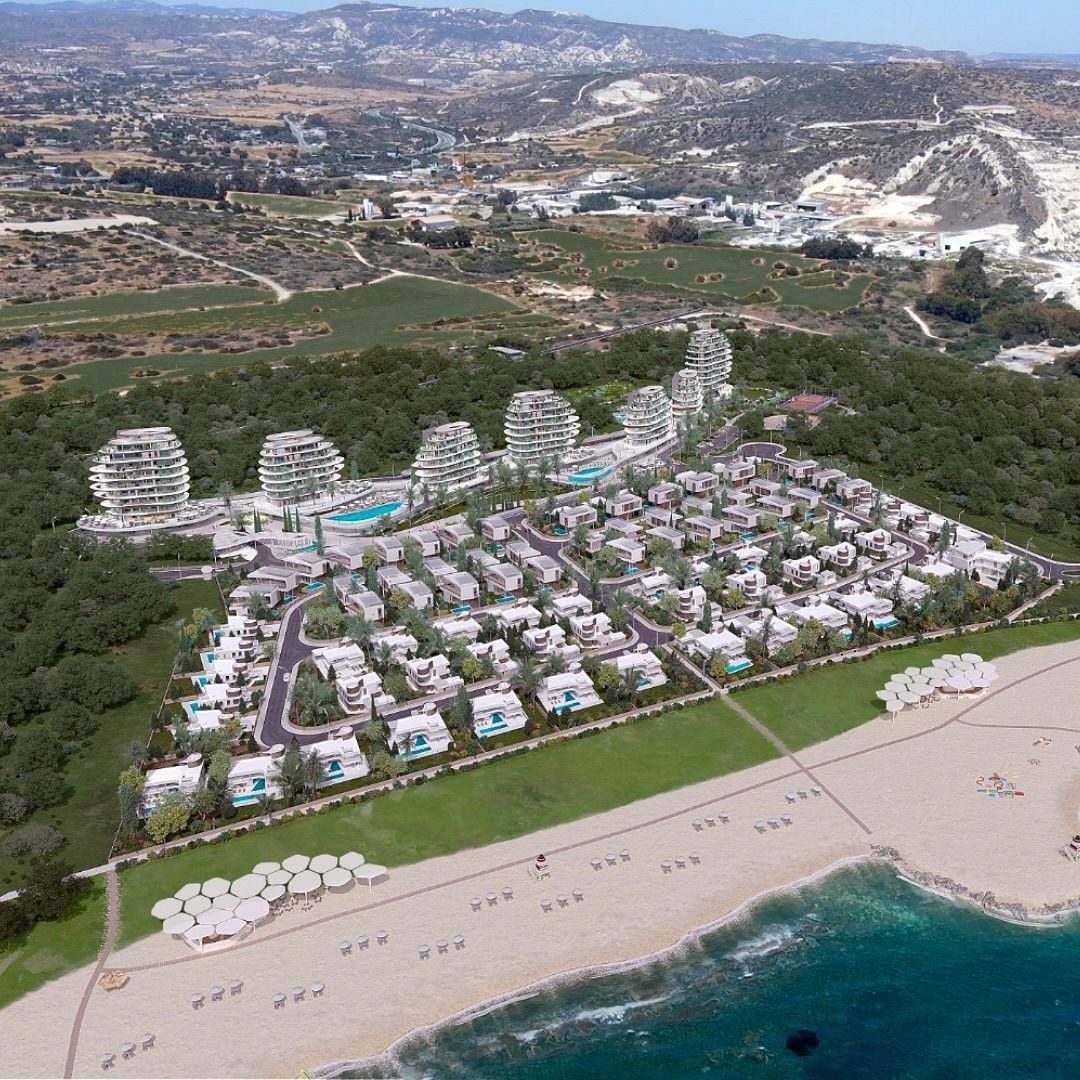
 Photo: YOO Limassol — Brand Atlas
9 September 2026 ·6 min read
Branded Residences in Cyprus: Small Island, Outsized Branded Pipeline

For a decade Cyprus sold luxury real estate as a route to an EU passport. When that programme closed, a large part of the market's demand engine disappeared overnight. What replaced it is more durable: non-domicile tax residents, relocating corporate headquarters — particularly in technology, shipping and professional services — and European buyers seeking a euro-denominated, English-law-influenced jurisdiction with year-round sun.
Branded residences sit at the top of that rebuilt market, and the pipeline is serious.
Where the market actually is
- Limassol — the centre of gravity. The seafront tower corridor and the marina district carry the majority of branded and design-branded stock, aimed at relocating executives, Israeli and Lebanese buyers, and the residual Russian and Ukrainian base.
- Paphos — resort-led, lower price points, strong UK and northern European demand, golf and coastal schemes with rental programmes.
- Ayia Napa and Protaras — the Ayia Napa Marina project reset expectations for the east coast, pulling branded and design-led product into a market previously defined by mass tourism.
- Larnaca — the emerging story. Port and marina redevelopment plus airport proximity makes it the most credible next branded corridor after Limassol.
- Nicosia — domestic and diplomatic demand, little branded product, and limited near-term prospects for it.
Why the premium is narrower here
Cyprus buyers are price-sensitive in a way that Gulf and Asian branded buyers are not. Many are relocating families comparing a branded apartment against a large private villa at the same price. That comparison caps the premium at the 15-30% band rather than the 30-50% seen in scarcity markets.
Where Cypriot branded schemes earn their premium is on three points: management quality in a market with a weak facilities-management tradition, rental distribution for owners who occupy seasonally, and resale credibility in a tower market where unbranded stock has visibly aged. The last point matters more each year as the 2015-2020 tower cohort reaches ten years old and the quality gap becomes public.
| Segment | Typical positioning | Indicative premium vs comparable unbranded |
|---|---|---|
| Limassol seafront towers | Hotel-attached or design-branded | 20-30% |
| Limassol marina district | Design-branded apartments | 15-25% |
| Ayia Napa Marina | Resort and marina-attached | 20-30% |
| Paphos resort and golf | Resort-attached villas | 15-25% |
| Larnaca emerging | Mixed-use waterfront | 15-20% |
The regulatory reality: EU rules, residency and the new incentives
Cyprus is an EU member state, which sets the frame. EU and EEA nationals buy freely. Non-EU buyers require Council of Ministers approval for acquisition, which is administrative rather than discretionary in practice but must be programmed into the sales timeline.
The demand-side mechanics matter more than the ownership rules:
- Permanent residency by investment remains available at a €300,000 threshold on new-build property, with income requirements. It is a residency permit, not citizenship, and should be marketed with precision — overselling it is a compliance risk.
- Non-domicile tax status gives seventeen years of exemption from tax on dividends and interest for new tax residents. This, more than any property incentive, is what moves relocating wealth to Cyprus.
- Reduced VAT on a primary residence applies within defined area and value limits. Branded units frequently exceed those limits, so the standard 19% applies — model it accordingly and disclose it clearly.
- Title deed delivery. Cyprus has a documented history of delayed title issuance on off-plan sales. Buyer counsel will interrogate this, and sponsors who cannot show a clean, timetabled route to separate titles lose sales.
Which brands are actually transacting
The Cyprus pipeline is unusual in its brand mix. Design and lifestyle brands — YOO, Armani-adjacent interiors houses, and European design studios — dominate, because they deliver differentiation at a licence cost the price points can bear. Hotel brands are present but more selective: the schemes that work pair a genuine operating hotel with residences rather than licensing a name onto a standalone tower. Waldorf Astoria, Amara and the marina-led projects are the reference points.
The error we see most often is a sponsor buying a hotel brand licence without a hotel. Without an operating asset, the service promise has no delivery vehicle, the cost base has no absorption, and the buyer discovers it within the first year.
What sponsors get wrong
- Concentrating in Limassol without differentiating. The seafront corridor is crowded. A scheme that is simply another branded tower competes on price, which is exactly where branding stops helping.
- Marketing residency as citizenship. The programmes are different, the compliance exposure is real, and buyers who feel misled generate the worst kind of publicity in a small market.
- Underestimating service charge resistance. Cypriot and relocating European buyers compare against low local common-expense charges. The premium service model needs a clear, itemised justification.
- Ignoring seasonality in the rental model. Cyprus has a genuine year-round proposition but a heavily peaked one. Underwrite conservatively.
- Weak title programming. Delayed separate titles are a documented market risk and the single fastest way to lose an institutional buyer.
The capital picture
Cypriot schemes are funded with sponsor equity, local bank debt and increasing amounts of regional private capital, particularly from Israel and the Gulf. Following the banking reforms of the last decade, domestic lenders are conservative on residential development and typically require substantial pre-sales. That makes the branded proposition commercially useful: a credible brand improves pre-sale velocity, which is precisely what unlocks the debt.
For sponsors seeking equity or an exit, the buyer universe is regional rather than global. Presentation matters: clean title, a defensible premium study, a licence without open-ended obligations, and an operating model that does not assume hotel-level occupancy.
Outlook to 2030
Expect Limassol supply to digest slowly while Larnaca emerges as the next branded corridor on the back of port and marina redevelopment. Expect the quality gap between the 2015-2020 tower cohort and new branded stock to widen, which will strengthen the branded premium in resale rather than launch. And expect the buyer base to keep diversifying away from a narrow set of source markets — a structural improvement, even where it slows headline volumes.
Cyprus rewards sponsors who treat branding as an operating commitment. It punishes those who treat it as a marketing badge, faster than most markets, because everybody on the island knows everybody.
Frequently Asked Questions
Are branded residences a good investment in Cyprus?
They can be, particularly in Limassol and the marina-led schemes, where branded stock has held value better than the ageing unbranded tower cohort. Premiums are typically 15-30%. The market is price-sensitive, so the premium depends on genuine service delivery and differentiation rather than the brand name alone.
Can non-EU buyers purchase property in Cyprus?
Yes. Non-EU buyers need Council of Ministers approval, which is administrative in practice but should be built into the transaction timeline. EU and EEA nationals buy without restriction.
Does buying a branded residence in Cyprus give residency?
Permanent residency by investment is available from a €300,000 investment in new-build property, subject to income and other requirements. It is residency, not citizenship — the citizenship-by-investment programme ended in 2020.
Which city in Cyprus has the most branded residences?
Limassol, by a wide margin, across the seafront tower corridor and the marina district. Ayia Napa Marina and Paphos follow, with Larnaca emerging on the back of port and marina redevelopment.
See also
Market guides by country
- 'The Future of Branded Residences' — Global Tour 2026
- Branded Residence Ownership Structures Explained: The 2026 Guide
- Hotel-Branded vs Design-Branded Residences: The 2026 Comparison
- What Are Branded Residences? 2026 Definition, Models and Market Size
- Trustworthy Branded Residence Brands in 2026: How to Judge Credibility