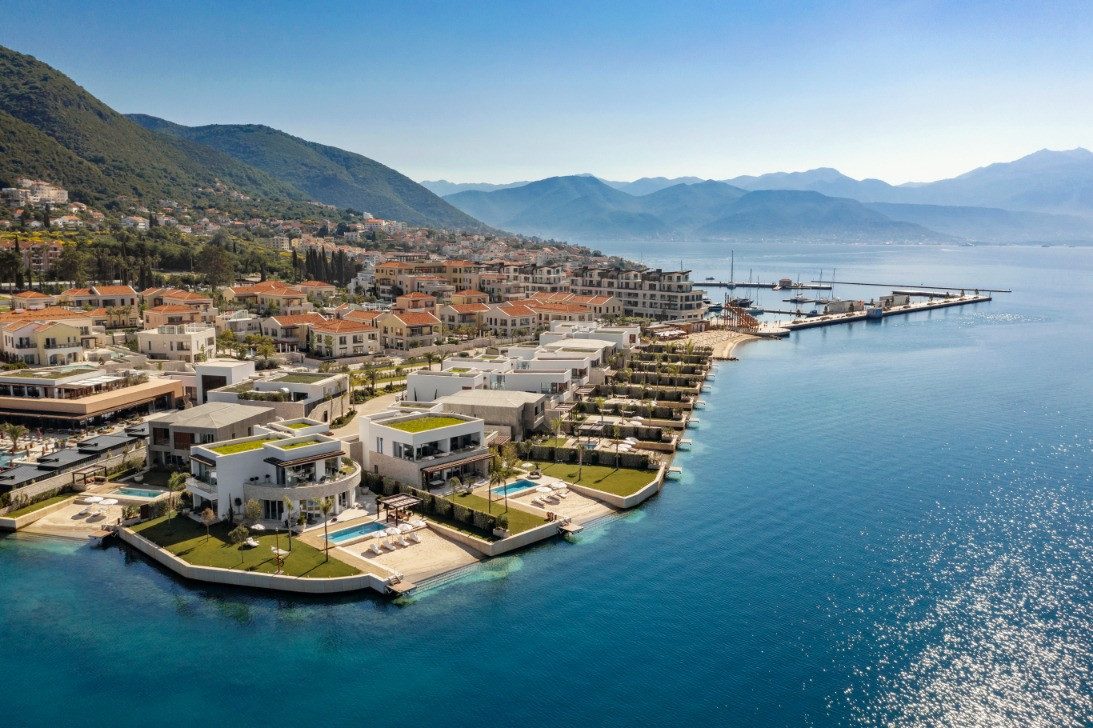
 Photo: One&Only Kea Island — Brand Atlas (illustrative Mediterranean render)
15 August 2026 ·3 min read
Branded Residences in Croatia: EU Membership, Coastal Law and a Market Still Waiting

On paper Croatia should lead the Adriatic branded residence market. It has more coastline and more islands than its neighbours, it joined the eurozone and Schengen, its tourism sector is mature, and Dubrovnik, Hvar and Rovinj are internationally known. In practice the pipeline is thin, and the reasons are legal and structural rather than commercial.
The three real obstacles
- 01**Maritime domain (*pomorsko dobro*).** A statutory strip along the shoreline is public property and cannot be privately owned. It can be used under concession, but concession terms, duration and renewal are a live risk that lenders and operators scrutinise closely. Any scheme selling waterfront lifestyle must be clear about what is owned and what is conceded.
- 02Land title fragmentation. Historic inheritance patterns have left many coastal parcels with dozens of registered co-owners, unresolved restitution claims or discrepancies between the land registry and the cadastre. Site assembly can take years, and title insurance is not the routine solution it is elsewhere.
- 03Coastal spatial planning. County and municipal spatial plans control tourism zone designations and buildable density along the coast. The most saleable sites are frequently zoned for hotel use at a density that does not support a large residential component.
Where a branded scheme can work
| Sub-market | Character | Realistic branded model |
|---|---|---|
| Istria (Rovinj, Poreč) | Mature resort market, Italian and Austrian demand | Resort-attached residences, wellness |
| Dubrovnik and the south | Global brand recognition, extreme site scarcity | Small conversions and hotel-adjacent phases |
| Split and the mid-Dalmatian islands | Growing yachting and lifestyle demand | Marina-led mixed use |
| Zagreb | Domestic and regional prime | Limited; city branded product is untested |
The yachting angle is the strongest card
Croatia is one of the world's leading sailing destinations, and berth supply has not kept pace with demand. A branded scheme that combines managed residences with contracted berthing solves a real problem for exactly the buyer profile that pays a branded premium. This is the Montenegrin lesson applied to a larger, EU-domiciled market — and it is the model most likely to produce Croatia's first genuinely successful branded residential phases.
Ownership and tax
EU and EEA nationals may generally acquire Croatian real estate on the same basis as citizens, while non-EU buyers are typically subject to a reciprocity regime or acquire through a Croatian company. Property transfer tax, VAT treatment on new-build sales and the tax treatment of short-term rental income all vary with the structure chosen. These are structuring decisions with real cost consequences and should be taken with current Croatian legal and tax advice.
What a sponsor should do first
- 01Title diligence before anything else — land registry, cadastre, restitution claims and co-ownership, resolved to lender standard.
- 02Map the maritime domain boundary and confirm the concession position for every amenity that touches the water.
- 03Confirm the spatial plan permits the residential component at the density the model requires; if it does not, treat amendment as a multi-year process.
- 04Only then approach operators. A brand conversation without clean title and confirmed density is not a conversation an operator's development team will take seriously.
Pitfalls
- Signing a licence agreement with milestones tied to a consent process the sponsor cannot control.
- Marketing waterfront exclusivity over land that is public maritime domain.
- Assuming Montenegro's absorption in a market with different pricing and a different buyer mix.
- Underestimating seasonality — much of the Croatian coast operates a short, intense season that shapes the service model and its cost.
Outlook
Croatia's branded residence market is a question of when, not whether. EU membership, the euro, yachting demand and international recognition are all in place. The pipeline will open when sponsors solve title and maritime domain first and treat the brand as the last step rather than the first.
Frequently Asked Questions
Why does Croatia have so few branded residences?
Not for want of demand. The obstacles are maritime domain law that keeps the shoreline in public ownership, fragmented and sometimes contested land title along the coast, and spatial plans that restrict residential density in the most saleable tourism zones.
Can foreigners buy property in Croatia?
EU and EEA nationals may generally acquire Croatian real estate on the same basis as citizens. Non-EU buyers are typically subject to a reciprocity regime or acquire through a Croatian company. The structure chosen affects transfer tax, VAT and rental income treatment, so take current Croatian advice.
What is pomorsko dobro and why does it matter?
It is the statutory maritime domain: a strip along the shoreline that is public property and cannot be privately owned. Waterfront amenities such as beach clubs and berths operate under concession, and the concession's terms and renewal risk are scrutinised by both operators and lenders.
What branded model is most likely to succeed in Croatia?
A marina-led scheme that pairs managed residences with contracted berthing. Croatia is a leading sailing destination with constrained berth supply, so this combination addresses a genuine scarcity for exactly the buyer profile that pays a branded premium.
See also
Market guides by country
- 'The Future of Branded Residences' — Global Tour 2026
- What Are Branded Residences? The Definitive 2026 Guide
- Branded Residence Ownership Structures Explained: The 2026 Guide
- Hotel-Branded vs Design-Branded Residences: The 2026 Comparison
- What Are Branded Residences? 2026 Definition, Models and Market Size