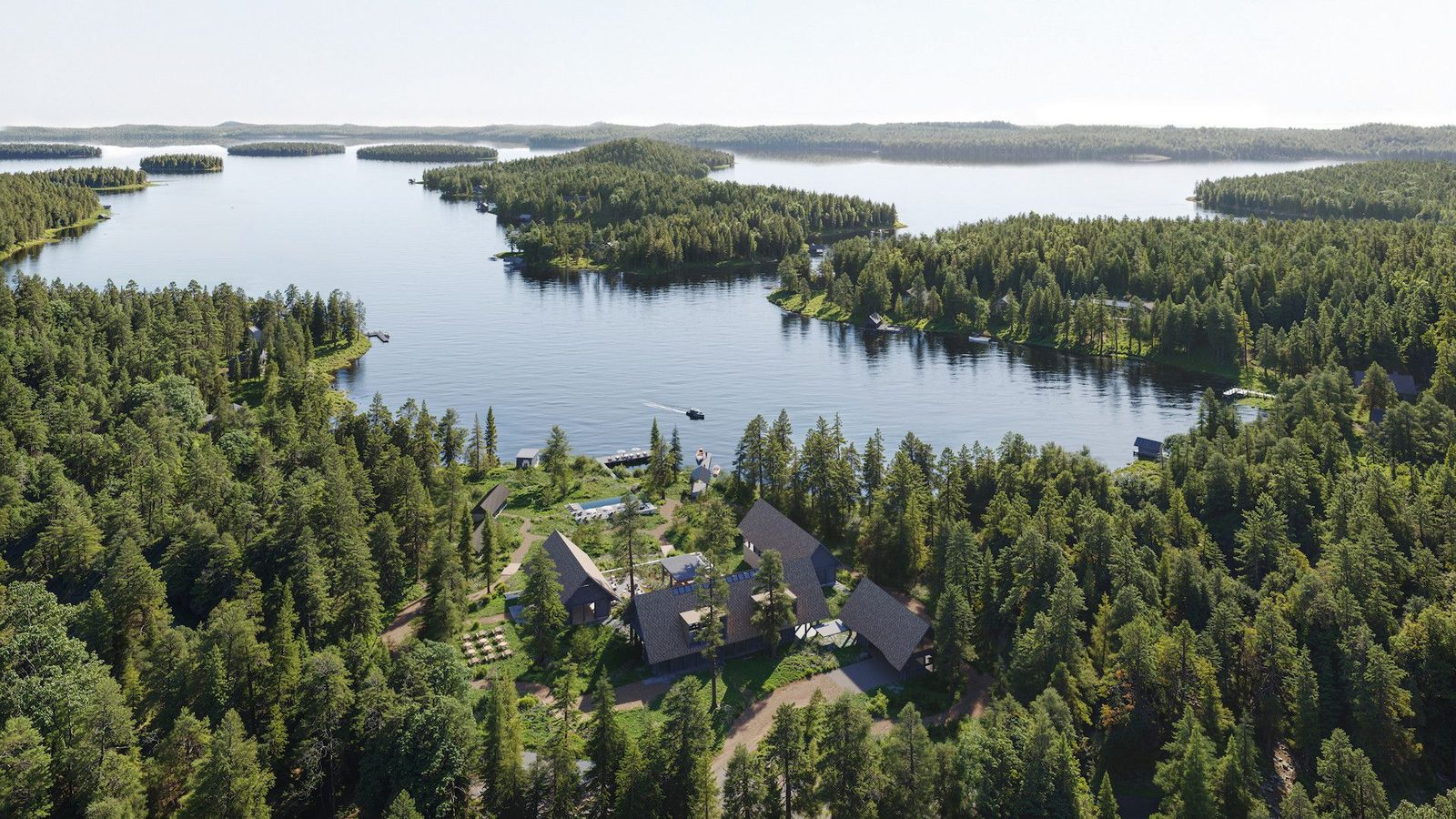
 Photo: The Ritz-Carlton Residences, Lake Muskoka — Brand Atlas
13 September 2026 ·5 min read
Branded Residences in Canada: Toronto Towers, Muskoka Lakes and the Foreign Buyer Ban

Toronto's Four Seasons and Ritz-Carlton residences, Vancouver's Shangri-La and Fairmont Pacific Rim, Montreal's Ritz-Carlton: Canada has had branded residences since before the term was widely used, and it has the resale data to prove what they do. That makes it one of the few markets where the premium is an observable fact rather than a projection.
It is also, right now, a closed market to foreign purchasers — which changes everything about how a scheme is underwritten.
Where the market actually is
- Toronto — the deepest branded market in the country. Yorkville, Bloor Street and the downtown core. Hotel-attached towers targeting downsizing wealth, professionals and family trusts.
- Vancouver — Coal Harbour, West Georgia and the West End. Historically the most internationally exposed market in Canada, now rebuilt around domestic and returning-citizen demand.
- Montreal — Golden Square Mile and Old Montreal. Lower price points, distinct francophone buyer culture, strong heritage conversion product.
- Whistler and the mountain west — four-season resort residences with genuine rental demand and constrained supply.
- Muskoka and cottage country — the most interesting current story. The Ritz-Carlton Residences at Lake Muskoka brought international branding to a market previously defined by generational family cottages, and the response has reframed what Canadian resort-branded product can achieve.
Why the premium holds in Canada
Three reasons, all of them boring and all of them durable:
- 01Service scarcity in cold-climate buildings. Canadian condominium management quality varies widely, and a brand-operated building with a real facilities budget ages visibly better. Buyers can see this by walking through a fifteen-year-old comparable.
- 02Downsizer demand. A large cohort of wealthy Canadians moving out of family homes wants full service, security and lock-and-leave capability. Branded product is built for exactly this buyer.
- 03Resale evidence. Unlike most markets in this series, Canada has two decades of transaction history. Branded units in Toronto and Vancouver have consistently held a premium over comparable non-branded stock in the same districts through multiple cycles.
| Segment | Typical positioning | Indicative premium vs comparable unbranded |
|---|---|---|
| Toronto Yorkville / core | Hotel-attached branded | 20-30% |
| Vancouver Coal Harbour | Hotel-attached branded | 20-30% |
| Montreal | Hotel-attached and heritage conversion | 15-25% |
| Whistler / mountain resort | Resort-attached with rental | 20-35% |
| Muskoka / cottage country | Resort-attached lakefront | 25-40% |
The regulatory reality: the ban, the taxes and the condo act
- The Prohibition on the Purchase of Residential Property by Non-Canadians Act blocks most non-resident purchases of residential property, and has been extended to January 2027. Exemptions exist — including for certain recreational property outside census metropolitan areas and for some work-permit holders — but the practical effect is that urban branded schemes must be underwritten on domestic demand alone.
- Provincial and municipal taxes compound it. British Columbia's foreign buyer tax and speculation and vacancy tax, Ontario's Non-Resident Speculation Tax, Toronto's and Vancouver's vacant home taxes, and the federal Underused Housing Tax all apply. Any sales material aimed at non-residents must be scrupulously accurate.
- Condominium legislation is provincial. Ontario's Condominium Act, BC's Strata Property Act and Quebec's Civil Code each govern how a shared-facilities and services agreement between hotel and residences must be structured. The brand's operating standard has to be embedded in the declaration and the shared-facilities agreement at registration.
- Rental restrictions vary. Short-term rental rules in Toronto, Vancouver and resort municipalities directly determine whether a rental programme is viable. This is a site-level question, not a national one.
Which brands are actually transacting
Canada is a hotel-brand market with an unusually stable cast: Four Seasons — a Toronto-founded company, which carries weight domestically — Ritz-Carlton, Shangri-La, Fairmont, St. Regis and, in the resort markets, Rosewood and boutique mountain operators. Design and fashion brands have made almost no impression; Canadian buyers are pragmatic and want operating substance.
The most notable strategic shift is brands moving out of the three big cities and into four-season resort markets — Muskoka, Whistler, Mont-Tremblant, the Okanagan — where supply is constrained, service is scarce, and a strong brand solves the lock-and-leave problem for owners who visit in bursts.
What sponsors get wrong
- Underwriting on foreign demand. It is not available until at least 2027, and policy risk beyond that is real.
- Weak shared-facilities agreements. Hotel-residence cost allocation disputes are the most common source of litigation in Canadian branded buildings. Draft the agreement as though it will be contested, because it may be.
- Ignoring short-term rental bylaws before promising owners a rental programme. Municipal rules have changed rapidly and unfavourably in several markets.
- Underspecifying for climate. Freeze-thaw cycles, envelope performance and snow-load logistics dominate lifecycle cost. Brand standards written for temperate markets need local engineering review.
- Over-relying on the brand in a high-quality field. Canadian non-branded luxury condominiums are well built. The brand must add service, not merely a name.
The capital picture
Canadian development is financed by domestic banks, pension-linked capital, and a mature private-lending market, with pre-sale thresholds driving construction financing. Rate volatility since 2022 has slowed launches and pushed sponsors toward schemes with defensible pricing — which favours branded product, because it pre-sells faster.
For equity and exits, the buyer universe is institutional and domestic: pension funds, REITs and family offices. They underwrite the shared-facilities agreement, the fee structure and the operator's track record in the specific province, in that order.
Outlook to 2030
Expect resort-branded product to be the growth story, not urban towers. Expect the foreign buyer question to remain politically live, with any relaxation likely partial and conditional. And expect the ageing of the 2005-2015 branded cohort to reinforce the premium, as buyers observe which fifteen-year-old buildings still look and feel new.
Canada is a market where branding has already proved itself. The question for sponsors is not whether the premium exists, but whether their scheme is in a location where service scarcity makes it worth paying for.
Frequently Asked Questions
Can foreigners buy branded residences in Canada?
Mostly not. The federal prohibition on residential purchases by non-Canadians has been extended to January 2027, with limited exemptions including certain recreational property outside major metropolitan areas and some work-permit holders. Provincial foreign buyer and speculation taxes apply on top.
Which Canadian cities have branded residences?
Toronto has the deepest market, followed by Vancouver and Montreal. The fastest-growing segment is four-season resort markets — Muskoka, Whistler, Mont-Tremblant and the Okanagan.
Do branded residences hold their value in Canada?
Canada is one of the few markets with two decades of evidence, and branded units in Toronto and Vancouver have consistently held a premium over comparable non-branded stock in the same districts across multiple cycles, typically in the 15-30% range.
What is the main legal issue in a Canadian branded scheme?
The shared-facilities and services agreement between the hotel and the residential corporation. Cost allocation disputes are the most common source of litigation, and condominium legislation differs by province, so the structure must be drafted provincially and embedded at registration.
See also
Market guides by country
- 'The Future of Branded Residences' — Global Tour 2026
- Branded Residence Ownership Structures Explained: The 2026 Guide
- Hotel-Branded vs Design-Branded Residences: The 2026 Comparison
- What Are Branded Residences? 2026 Definition, Models and Market Size
- Trustworthy Branded Residence Brands in 2026: How to Judge Credibility