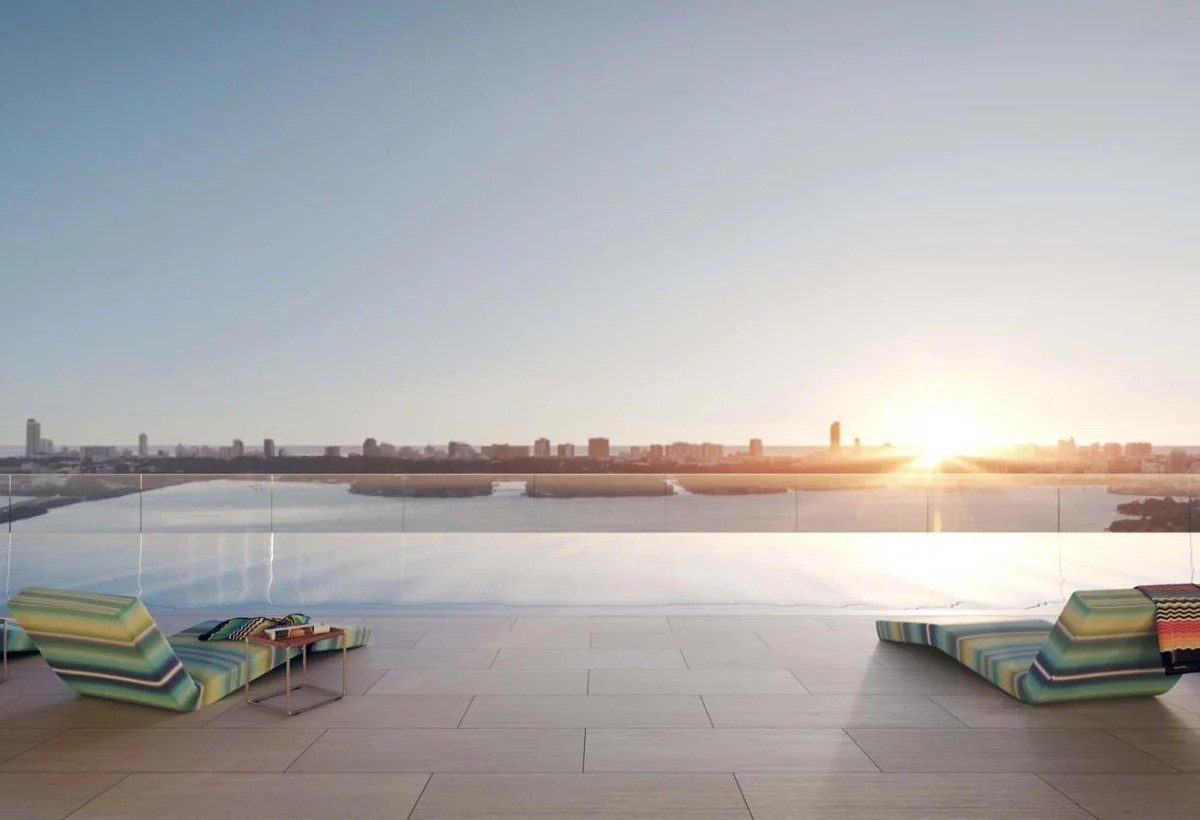
 Photo: Missoni Residences São Paulo — Brand Atlas
10 September 2026 ·5 min read
Branded Residences in Brazil: São Paulo Wealth, Coastal Scarcity and a Maturing Model

Brazil is frequently misread by international sponsors. It is not an offshore-buyer market like Dubai or Portugal. Ninety per cent or more of the demand for a branded scheme in São Paulo is Brazilian, paying in reais, and comparing the product against the best unbranded buildings in Jardins, Vila Nova Conceição and Itaim Bibi — which are very good indeed.
That sets a high bar. It also means the market rewards genuine operating quality and is largely immune to name-only licensing.
Where the market actually is
- São Paulo — the engine. Jardins, Vila Nova Conceição, Itaim Bibi, Faria Lima and Cidade Jardim. Vertical, high-specification, security-led, with the country's deepest concentration of ultra-high-net-worth households and the highest price per square metre in Latin America.
- Rio de Janeiro — Leblon, Ipanema and the São Conrado and Barra corridors. Extraordinary scarcity value on the beachfront and a slow, complex planning environment.
- Angra dos Reis and Costa Verde — the domestic ultra-luxury weekend market, marina-led, dominated by São Paulo money.
- Trancoso and the Bahia coast — the fashion-led leisure market. Small, design-driven, very high price per square metre for Brazil, strong international awareness.
- The northeast — Ceará, Rio Grande do Norte, Alagoas — resort-led development with European charter demand, lower entry prices and the country's clearest resort-branded opportunity.
Why Brazilian buyers pay the premium
Three drivers, in order of weight:
- 01Security and staff management. In São Paulo and Rio, a professionally operated building with vetted staff, controlled access and managed service is not a luxury — it is the core product. Hotel operators run this better than condominium administrators.
- 02Service continuity. Brazilian condominium service quality is volatile because it depends on an elected *síndico* and a rotating administrator. A brand with reputational exposure produces stability that buyers price.
- 03Rental and second-home logistics in the coastal markets, where owners are present a few weeks a year and the property needs to be maintained, staffed and — increasingly — monetised.
| Segment | Typical positioning | Indicative premium vs comparable unbranded |
|---|---|---|
| São Paulo prime | Standalone or hotel-attached branded towers | 25-40% |
| Rio beachfront | Hotel-attached branded | 20-35% |
| Angra / Costa Verde | Marina and resort-attached | 20-35% |
| Trancoso / Bahia | Design and fashion-branded villas | 25-45% |
| Northeast resorts | Resort-attached with rental programme | 15-30% |
The regulatory reality: condominium law, foreign ownership and tax
- Foreign ownership is broadly open. Non-residents can buy urban property with a CPF tax number; the meaningful restrictions apply to rural and border-zone land, where INCRA and national-security rules limit foreign acquisition. Coastal resort sites frequently sit on or near rural-classified land, so classification diligence is essential before a licence is signed.
- The condominium regime governs the service model. Brazilian condominium law gives the owners' assembly substantial control over budgets and service providers. A brand's operating standard therefore has to be embedded in the *convenção de condomínio* and the unit sale contracts at launch — retrofitting it after handover is close to impossible.
- Terreno de marinha. Much of the Brazilian coastline is subject to federal marine land tenure, with *aforamento* or *ocupação* rights rather than pure freehold, and annual charges. Buyers and lenders will ask. Sponsors need a clean answer.
- Incorporação imobiliária. Off-plan sales require registration of the development at the property registry, with the *patrimônio de afetação* ring-fencing regime available to segregate project assets — increasingly expected by institutional buyers after past developer failures.
Which brands are actually transacting
Three groups. International hotel brands — Rosewood, Fasano as the domestic ultra-luxury reference, Four Seasons, and the Marriott and Accor luxury stables — anchor São Paulo and Rio. Fashion and design houses — Missoni, Pininfarina, Fendi-adjacent interiors and Italian design studios — are unusually successful in Brazil, where design literacy among luxury buyers is high and the fashion association carries genuine weight. Domestic hospitality brands, led by Fasano, frequently outperform international names on absorption because Brazilian buyers know exactly what the service is.
Fasano is the instructive case: a domestic brand with an unimpeachable service reputation that commands premiums comparable to global names, at a licence cost and cultural fit that global names cannot match.
What sponsors get wrong
- Assuming foreign buyers will carry the scheme. They will not. Underwrite on domestic demand and treat international sales as upside.
- Failing to embed the operating model in the condominium convention. This is the single most common structural error in Brazilian branded projects.
- Underestimating construction cost inflation. The INCC index has run hard; fixed-price presale contracts without indexation have destroyed margins across the market.
- Importing a Gulf unit mix. Brazilian luxury demand is family-sized: three and four suites, service quarters, multiple parking spaces. Studio-heavy mixes do not clear.
- Ignoring the terreno de marinha and rural classification questions until due diligence, when a brand or a lender raises them.
The capital picture
Brazilian development is financed by sponsor equity, bank construction finance, and the capital-markets instruments that dominate the sector — CRI securitisations and listed real estate funds (FIIs). Rates have been volatile, and the cost of capital is the principal variable in feasibility.
International equity enters selectively, usually via joint venture with an established local developer who controls land and permitting. What attracts it is governance: *patrimônio de afetação*, audited reporting, a licence with defined termination triggers, and a residential fee load that survives a sensitivity test on both absorption and currency.
Outlook to 2030
Three expectations. First, São Paulo continues to set the standard, with branded schemes becoming a normal feature of the prime market rather than a novelty. Second, the northeast coast professionalises, as European charter access and resort investment converge to create the country's first genuinely institutional resort-branded product. Third, domestic brands strengthen further — the Fasano effect will attract imitators, and some will be credible.
Brazil is a market where the brand has to work for its fee. Buyers are sophisticated, comparisons are available, and the service either shows up or it does not.
Frequently Asked Questions
Can foreigners buy branded residences in Brazil?
Yes. Non-residents can buy urban property with a Brazilian CPF tax number. Restrictions apply mainly to rural land and border zones, and much of the coastline carries federal marine land tenure, so classification and tenure diligence matter on resort sites.
Which Brazilian cities have branded residences?
São Paulo leads by volume and price, followed by Rio de Janeiro. Angra dos Reis, Trancoso and the Bahia coast serve the domestic leisure market, while Ceará, Rio Grande do Norte and Alagoas are the emerging resort-branded corridor.
What premium do branded residences achieve in Brazil?
Indicatively 20-40% over comparable unbranded stock, with the highest figures in São Paulo prime and design-branded coastal villas. The premium is driven by security, service continuity and management quality rather than international recognition.
Do international or Brazilian brands perform better in Brazil?
Both work, but domestic brands with a strong service reputation — Fasano above all — frequently match international names on premium and beat them on absorption and licence cost. The right answer depends on the buyer profile for the specific site.
See also
Market guides by country
- 'The Future of Branded Residences' — Global Tour 2026
- Branded Residence Ownership Structures Explained: The 2026 Guide
- Hotel-Branded vs Design-Branded Residences: The 2026 Comparison
- What Are Branded Residences? 2026 Definition, Models and Market Size
- Trustworthy Branded Residence Brands in 2026: How to Judge Credibility