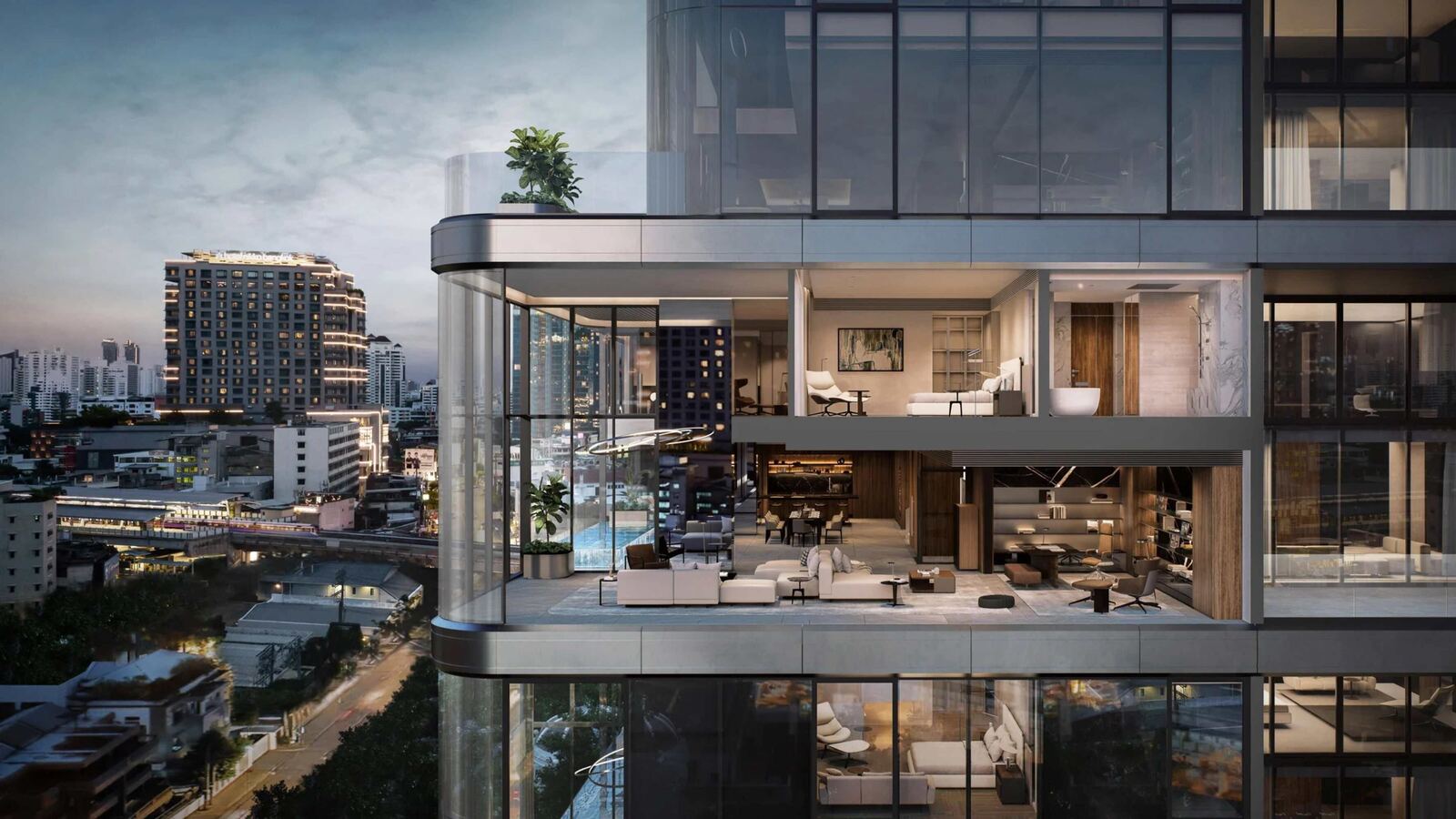
 Photo: Dolce & Gabbana branded residence interior. Brand Atlas
6 September 2026 ·4 min read
Wellness, Automotive and Fashion: The Non-Hotel Branded Wave

The category began in hospitality and stayed there for thirty years. It has broadened dramatically since 2015, and the three non-hotel families now behave differently enough that a single strategy for all of them is wrong.
Wellness: the category with real substance
Wellness brands — Six Senses, Clinique La Prairie, Equinox, SHA, Aman's wellness platforms — are growing faster than any other segment, and for a structural reason: what affluent buyers consider luxury has shifted from ornament to health and longevity.
What a wellness brand actually delivers:
- Programmed space — diagnostic suites, treatment rooms, movement studios, hydrothermal areas — which requires real floor area, real plant and real capital, not just finishes.
- Clinical or coaching staff on site, which is an operating commitment closer to a hotel model than a licence.
- A recurring service relationship with residents, which supports both the premium and the service charge.
The underwriting question is whether the programme is funded. A wellness brand on the signage with a conventional gym behind it is the weakest product in the category, because the promise is specific and the shortfall is obvious.
Automotive: velocity without a platform
Aston Martin Residences in Miami, Bugatti Residences in Dubai, Porsche Design Tower, Pininfarina and Bentley schemes across the Gulf and Southeast Asia. These launches are frequently the fastest-selling product in their market.
| Strength | Limitation |
|---|---|
| Extraordinary launch velocity and press reach | No operating platform; service must be contracted separately |
| Distinctive, highly marketable design signature | Design language can date faster than architecture |
| Access to an affluent, brand-loyal global buyer base | Brand affinity moves faster than a 25-year agreement |
| Strong premium at launch | Resale premium more variable |
The practical implication for sponsors: budget for a separate operator and a residential services agreement from the outset, and do not let the brand's marketing imply a service capability the contract does not deliver. Buyer disappointment after handover is what destroys resale premiums.
Fashion and design: execution is everything
Armani, Bulgari, Fendi, Missoni, Dolce & Gabbana, Karl Lagerfeld, Elie Saab, Roberto Cavalli, Baccarat. The oldest of the non-hotel categories and the most variable in outcome.
The successful schemes share three traits. The brand's design studio is genuinely involved rather than approving mood boards. The interior product is unmistakably that brand — a buyer should be able to identify it from a photograph. And the amenity offer is edited rather than exhaustive, matching the brand's own aesthetic discipline.
The unsuccessful ones share one: the licence was bought for the logo, applied to a conventional developer product, and priced as if it were a Four Seasons.
How the three categories compare
| Wellness | Automotive | Fashion / design | |
|---|---|---|---|
| Operating substance | High | Low | Low to medium |
| Launch velocity | Medium to high | Very high | High |
| Capital intensity of programme | High | Low | Medium |
| Typical service charge | USD 18–30 per sq ft | USD 10–16 per sq ft | USD 12–20 per sq ft |
| Durability of appeal | High and rising | Medium | Brand-dependent |
| Best-suited product | Resort, second-home, longevity-led urban | Urban towers, trophy units | Urban prime, design-led resort |
Underwriting rules for non-hotel licences
- 01Identify the operator before the brand. If none is named, the scheme has a design partner, not a service partner.
- 02Price the brand as a marketing and premium asset with a defined life, not as a permanent operating advantage.
- 03Negotiate territorial exclusivity harder than in hospitality — non-hotel brands have historically licensed more freely.
- 04Cap standards-change exposure. Fashion and automotive design refreshes are more frequent than hotel standards cycles.
- 05Model the resale narrative at year ten. Ask what an international buyer will understand about this brand then.
Frequently Asked Questions
What are non-hotel branded residences?
Residential schemes licensed to brands outside hospitality — wellness operators, car makers, fashion houses and design brands. They supply identity, design codes and marketing reach, and, with the exception of most wellness brands, they do not supply an operating platform.
Are wellness branded residences worth the premium?
Where the wellness programme is genuinely funded — diagnostic and treatment space, clinical or coaching staff, a recurring resident programme — yes, and it is the fastest-growing part of the category. Where the brand appears on the signage above a conventional gym, the premium is not supported.
Do car-branded residences hold value?
They launch exceptionally strongly and their resale performance is more variable than hotel-branded stock, because there is no operating platform sustaining the standard and brand affinity can shift faster than a 25-year agreement. Appointing a credible operator alongside the licence materially improves the outcome.
Which fashion brands do branded residences?
Armani, Bulgari, Fendi, Missoni, Dolce & Gabbana, Karl Lagerfeld, Elie Saab, Roberto Cavalli and Baccarat are among the most active. Outcomes vary widely and depend chiefly on whether the brand's own design studio was genuinely involved in the interiors.
See also
Types of branded residences
- Types of Branded Residences in 2026: Categories, Formats and Ownership Models
- Branded Residence Ownership Structures Explained: The 2026 Guide
- Hotel-Branded vs Design-Branded Residences: The 2026 Comparison
- What Are Branded Residences? 2026 Definition, Models and Market Size
- Trustworthy Branded Residence Brands in 2026: How to Judge Credibility