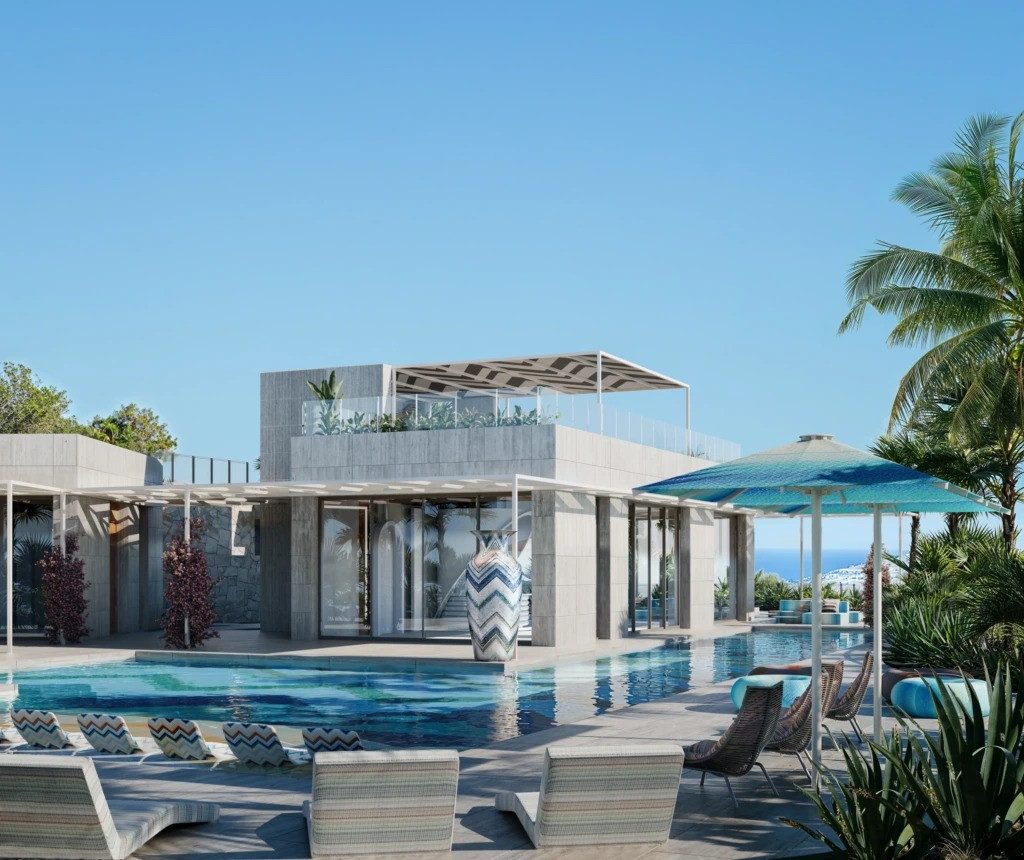
 Photo: Missoni Bodrum — Brand Atlas
23 August 2026 ·4 min read
Branded Residences in Türkiye: Istanbul, Bodrum and the Citizenship Question

Türkiye is one of the more sophisticated branded residence markets outside the Gulf, with a long track record of hospitality-branded urban product and a domestic development industry that understands the model well. It is also one of the harder markets to underwrite, because two of its principal demand drivers — currency and citizenship policy — are policy-sensitive rather than fundamental.
Istanbul: genuine urban depth
Istanbul supports branded residential product for reasons independent of any investment programme. It is a genuine global city with a large affluent domestic population, an established luxury retail and hospitality sector, and prime districts with real scarcity. Branded schemes in the Bosphorus corridor, Nişantaşı, Levent and Beşiktaş sell to Turkish households as primary residences, and that demand does not disappear when policy shifts.
| District | Character | Branded positioning |
|---|---|---|
| Bosphorus corridor | Waterfront scarcity, historic | Ultra-prime, strongest premium |
| Nişantaşı / Şişli | Luxury retail core | Urban hospitality-branded |
| Levent / Maslak | Business district | Professional and corporate lettings |
| Asian side (Ataşehir, Kadıköy) | Emerging affluent, better value | Selective, domestic end-user |
The citizenship programme and what it does to demand
Türkiye's citizenship-by-investment route, based on a qualifying property purchase held for a defined period, has been one of the most significant demand drivers for foreign purchases. The threshold has been revised upward more than once, and each revision has redistributed demand across price bands quite sharply.
The strategic lesson from previous threshold changes is straightforward: a scheme priced to sit exactly at the qualifying threshold is exposed. When the threshold moves, product designed to meet the old number is stranded between the new requirement and the genuine market price. We advise clients to price to intrinsic value and treat any citizenship eligibility as an additional selling point rather than as the pricing basis.
Bodrum and the Aegean
The Aegean and Mediterranean coast — Bodrum principally, with Çeşme, Göcek and the Datça peninsula behind it — is a different market entirely. Demand is seasonal, heavily domestic at the top end, and increasingly regional, with Gulf buyers a meaningful and growing cohort. Product is villa-led, land-hungry and design-sensitive, and the strongest schemes pair a boutique hotel with a small number of very high-specification residences.
The constraints mirror other seasonal markets: a service-charge model that must survive the off-season, staffing that cannot be sustained year-round without a rental programme, and a resale market that is thin outside the summer window.
Currency and construction
- 01Price in hard currency or index to it. The domestic prime market has largely done so already.
- 02Understand where devaluation risk sits in your construction contracts, particularly on imported specification items that brand standards frequently require.
- 03Model the gap between local build cost and brand-standard build cost — in Türkiye this gap is wider than in most markets because domestic construction is competitively priced but brand specification often mandates imported product.
- 04Stress-test payment plans denominated in a currency different from your cost base.
- 05Confirm repatriation mechanics early rather than at exit.
What premium is achievable
Istanbul branded schemes typically achieve 20-40% over comparable unbranded prime stock, with Bosphorus waterfront at the top of that range. Bodrum villa product with a strong operator can exceed it, though the comparable set is small enough that the number should be treated with caution.
Pitfalls
- Pricing to a citizenship threshold rather than to intrinsic value.
- Underestimating imported specification cost under brand standards.
- Assuming Bodrum seasonality can be solved with amenity rather than with a functioning rental programme.
- Reading lira-denominated historic comparables without hard-currency normalisation.
Outlook
Istanbul's branded market rests on genuine urban fundamentals and will continue to perform regardless of policy shifts, provided sponsors price to value rather than to a threshold. The Aegean coast offers a genuinely distinctive villa-led proposition for boutique operators willing to work at small scale. Both reward developers who treat currency and policy as risks to be structured around rather than assumptions to build on.
Frequently Asked Questions
Does buying a branded residence in Türkiye grant citizenship?
Türkiye operates a citizenship-by-investment route based on a qualifying property purchase held for a defined period. The qualifying threshold, holding period and eligible property categories have all been revised more than once, so confirm current requirements with the Turkish authorities before relying on the programme.
Where are Türkiye's branded residences located?
Principally in Istanbul — the Bosphorus corridor, Nişantaşı, Levent and Beşiktaş — where genuine urban prime demand exists independently of any investment programme. A separate villa-led coastal market operates in Bodrum and across the Aegean, including Çeşme, Göcek and the Datça peninsula.
What premium do branded residences achieve in Türkiye?
Istanbul schemes typically achieve 20-40% over comparable unbranded prime stock, with Bosphorus waterfront at the upper end. Bodrum villa product with a strong operator can exceed that range, though the small comparable set means those figures should be treated cautiously.
What is the biggest underwriting risk in Türkiye?
Currency. Lira volatility affects historic comparables, construction contracts and payment plans simultaneously. Brand standards that mandate imported specification widen the gap between competitive domestic build cost and brand-standard build cost, and that gap carries direct devaluation exposure.
See also
Market guides by country
- 'The Future of Branded Residences' — Global Tour 2026
- What Are Branded Residences? The Definitive 2026 Guide
- Branded Residence Ownership Structures Explained: The 2026 Guide
- Hotel-Branded vs Design-Branded Residences: The 2026 Comparison
- What Are Branded Residences? 2026 Definition, Models and Market Size