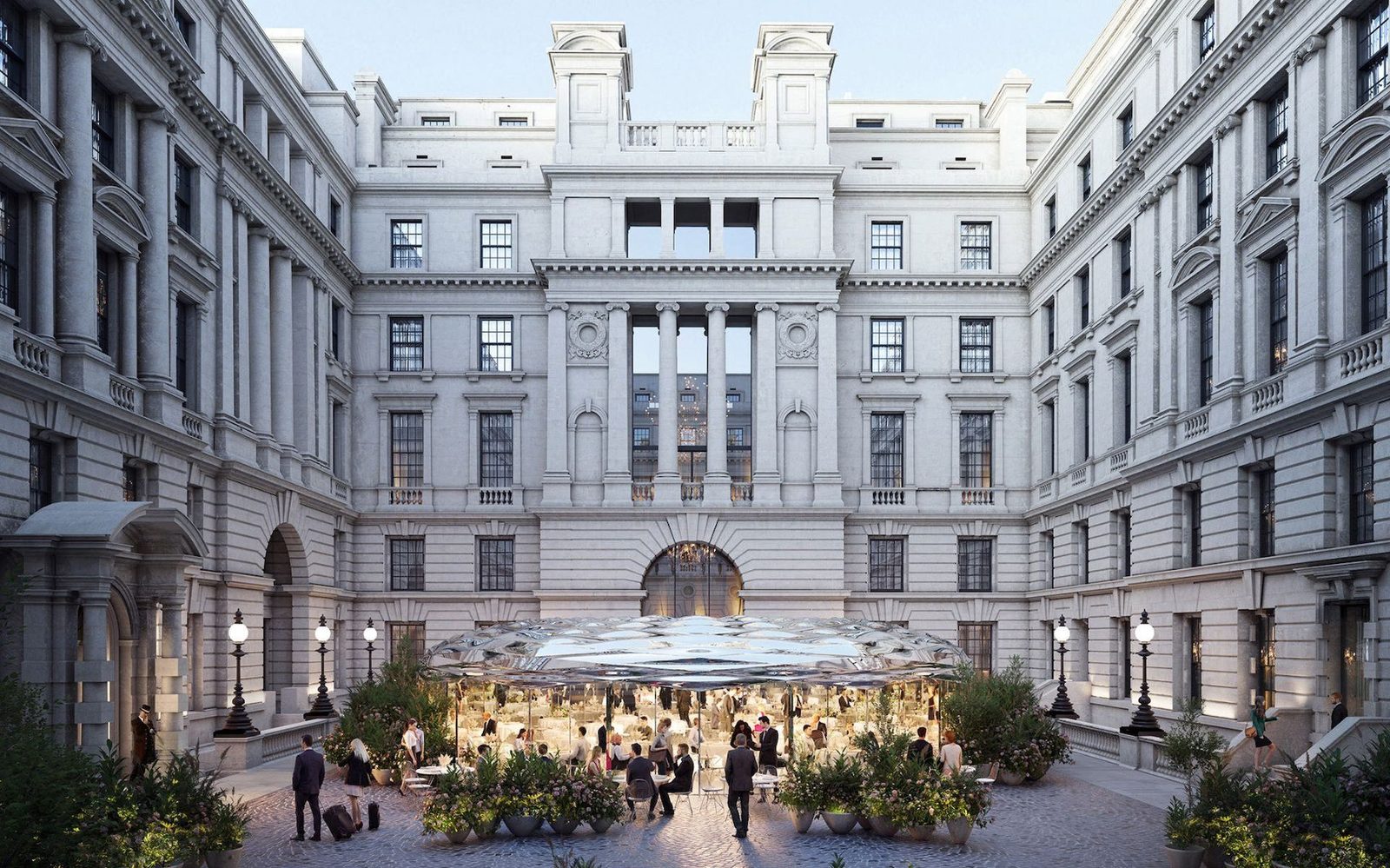
 Photo: Raffles London at The OWO — Brand Atlas
22 August 2026 ·4 min read
Branded Residences in London: Scarcity, Planning and the Super-Prime Buyer

Ask any global hospitality brand where it would most like to place a residential product and London appears near the top of every list. Ask how many schemes it has managed to deliver there and the answer is usually one, or none. That gap between appetite and delivery is the defining feature of the London market and the source of its pricing power.
Why supply is so constrained
- 01Site scarcity. Prime central London — Mayfair, Belgravia, Knightsbridge, St James's — is essentially fully built. New schemes require assembly, conversion or the redevelopment of an existing consented site.
- 02Heritage and conservation. Much of the relevant stock is listed or sits in conservation areas, constraining massing, facade treatment and even internal layout.
- 03Planning process length. Consent timelines measured in years introduce carry cost and market risk that few sponsors underwrite accurately.
- 04Affordable housing obligations. Section 106 and CIL contributions materially affect the viability of high-value residential schemes.
- 05Hotel-residential adjacency. The branded model works best where a hotel component can carry the service; assembling a site large enough for both in prime central London is exceptionally rare.
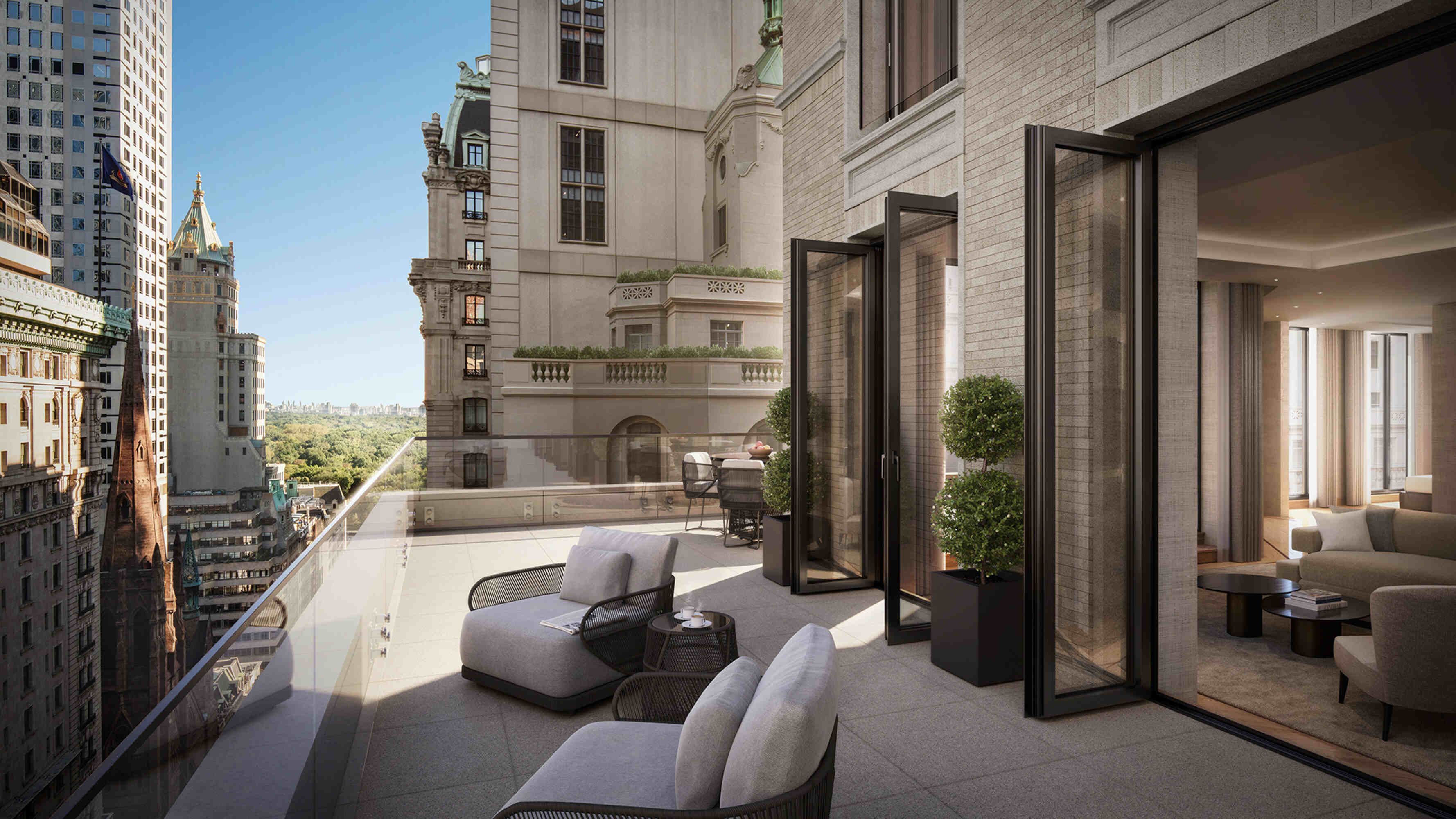
The consequence is that London's branded residences are frequently conversions or hotel-adjacent phases of existing luxury hotels rather than ground-up towers — a structurally different development proposition from Dubai or Miami.
Who buys
London's super-prime buyer pool is the most internationally diverse of any city, drawn from the Gulf, Southeast Asia, North America, Europe and increasingly India. What unites them is a set of requirements that branded product answers unusually well:
- Lock-and-leave security for owners resident abroad for most of the year.
- Managed maintenance of a high-specification asset without personal staff.
- Discretion — branded schemes offer hotel-grade privacy protocols that a private mansion cannot.
- A recognised service standard that transcends any individual managing agent.
What premium is achievable
| Product | Typical positioning | Premium vs prime unbranded |
|---|---|---|
| Ultra-prime hotel-attached | Mayfair, Knightsbridge | 40-60%+ |
| Prime managed residences | Fitzrovia, Marylebone, South Bank | 20-35% |
| Outer-prime branded | Regeneration districts | 10-20% |
The top band is genuinely exceptional. Where a globally recognised operator delivers a small number of residences attached to an established London hotel, the scarcity is close to absolute and pricing reflects it. That is not a repeatable model — it depends on the operator already holding the hotel.
The realistic development route
For sponsors, London branded opportunities generally arise in three forms: acquisition of a consented site with hotel and residential permitted; conversion of an existing commercial or institutional building; or partnership with an operator that already controls a London hotel and wishes to add a residential component. The third is the fastest route to a credible scheme and the hardest to source, because it depends entirely on relationships with the operator's development team.
Pitfalls
- Underestimating planning duration and the carry cost attached to it.
- Assuming a Gulf-style service charge is acceptable to a London buyer and their advisers.
- Ignoring the tax profile of the target buyer, which can outweigh the brand in the purchase decision.
- Branding a location prime central buyers do not accept, where the premium simply does not materialise.
Outlook
London will remain supply-constrained, and that is precisely why the schemes that do complete perform. Sponsors should approach it as a site and consent problem rather than a brand problem: secure the right site with the right consent and the brand conversation becomes straightforward, because every operator wants London.
Frequently Asked Questions
How many branded residences are there in London?
Very few relative to the size of London's super-prime market. Supply is constrained by site scarcity in prime central districts, heritage and conservation protection, lengthy planning timelines and affordable housing obligations — not by any lack of interest from hospitality brands.
What premium do branded residences achieve in London?
Ultra-prime hotel-attached schemes in Mayfair and Knightsbridge can achieve 40-60% or more over comparable unbranded prime stock. Prime managed residences in districts such as Fitzrovia and Marylebone typically achieve 20-35%. Comparable sets are small, so individual outcomes vary widely.
Why do international buyers choose branded residences in London?
Lock-and-leave security for owners resident abroad, professionally managed maintenance of a high-specification asset without private staff, hotel-grade discretion and privacy protocols, and a recognised service standard that does not depend on an individual managing agent.
What taxes apply to buying a London branded residence?
UK residential property taxation for non-resident and non-domiciled buyers is complex, covering stamp duty surcharges, inheritance tax exposure, charges on corporate ownership and reporting obligations, and it has changed repeatedly. Take current specialist UK tax advice rather than relying on general guidance.
See also
Market guides by country
- 'The Future of Branded Residences' — Global Tour 2026
- What Are Branded Residences? The Definitive 2026 Guide
- Branded Residence Ownership Structures Explained: The 2026 Guide
- Hotel-Branded vs Design-Branded Residences: The 2026 Comparison
- What Are Branded Residences? 2026 Definition, Models and Market Size