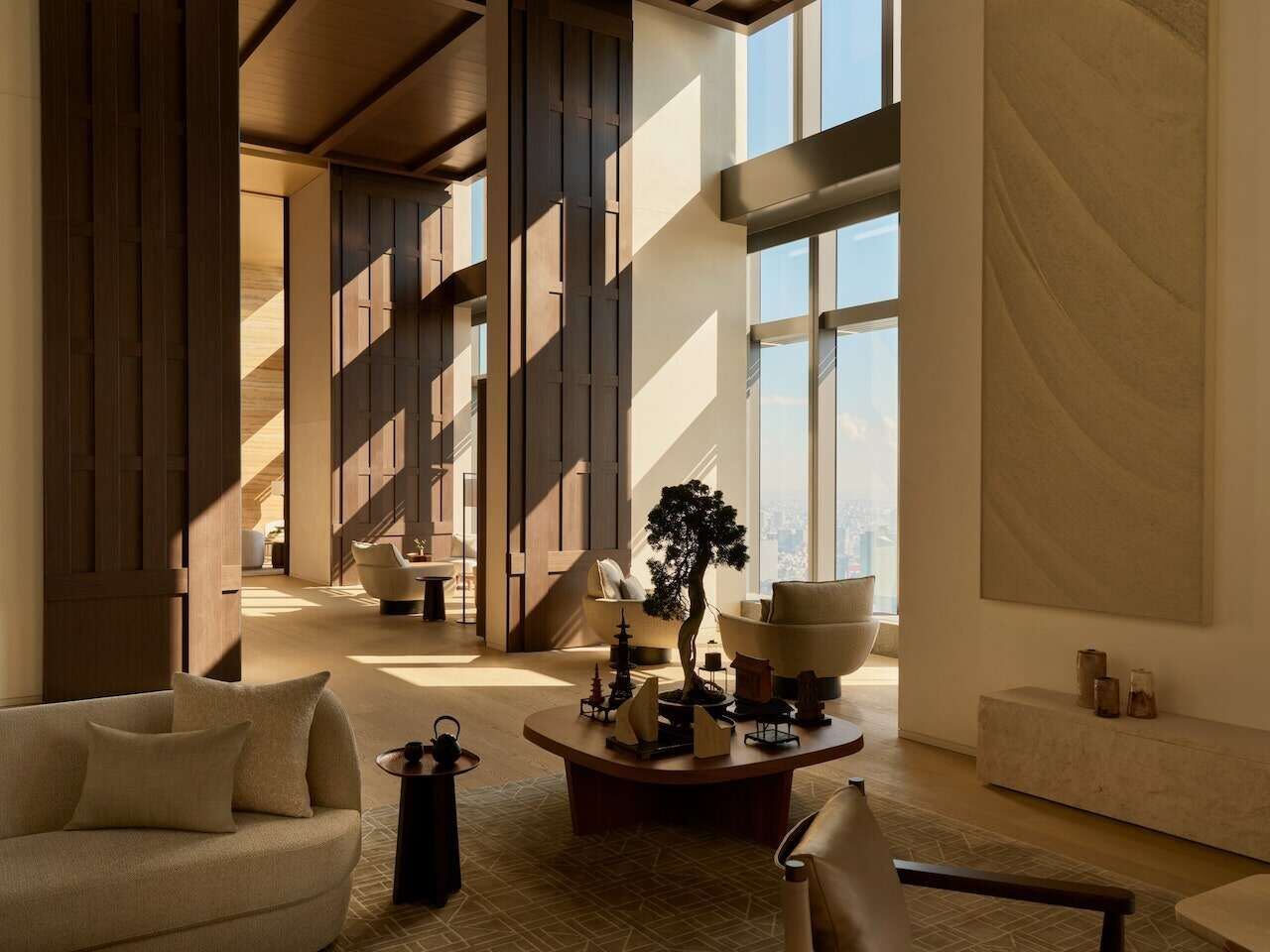
 Photo: Rosewood Residences Beverly Hills — living room. Brand Atlas
1 September 2026 ·4 min read
What Happens If the Brand Walks Away? De-Branding Risk Explained

Every branded residence rests on a contract with an end date. Most owners never read it. Yet the way that contract ends — cleanly at expiry, abruptly on termination, or as collateral damage in a corporate transaction — is the single largest tail risk in the asset class.
How brand agreements actually end
| Route | Typical trigger | Warning to owners |
|---|---|---|
| Expiry | Term runs out, renewal not exercised | Long — the date is known from day one |
| Developer or association default | Non-payment of fees, failure to fund the standard | Months, sometimes weeks |
| Brand default or service failure | Sustained failure to meet contracted standards | Rare; usually negotiated quietly |
| Change of control | Sponsor sells, or the brand is acquired | Little to none |
| Reputational termination | Events affecting the sponsor or the asset | Immediate |
The most common real-world cause is not scandal. It is money. Maintaining a hotel-grade service standard costs what it costs; when an owners' association votes down the budget required to fund it, the brand's contractual standard cannot be met, and the brand's own agreement obliges it to protect the mark by leaving.
What changes the day after
- 01Signage and marks come down, usually within a defined short window. Marketing material, stationery, digital listings and the building's name must all be changed.
- 02The operating team may transfer out. Where the brand employed the general manager and department heads, institutional knowledge leaves with them.
- 03Loyalty and reservation integration ends, which matters for owners in a rental programme — booking channels and rate positioning both change.
- 04The service charge often falls, sometimes materially, because the brand fee and audit obligations disappear. Lower cost, lower standard.
- 05Resale positioning resets. Listings can no longer reference the brand, and the comparable set moves from branded to prime unbranded.
What it does to value
Evidence in the category is still thin, because de-branding events are relatively rare and rarely publicised. From the cases we have been able to analyse, the pattern is consistent: schemes that lose a brand see the branded premium compress by roughly 10 to 20 percentage points against comparable unbranded stock within 24 months, with the sharpest fall in markets where the brand was the primary differentiator rather than the location.
Two variables separate the mild cases from the severe ones. First, whether the physical asset can stand alone — genuinely exceptional location, architecture and specification retain value regardless of signage. Second, whether a replacement operator is appointed quickly. A scheme that moves from one credible brand to another loses far less than one that spends eighteen months unbranded.
Protections that actually work
For developers negotiating the licence, and for association boards reviewing it, four provisions do the heavy lifting:
- A replacement-brand right. The developer or association retains the right to appoint an alternative operator of comparable standing, without the outgoing brand blocking it.
- A run-off period. A defined transition window — commonly six to twelve months — during which the outgoing operator continues to run the building while a successor is appointed.
- Standards, not brands, in the association documents. If the constitutional documents define the service standard independently of any particular brand, the standard survives the exit.
- A funded reserve and a realistic budget. The most effective de-branding protection is simply funding the standard so no default arises.
What buyers should ask
- What is the remaining term of the brand agreement, and who holds the renewal right?
- What are the termination triggers, in summary?
- Is there a replacement-brand mechanism, and who controls it?
- Has this brand exited any residential scheme before, and what happened to values there?
- What proportion of this building's value is the location, and what proportion is the name? Answer honestly.
The strategic reading
De-branding risk is not an argument against branded residences. It is an argument for buying schemes where the brand is operationally embedded rather than decoratively applied. A building where the brand supplies staffing, systems, training and audit has something to lose by leaving — and something durable to leave behind if it does. A building where the brand supplies a logo has neither.
Frequently Asked Questions
What happens if a branded residence loses its brand?
Signage and use of the name end within a contractual window, the branded operating team may transfer out, loyalty and reservation integration stops, and the service charge usually falls along with the service standard. The scheme is then marketed as prime unbranded property unless a replacement operator is appointed.
How much value does a branded residence lose if it de-brands?
Evidence is limited, but the cases we have analysed show the branded premium compressing by roughly 10 to 20 percentage points against comparable unbranded stock within two years. The loss is smallest where the location and building quality justify the pricing independently, and where a replacement operator is appointed quickly.
Can owners stop a brand from leaving?
Not directly, because individual owners are not party to the brand agreement. What owners can do collectively, through the association, is remove the usual cause of exit by funding the contracted service standard, and ensure the association's documents include a replacement-operator mechanism.
Is de-branding common?
It is uncommon but not rare, and it becomes more likely as the first large cohort of branded schemes reaches the end of its initial 20-year agreements later this decade. It is best treated as a low-probability, high-impact risk to be structured against rather than ignored.
See also
Brands, trust & due diligence
- Trustworthy Branded Residence Brands in 2026: How to Judge Credibility
- Branded Residence Ownership Structures Explained: The 2026 Guide
- Hotel-Branded vs Design-Branded Residences: The 2026 Comparison
- What Are Branded Residences? 2026 Definition, Models and Market Size
- How Do Branded Residences Work? The 2026 Operating Model Explained